
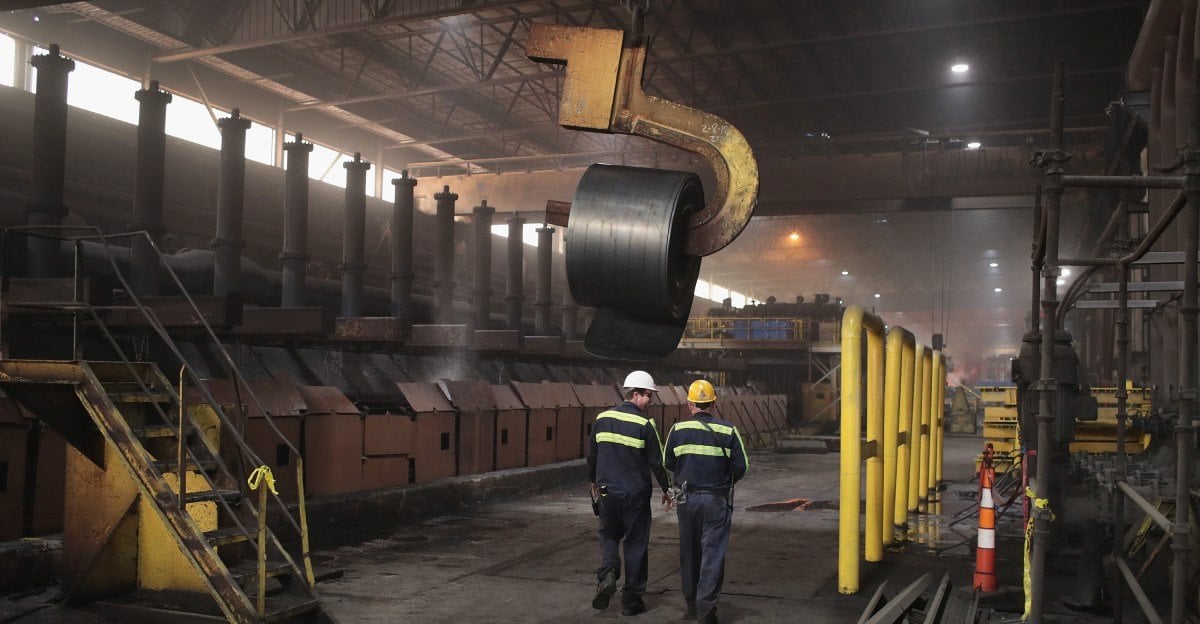
Manufacturing jobs are never coming back | Putting Americans back to work in factories isn’t just hard. It’s impossible
Posted by ONETRILLIONAMERICANS
Manufacturing jobs are never coming back | Putting Americans back to work in factories isn’t just hard. It’s impossible
Posted by ONETRILLIONAMERICANS
2 Comments
> “Jobs and factories will come roaring back into our country,” President Donald Trump promised on “Liberation Day,” as he announced tariffs that have shocked global markets and set the country on course for a recession. “We will supercharge our domestic industrial base. We will pry open foreign markets and break down foreign trade barriers, and ultimately, more production at home will mean stronger competition and lower prices for consumers.”
> This has long been the key argument behind protectionist policies like Trump’s: They will bring manufacturing jobs back to America. It’s a claim popular not just on the right, but with pro-tariff Democrats and labor unions, too. Chris Deluzio, a House Democrat from western Pennsylvania (a traditional hotbed of protectionism), has urged his party to “embrace tariffs as one component of a broader industrial strategy to revitalize American manufacturing and make whole communities that have been hollowed out by decades of bad trade policy.”
> It’s a false promise. Tariffs cannot “make whole” any communities that have seen manufacturing jobs depart. That’s partly because tariffs are wildly ineffective at that purpose, as we saw in Trump’s first term, when his tariffs failed to lead to any increase in manufacturing employment, while costing jobs elsewhere.
But the bigger reason is that the fall of manufacturing employment in the US was not caused primarily by changes in policy, and changes in policy cannot reverse it. What’s happening is a transition from manufacturing to services that occurs in all countries as they get richer.
> This transition happened in countries whose policies were strongly biased toward manufacturing, like Germany, just as it did in the US.
The root cause isn’t trade negotiators selling out the working class, but the inevitable effects of rising productivity in the manufacturing sector, plus falling demand for many manufactured goods.
> Indeed, manufacturing employment isn’t just falling in the US: It’s falling worldwide. That’s the essential reality that Trump, Deluzio, and other tariff-mongers refuse to understand.
# Downward sloping primary employment
> The richer a country is, the fewer workers are employed in agriculture and other primary sector activities. Large-scale mechanization of farms means that we can enjoy much more plentiful food than our ancestors a century ago, with many fewer workers producing it.
# U-shaped secondary employment
> First, as countries emerge from deep poverty, the manufacturing share of employment increases. This is the process that has happened in South Korea, Taiwan, and China since the 1980s: A push toward manufacturing for export means that more and more workers move into that sector.
> But then, as countries go from middle-income to high-income and can afford more labor-saving technologies in factories, employment in the sector falls again. This is the deindustrialization process that the US and Western Europe have experienced in recent decades.
# Upward sloping tertiary employment
> Finally, there’s the tertiary sector, or services, where the trendline is simply upward. Rich countries see more and more of their workers enter the service sector
!ping CONTAINERS
The “hollowing out” of American manufacturing:
https://preview.redd.it/5q16lvh9klve1.jpeg?width=909&format=pjpg&auto=webp&s=c9c2de52ce120e163a99bfd64f411066ff715953