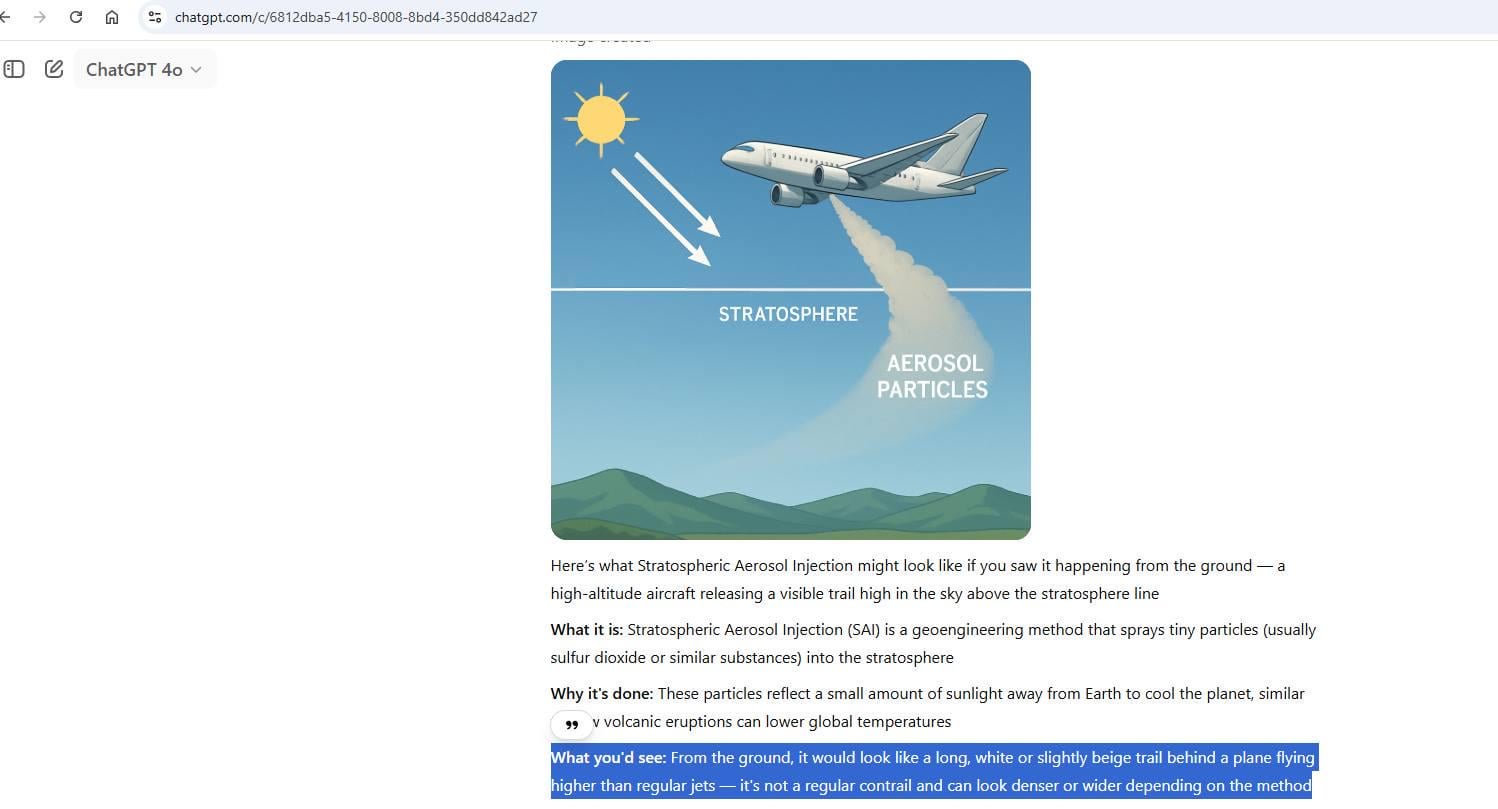
I found this to be very interesting as i see this on a daily basis here in New Zealand and have done for years. Now with the talk of them dimming the sun in the UK i decided to ask Chatgpt about it and this is what i got.
Also we have a company here in NZ Hamilton called NZAero, they build and sell weather modification planes to other countries
Japsabbath on
Yes, sulfur dioxide is toxic, particularly when inhaled in high concentrations. Exposure to high levels can cause irritation to the respiratory system, eyes, and skin, and in severe cases, lead to respiratory distress and even pulmonary edema.
More details:
Acute Effects:
Short-term exposure to high levels of sulfur dioxide can cause immediate irritation of the eyes, nose, throat, and lungs, along with coughing, chest tightness, and shortness of breath. In severe cases, it can lead to pulmonary edema (fluid buildup in the lungs), a medical emergency.
Chronic Effects:
Long-term exposure to even low levels of sulfur dioxide can cause or worsen respiratory problems, such as asthma and bronchitis. It can also affect lung function and potentially increase the risk of heart disease in sensitive individuals.
Sensitivity:
Individuals with pre-existing respiratory conditions, such as asthma, are particularly susceptible to the harmful effects of sulfur dioxide.
Other Effects:
Sulfur dioxide can also affect the skin and eyes, causing irritation and burns upon direct contact.
Sources of Exposure:
Sulfur dioxide is released into the atmosphere from various sources, including burning coal and oil at power plants, copper smelting, and volcanic eruptions.
Regulations and Guidelines:
Occupational exposure limits for sulfur dioxide are set by organizations like OSHA and ACGIH to protect workers. There are also guidelines for the general public, such as those established by the EPA.

2 Comments
SS
I found this to be very interesting as i see this on a daily basis here in New Zealand and have done for years. Now with the talk of them dimming the sun in the UK i decided to ask Chatgpt about it and this is what i got.
Also we have a company here in NZ Hamilton called NZAero, they build and sell weather modification planes to other countries
Yes, sulfur dioxide is toxic, particularly when inhaled in high concentrations. Exposure to high levels can cause irritation to the respiratory system, eyes, and skin, and in severe cases, lead to respiratory distress and even pulmonary edema.
More details:
Acute Effects:
Short-term exposure to high levels of sulfur dioxide can cause immediate irritation of the eyes, nose, throat, and lungs, along with coughing, chest tightness, and shortness of breath. In severe cases, it can lead to pulmonary edema (fluid buildup in the lungs), a medical emergency.
Chronic Effects:
Long-term exposure to even low levels of sulfur dioxide can cause or worsen respiratory problems, such as asthma and bronchitis. It can also affect lung function and potentially increase the risk of heart disease in sensitive individuals.
Sensitivity:
Individuals with pre-existing respiratory conditions, such as asthma, are particularly susceptible to the harmful effects of sulfur dioxide.
Other Effects:
Sulfur dioxide can also affect the skin and eyes, causing irritation and burns upon direct contact.
Sources of Exposure:
Sulfur dioxide is released into the atmosphere from various sources, including burning coal and oil at power plants, copper smelting, and volcanic eruptions.
Regulations and Guidelines:
Occupational exposure limits for sulfur dioxide are set by organizations like OSHA and ACGIH to protect workers. There are also guidelines for the general public, such as those established by the EPA.