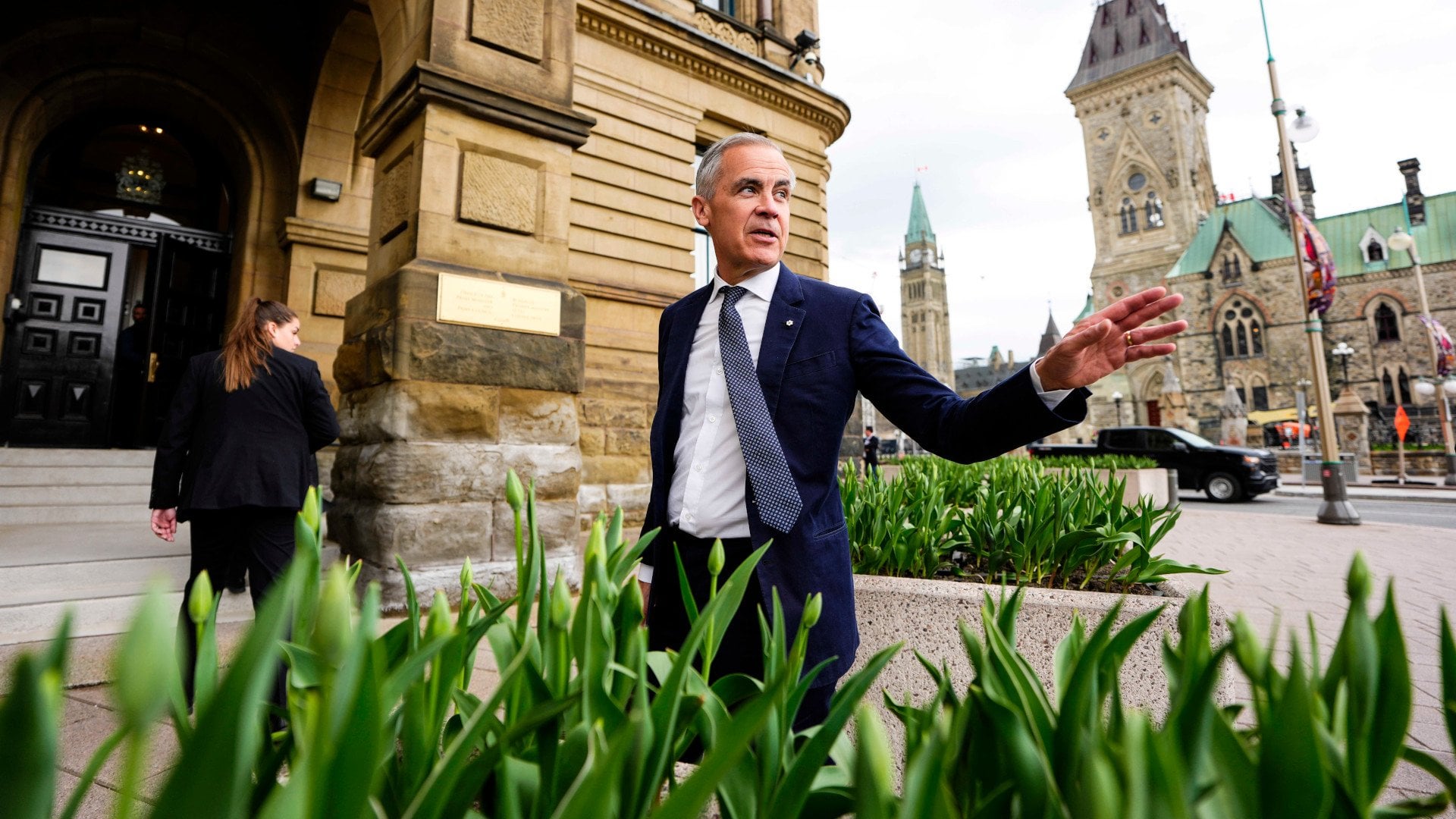
>There’s growing chatter in senior bureaucratic circles that the new Carney government is exploring a different way to govern – one that could execute plans for the biggest remake of Canada’s economy since the Second World War.
>The former central banker, who positioned himself as a crisis leader and a champion of getting things done, could face his toughest challenge yet – navigating the machinery of government, with its entrenched structures, processes and systems.
>The public service, whose job is to implement those plans, is often criticized as bloated, slow, and inefficient. The previous Trudeau government, with more than 750 priorities, was plagued by execution struggles that produced backlogs, delays and failed projects.
>But senior bureaucrats are thinking hard about how to fix it. One idea up for discussion is the U.K.’s “mission government” model. Some senior officials travelled to London to assess the approach and whether it could be adapted here.
>Starmer has faced an uphill battle, but the goal is to focus government machinery on delivery and accountability, not just ideas.
>It’s unclear whether the Carney government is adopting the U.K.’s mission-government model, but it already appears to be embracing the key principles by focusing on a handful of priorities, with ministers organized around them.
>[…]
>Many public servants were frustrated by the sheer volume of priorities and new initiatives under the Trudeau government, which left them overworked, overstretched, and pulled in too many directions. With too many competing priorities, the government struggled to focus or hold ministers accountable. Narrowing that list could make progress easier to track and more likely to happen, said several senior officials.
>Fixing the government’s execution gap is part of the broader debate today about state capacity, which is the ability of governments to make policy, execute it and deliver results for Canadians. Public service reform would aim to make it more adaptable, agile, innovative and willing to take risks – all of which could improve state capacity.
>The erosion of state capacity has become a growing concern in Canada. In analyzing the Liberal election platform, [Sahir Khan](https://ifsd.ca/team/sahir-khan/), executive vice-president of the Institute of Fiscal Studies and Democracy (ISFD) at the University of Ottawa, warned that promised savings – whether from program reviews or AI – fail to account for “the challenges of state capacity” and how they could affect the government’s plans.

2 Comments
>There’s growing chatter in senior bureaucratic circles that the new Carney government is exploring a different way to govern – one that could execute plans for the biggest remake of Canada’s economy since the Second World War.
>Thrust into office by Trump’s trade war, Prime Minister Mark Carney is trying to turn an economic crisis into a defining moment for the country. [At his first press conference](https://www.cpac.ca/headline-politics/episode/pm-carney-outlines-govt-priorities-confirms-may-26-return-of-house?id=313a787d-d2b5-4f83-b441-331756778ca4), he zeroed in on a handful of sweeping [priorities](https://nationalnewswatch.com/2025/05/02/mark-carney-says-he-has-priorities-for-his-new-government-here-are-5-of-them) aimed at making Canada and its economy more resilient and independent. The big question: Can [government actually pull it off?](https://policyoptions.irpp.org/magazines/february-2025/trump-canada-public-service/)
>The former central banker, who positioned himself as a crisis leader and a champion of getting things done, could face his toughest challenge yet – navigating the machinery of government, with its entrenched structures, processes and systems.
>The public service, whose job is to implement those plans, is often criticized as bloated, slow, and inefficient. The previous Trudeau government, with more than 750 priorities, was plagued by execution struggles that produced backlogs, delays and failed projects.
>But senior bureaucrats are thinking hard about how to fix it. One idea up for discussion is the U.K.’s “mission government” model. Some senior officials travelled to London to assess the approach and whether it could be adapted here.
>U.K. Prime Minister Keir Starmer adopted a “mission government” model, [popularized by economist Mariana Mazzucato.](https://medium.com/iipp-blog/professor-mariana-mazzucato-and-cllr-georgia-gould-leader-of-camden-council-write-about-the-need-ebd5ec2841d2) She argues that missions help break down silos, unite departments, and can rally the public around bold but achievable goals.
>Starmer – who [accused](https://www.bbc.com/news/articles/clyv2g2pe5ro) public servants of being “comfortable in the tepid bath of managed decline” – [organized his government around five priorities](https://www.instituteforgovernment.org.uk/publication/whitehall-monitor-2025/part-1-new-government#footnoteref40_k4hyg3t) with clear targets and ministers accountable for each. His missions: economic growth, health system reform, safer streets, better education, and clean energy.
>Starmer has faced an uphill battle, but the goal is to focus government machinery on delivery and accountability, not just ideas.
>It’s unclear whether the Carney government is adopting the U.K.’s mission-government model, but it already appears to be embracing the key principles by focusing on a handful of priorities, with ministers organized around them.
>[…]
>Many public servants were frustrated by the sheer volume of priorities and new initiatives under the Trudeau government, which left them overworked, overstretched, and pulled in too many directions. With too many competing priorities, the government struggled to focus or hold ministers accountable. Narrowing that list could make progress easier to track and more likely to happen, said several senior officials.
>Fixing the government’s execution gap is part of the broader debate today about state capacity, which is the ability of governments to make policy, execute it and deliver results for Canadians. Public service reform would aim to make it more adaptable, agile, innovative and willing to take risks – all of which could improve state capacity.
>The erosion of state capacity has become a growing concern in Canada. In analyzing the Liberal election platform, [Sahir Khan](https://ifsd.ca/team/sahir-khan/), executive vice-president of the Institute of Fiscal Studies and Democracy (ISFD) at the University of Ottawa, warned that promised savings – whether from program reviews or AI – fail to account for “the challenges of state capacity” and how they could affect the government’s plans.
!ping Can&Administrative-state
Ugh, missionary government is so boring