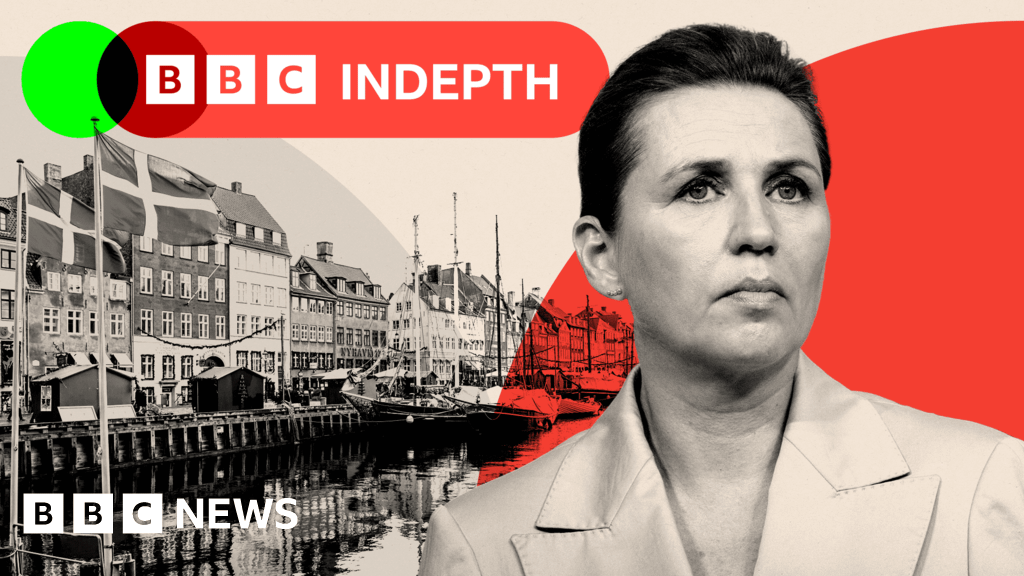
> Think, Denmark. Images of sleek, impossibly chic Copenhagen, the capital, might spring to mind. As well as a sense of a liberal, open society. That is the Scandinavian cliché.
>But when it comes to migration, Denmark has taken a dramatically different turn. The country is now ***”a pioneer in restrictive migration policies”** in Europe, according to Marie Sandberg, Director of the Centre for Advanced Migration Studies (AMIS) at the University of Copenhagen – both when it comes to asylum-seekers and economic migrants looking to work in Denmark.
>Even more surprising, perhaps, is who is behind this drive. It’s generally assumed ‘far right’ politicians are gaining in strength across Europe on the back of migration fears, but that’s far from the full picture.
>In Denmark – and in Spain, which is tackling the issue in a very different but no less radical way by pushing for more, not less immigration – the politicians taking the migration bull by the horns, now come from the centre left of politics.
>How come? And can the rest of Europe – including the UK’s Labour government – learn from them?
>Unsettling times in Europe
>Migration is a top voter priority, right across Europe. We live in really unsettling times. As war rages in Ukraine, Russia is waging hybrid warfare, such as cyber attacks across much of the continent. Governments talk about spending more on defence, while most European economies are spluttering. Voters worry about the cost of living and into this maelstrom of anxieties comes concern about migration.
>But in Denmark, the issue has run deeper, and for longer.
Immigration began to grow apace following World War Two, increasing further – and rapidly – in recent decades. The proportion of Danish residents who are immigrants, or who have two immigrant parents, has increased more than fivefold since 1985, according to the Migration Policy Institute (MPI).
>A turning point was ten years ago, during the 2015 European migration and refugee crisis, when well over a million migrants came to Europe, mostly heading to the wealthier north, to countries like Denmark, Sweden and Germany.
> Slogans like “Danskerne Først” (Danes First) resonated with the electorate. When I interviewed supporters of the hard-right nationalist, anti-immigration, Danish People’s Party (DPP) that year they told me, “We don’t see ourselves as racists but we do feel we are losing our country.”
>Denmark came under glaring international attention for its hardline refugee stance, after it allowed the authorities to confiscate asylum seekers’ jewellery and other valuables, saying this was to pay towards their stay in Denmark.
>The Danish immigration minister put up a photo of herself on Facebook having a cake decorated with the number 50 and a Danish flag to celebrate passing her 50th amendment to tighten immigration controls.
And Danish law has only tightened further since then.
>**Plans to detain migrants on an island**
>Mayors from towns outside Copenhagen had long been sounding the alarm about the effects of the speedy influx of migrants.
>Migrant workers and their families had tended to move just outside the capital, to avoid high living costs. Denmark’s famous welfare system was perceived to be under strain. Infant schools were said to be full of children who didn’t speak Danish. Some unemployed migrants reportedly received resettlement payments that made their welfare benefits larger than those of unemployed Danes, and government statistics suggested immigrants were committing more crimes than others. Local resentment was growing, mayors warned.
>**Today Denmark’s has become one of the loudest voices in Europe calling for asylum seekers and other migrants turning up without legal papers to be processed outside the continent.**
>The country had first looked at detaining migrants without papers on a Danish island that used to house a centre for contagious animals. That plan was shelved.
>Then Copenhagen passed a law in 2021 allowing asylum claims to be processed and refugees to be resettled in partner countries, like Rwanda. The UK’s former Conservative government attempted a not dissimilar plan that was later annulled.
>Copenhagen’s Kigali plan hasn’t progressed much either but it’s tightened rules on family reunions, which not long ago, was seen as a refugee’s right. It has also made all refugees’ stay in Denmark temporary by law, whatever their need for protection.
>But many of Denmark’s harsh measures seemed targeted as much at making headlines, as taking action. The Danish authorities intentionally created a “hostile environment” for migrants”, says Alberto Horst Neidhardt, senior analyst at the European Policy Centre.
>And Denmark has been keen for the word to spread.
Foucault_Please_No on
The left hating immigrants is nothing new. Nor is it exclusively a European problem.
pp_bjorn on
tl;dr Most European countries were never very good at integrating immigrants and there’s no appetite to get good at it.
WAGRAMWAGRAM on
Just asking no irony, but who do immigrants vote for in Denmark
omnipotentsandwich on
Once their population starts declining, suddenly immigration will be the next big thing. China’s population went down once and they completely abandoned the their child policies.
halee1 on
> A turning point was ten years ago, during the 2015 European migration and refugee crisis, when well over a million migrants came to Europe, mostly heading to the wealthier north, to countries like Denmark, Sweden and Germany.
Denmark has almost always had significant restrictions on immigration policy. It was most liberal from 1945 to 1973, when labor migration was first encouraged at Nordic level, and then from elsewhere in Europe and outside of it, but the guest worker program was ended in that last year, when the first oil crisis also happened to strike. In 1983 the Aliens Act granted stronger asylum rights and family reunification protections (ironically, in that year Denmark’s fertility rate reached its all-time low), but by 1999 another Aliens Act was introduced that cut social assistance benefits for non-EU immigrants already. Also, Denmark tightened immigration laws in 2002 following a new center-right government that included the populist Danish People’s Party, by introducing a 24-year rule for family reunification and stricter asylum policies
In 1986 the Danish Social Democrats actually tabled a draft resolution to the United Nations General Assembly to establish UN centers for asylum processing. This idea has been slowly implemented in the EU since the 2015 migrant crisis (particularly with the 2016 EU-Turkey deal), but was actually floated in the EU twice in the 2000s already, though it was rejected both times. Australia ended up doing that much faster from 2001 onwards in form of the Pacific Solution, largely because it was a single country, and because it didn’t have an equivalent of the European Court of Human Rights, leading to what many described as an inhumane policy towards migrants, but also effective immigration management as a whole, since the country actually still got a huge stream of qualified and mostly Asian immigrants arriving.
Despite some moves on European level from 2015 onwards, the existing obstacles have led Denmark to act relatively alone with things like declaring Syria safe for refugee return in 2021 and then announcing it would send send asylum seekers to Rwanda next years, further externalizing asylum processing. Still, despite all of this, Denmark’s population [has just reached 6 million](https://www.thelocal.dk/20250610/denmarks-total-population-exceeds-six-million), so given Denmark’s low fertility rates, it can’t be from anything else other than existing immigration.
So yeah, while the article is otherwise valuable, claims that this somehow begins in 2015 ignores the country’s broader historical context.

6 Comments
> Think, Denmark. Images of sleek, impossibly chic Copenhagen, the capital, might spring to mind. As well as a sense of a liberal, open society. That is the Scandinavian cliché.
>But when it comes to migration, Denmark has taken a dramatically different turn. The country is now ***”a pioneer in restrictive migration policies”** in Europe, according to Marie Sandberg, Director of the Centre for Advanced Migration Studies (AMIS) at the University of Copenhagen – both when it comes to asylum-seekers and economic migrants looking to work in Denmark.
>Even more surprising, perhaps, is who is behind this drive. It’s generally assumed ‘far right’ politicians are gaining in strength across Europe on the back of migration fears, but that’s far from the full picture.
>In Denmark – and in Spain, which is tackling the issue in a very different but no less radical way by pushing for more, not less immigration – the politicians taking the migration bull by the horns, now come from the centre left of politics.
>How come? And can the rest of Europe – including the UK’s Labour government – learn from them?
>Unsettling times in Europe
>Migration is a top voter priority, right across Europe. We live in really unsettling times. As war rages in Ukraine, Russia is waging hybrid warfare, such as cyber attacks across much of the continent. Governments talk about spending more on defence, while most European economies are spluttering. Voters worry about the cost of living and into this maelstrom of anxieties comes concern about migration.
>But in Denmark, the issue has run deeper, and for longer.
Immigration began to grow apace following World War Two, increasing further – and rapidly – in recent decades. The proportion of Danish residents who are immigrants, or who have two immigrant parents, has increased more than fivefold since 1985, according to the Migration Policy Institute (MPI).
>A turning point was ten years ago, during the 2015 European migration and refugee crisis, when well over a million migrants came to Europe, mostly heading to the wealthier north, to countries like Denmark, Sweden and Germany.
> Slogans like “Danskerne Først” (Danes First) resonated with the electorate. When I interviewed supporters of the hard-right nationalist, anti-immigration, Danish People’s Party (DPP) that year they told me, “We don’t see ourselves as racists but we do feel we are losing our country.”
>Denmark came under glaring international attention for its hardline refugee stance, after it allowed the authorities to confiscate asylum seekers’ jewellery and other valuables, saying this was to pay towards their stay in Denmark.
>The Danish immigration minister put up a photo of herself on Facebook having a cake decorated with the number 50 and a Danish flag to celebrate passing her 50th amendment to tighten immigration controls.
And Danish law has only tightened further since then.
>**Plans to detain migrants on an island**
>Mayors from towns outside Copenhagen had long been sounding the alarm about the effects of the speedy influx of migrants.
>Migrant workers and their families had tended to move just outside the capital, to avoid high living costs. Denmark’s famous welfare system was perceived to be under strain. Infant schools were said to be full of children who didn’t speak Danish. Some unemployed migrants reportedly received resettlement payments that made their welfare benefits larger than those of unemployed Danes, and government statistics suggested immigrants were committing more crimes than others. Local resentment was growing, mayors warned.
>**Today Denmark’s has become one of the loudest voices in Europe calling for asylum seekers and other migrants turning up without legal papers to be processed outside the continent.**
>The country had first looked at detaining migrants without papers on a Danish island that used to house a centre for contagious animals. That plan was shelved.
>Then Copenhagen passed a law in 2021 allowing asylum claims to be processed and refugees to be resettled in partner countries, like Rwanda. The UK’s former Conservative government attempted a not dissimilar plan that was later annulled.
>Copenhagen’s Kigali plan hasn’t progressed much either but it’s tightened rules on family reunions, which not long ago, was seen as a refugee’s right. It has also made all refugees’ stay in Denmark temporary by law, whatever their need for protection.
>But many of Denmark’s harsh measures seemed targeted as much at making headlines, as taking action. The Danish authorities intentionally created a “hostile environment” for migrants”, says Alberto Horst Neidhardt, senior analyst at the European Policy Centre.
>And Denmark has been keen for the word to spread.
The left hating immigrants is nothing new. Nor is it exclusively a European problem.
tl;dr Most European countries were never very good at integrating immigrants and there’s no appetite to get good at it.
Just asking no irony, but who do immigrants vote for in Denmark
Once their population starts declining, suddenly immigration will be the next big thing. China’s population went down once and they completely abandoned the their child policies.
> A turning point was ten years ago, during the 2015 European migration and refugee crisis, when well over a million migrants came to Europe, mostly heading to the wealthier north, to countries like Denmark, Sweden and Germany.
Denmark has almost always had significant restrictions on immigration policy. It was most liberal from 1945 to 1973, when labor migration was first encouraged at Nordic level, and then from elsewhere in Europe and outside of it, but the guest worker program was ended in that last year, when the first oil crisis also happened to strike. In 1983 the Aliens Act granted stronger asylum rights and family reunification protections (ironically, in that year Denmark’s fertility rate reached its all-time low), but by 1999 another Aliens Act was introduced that cut social assistance benefits for non-EU immigrants already. Also, Denmark tightened immigration laws in 2002 following a new center-right government that included the populist Danish People’s Party, by introducing a 24-year rule for family reunification and stricter asylum policies
In 1986 the Danish Social Democrats actually tabled a draft resolution to the United Nations General Assembly to establish UN centers for asylum processing. This idea has been slowly implemented in the EU since the 2015 migrant crisis (particularly with the 2016 EU-Turkey deal), but was actually floated in the EU twice in the 2000s already, though it was rejected both times. Australia ended up doing that much faster from 2001 onwards in form of the Pacific Solution, largely because it was a single country, and because it didn’t have an equivalent of the European Court of Human Rights, leading to what many described as an inhumane policy towards migrants, but also effective immigration management as a whole, since the country actually still got a huge stream of qualified and mostly Asian immigrants arriving.
Despite some moves on European level from 2015 onwards, the existing obstacles have led Denmark to act relatively alone with things like declaring Syria safe for refugee return in 2021 and then announcing it would send send asylum seekers to Rwanda next years, further externalizing asylum processing. Still, despite all of this, Denmark’s population [has just reached 6 million](https://www.thelocal.dk/20250610/denmarks-total-population-exceeds-six-million), so given Denmark’s low fertility rates, it can’t be from anything else other than existing immigration.
So yeah, while the article is otherwise valuable, claims that this somehow begins in 2015 ignores the country’s broader historical context.