
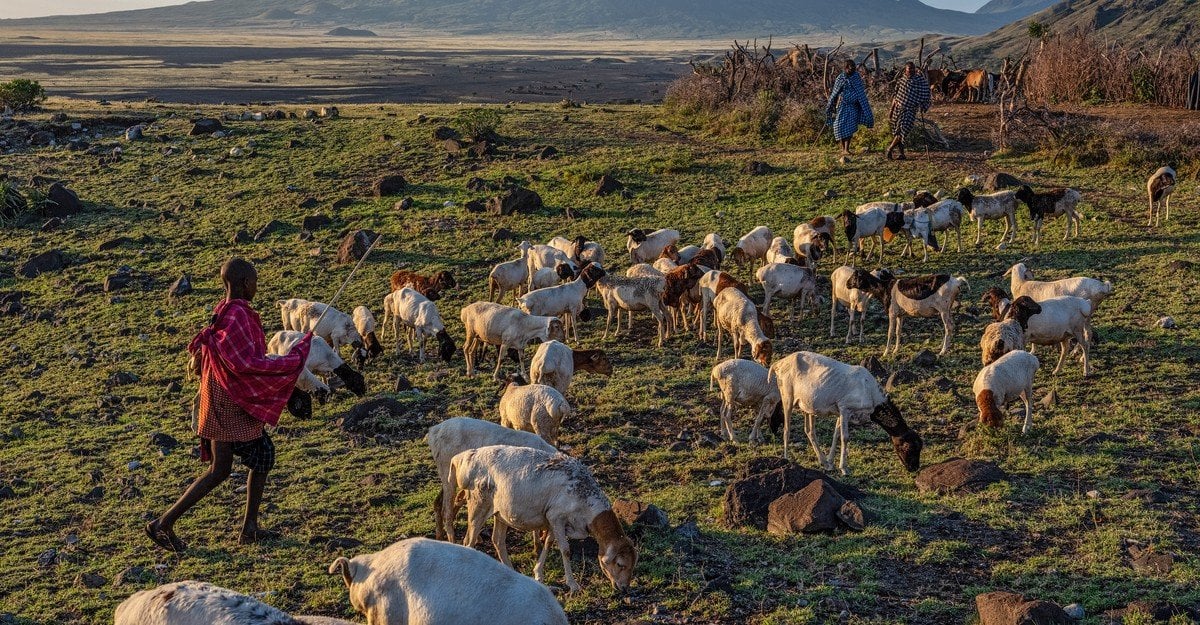
The Great Serengeti Land Grab | How Gulf princes, the safari industry, and conservation groups are displacing the Maasai from the last of their Serengeti homeland
Posted by Independent-Low-2398
The Great Serengeti Land Grab | How Gulf princes, the safari industry, and conservation groups are displacing the Maasai from the last of their Serengeti homeland
Posted by Independent-Low-2398
1 Comment
https://preview.redd.it/nypnsy6p30ld1.png?width=2608&format=png&auto=webp&s=24446187a13206b5c44a7f849c20dfb8249361c7
>It was high safari season in Tanzania, the long rains over, the grasses yellowing and dry. Land Cruisers were speeding toward the Serengeti Plain. Billionaires were flying into private hunting concessions. And at a crowded and dusty livestock market far away from all that, a man named Songoyo had decided not to hang himself, not today, and was instead pinching the skin of a sheep.
>“Please!” he was saying to a potential buyer with thousands of animals to choose from on this morning. “You can see, he is so fat!”
>The buyer moved on. Songoyo rubbed his eyes. He was tired. He’d spent the whole night walking, herding another man’s sheep across miles of grass and scrub and pitted roads to reach this market by opening time. He hadn’t slept. He hadn’t eaten. He’d somehow fended off an elephant with a stick. What he needed to do was sell the sheep so their owner would pay him, so he could try to start a new life now that the old one was finished.
>The old life: He’d had all the things that made a person such as him rich and respected. Three wives, 14 children, a large compound with 75 cows and enough land to graze them—“such sweet land,” he would say when he could bear to think of it—and that was how things had been going until recently.
>The new life: no cows, because the Tanzanian government had seized every single one of them. No compound, because the government had bulldozed it, along with hundreds of others. No land, because more and more of the finest, lushest land in northern Tanzania was being set aside for conservation, which turned out to mean for trophy hunters, and tourists on “bespoke expeditions,” and cappuccino trucks in proximity to buffalo viewing—anything and anyone except the people who had lived there since the 17th century, the pastoralists known as the Maasai.
#
>The forces arrayed against Songoyo, whom I met in the course of two long trips to Tanzania late last year, include some of the world’s most powerful people and interests. (I have not used Songoyo’s last name out of concern for his safety.) What these people and interests want is what the Maasai are trying to keep: the land they live on.
>Global leaders are seeking what they consider to be undeveloped land to meet a stated goal of conserving 30 percent of the planet’s surface by 2030. Corporations want undisturbed forests in order to offset pollution. Western conservation groups, which refer to the Maasai as “stakeholders” on their own land, exert great influence, as does a booming safari industry that sells an old and destructive myth—casting the Serengeti as some primordial wilderness, with the Maasai as cultural relics obstructing a perfect view.
>The reality is that the Maasai have been stewards, integral to creating that very ecosystem. The same can be said of Indigenous groups around the world, to whom conservation often feels like a land grab. In the past two decades, more than a quarter million Indigenous people have been evicted to make way for ecotourism, carbon-offset schemes, and other activities that fall under the banner of conservation. That figure is expected to soar.
!ping AFRICA&ECO