Have you not read any near future fiction? Its just going to change it into something much more aligned with GitS. We are going to need new AI anti AI routers and private safe networks will replace the normal. Something akin to TOR.
Res__Publica on
I’m fine with letting it die if we can keep wikipedia and Spotify
Proof-Roof6663 on
So the death of the web is just the death of traffic being the main factor for revenue? Then I’m all for killing the click bait web that it is now.
SleeplessInPlano on
Have they tried more AI?
geoguy78 on
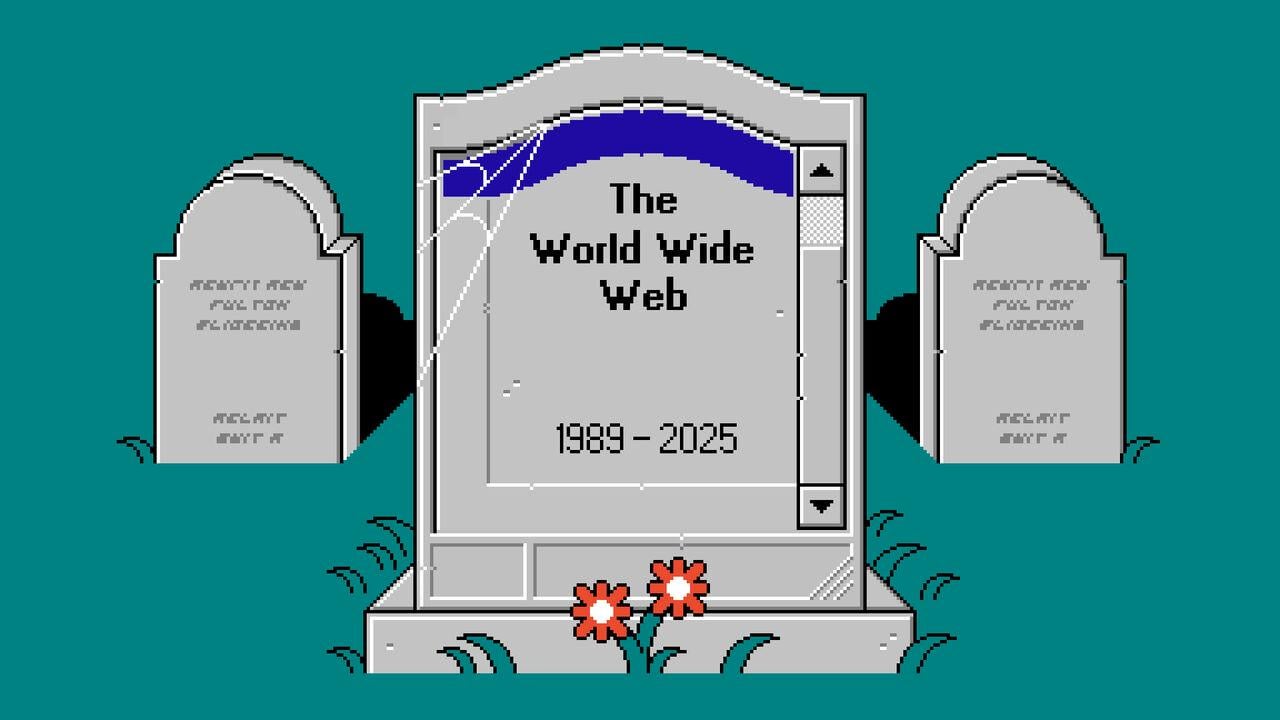
The World Wide Web has been dead since the early 2000s……
New_Combination2060 on
I mean, I read the article, but it sounds more like the death of the internet that began developing circa late-2014: one where the content creators were purely incentivized by making money and driving traffic to their content. I know that sounds kinda anti-capitalist, but I honestly just miss the days when people made stupid stuff on the internet *because they liked to make stupid stuff*. It just had a more fun vibe, I dunno. Now I can’t even watch a five minute YouTube video without a pop-up, a sponsorship in the video, getting shaken down for a Patreon subscription; the cherry on top is that the content isn’t that fun to watch or even useful. With the exception of places like Wikipedia or [archive.org](http://archive.org), I’m not going to miss the internet as I currently know it.
StreetCarp665 on
There’s a lot of literature which isn’t alarmist but is quietly sounding alarm bells, and I think – we failed to really get into a smart space of regulating social media. The harm has been widespread; diminished attention span; algorithmic radicalisation and a breakdown of the idea that consensus and compromise aren’t death; spikes in depression and other adverse health effects; child predation, and so on. A new school of thinking is showing that significant amounts of damage was done to the emotional well being of younger Millennials and GenZ through a concept know as digital soothing.
In short, mistakes were made and they’re partially defensible because we had no roadmap and didn’t know better. It was not malice, it was oversight and the guinea pig effect of embracing technology without knowing risks.
AI needs to be regulated for a variety of reasons. Misinformation. The ability of it to mirror and amplify the worst impulses in people (see also: chatbots encouraging racial hatred, violence, etc). The cognitive impairment factor – studies are suggesting that reliance – or maybe over-reliance – on AI has an effect on critical thinking skills for which the brain doesn’t really bounce back. It stays lazy.
Relative to this article; there is reference made to Meta and others subverting traditional copyright models by citing Fair Use provisions. We’ve just had an overtly AI band outed as AI. We have basically thriving neo-monopolies being able to act with relative impunity and the risk quite frankly is that the genie rarely wants to go back inside the bottle, once given a taste of freedom.

8 Comments
Yes but not the thing you’re thinking of
Have you not read any near future fiction? Its just going to change it into something much more aligned with GitS. We are going to need new AI anti AI routers and private safe networks will replace the normal. Something akin to TOR.
I’m fine with letting it die if we can keep wikipedia and Spotify
So the death of the web is just the death of traffic being the main factor for revenue? Then I’m all for killing the click bait web that it is now.
Have they tried more AI?
The World Wide Web has been dead since the early 2000s……
I mean, I read the article, but it sounds more like the death of the internet that began developing circa late-2014: one where the content creators were purely incentivized by making money and driving traffic to their content. I know that sounds kinda anti-capitalist, but I honestly just miss the days when people made stupid stuff on the internet *because they liked to make stupid stuff*. It just had a more fun vibe, I dunno. Now I can’t even watch a five minute YouTube video without a pop-up, a sponsorship in the video, getting shaken down for a Patreon subscription; the cherry on top is that the content isn’t that fun to watch or even useful. With the exception of places like Wikipedia or [archive.org](http://archive.org), I’m not going to miss the internet as I currently know it.
There’s a lot of literature which isn’t alarmist but is quietly sounding alarm bells, and I think – we failed to really get into a smart space of regulating social media. The harm has been widespread; diminished attention span; algorithmic radicalisation and a breakdown of the idea that consensus and compromise aren’t death; spikes in depression and other adverse health effects; child predation, and so on. A new school of thinking is showing that significant amounts of damage was done to the emotional well being of younger Millennials and GenZ through a concept know as digital soothing.
In short, mistakes were made and they’re partially defensible because we had no roadmap and didn’t know better. It was not malice, it was oversight and the guinea pig effect of embracing technology without knowing risks.
AI needs to be regulated for a variety of reasons. Misinformation. The ability of it to mirror and amplify the worst impulses in people (see also: chatbots encouraging racial hatred, violence, etc). The cognitive impairment factor – studies are suggesting that reliance – or maybe over-reliance – on AI has an effect on critical thinking skills for which the brain doesn’t really bounce back. It stays lazy.
Relative to this article; there is reference made to Meta and others subverting traditional copyright models by citing Fair Use provisions. We’ve just had an overtly AI band outed as AI. We have basically thriving neo-monopolies being able to act with relative impunity and the risk quite frankly is that the genie rarely wants to go back inside the bottle, once given a taste of freedom.