> Zafar thought he had done the hard bit. He had travelled from Afghanistan across mainland Europe to France, then survived a perilous Channel crossing on a small boat. But it was the final leg to Ireland that proved his undoing and ended with him in the back of a prison van. Irish police officers believe that after applying for refugee status in the UK he was on his way to do so again in Dublin, a move that could enable him to claim a further set of more generous benefits.
> Yet thanks to a police operation at the Irish border, Zafar did not reach the International Protection Office (IPO) in Dublin to lodge his application. He was returned to the UK that same day under a deal agreed by both governments in 2019 aimed at protecting the integrity of the Common Travel Area that ensures free movement between the jurisdictions post-Brexit. A total of 443 migrants have been immediately returned to Britain from Ireland since the start of 2024 as a result of the agreement.
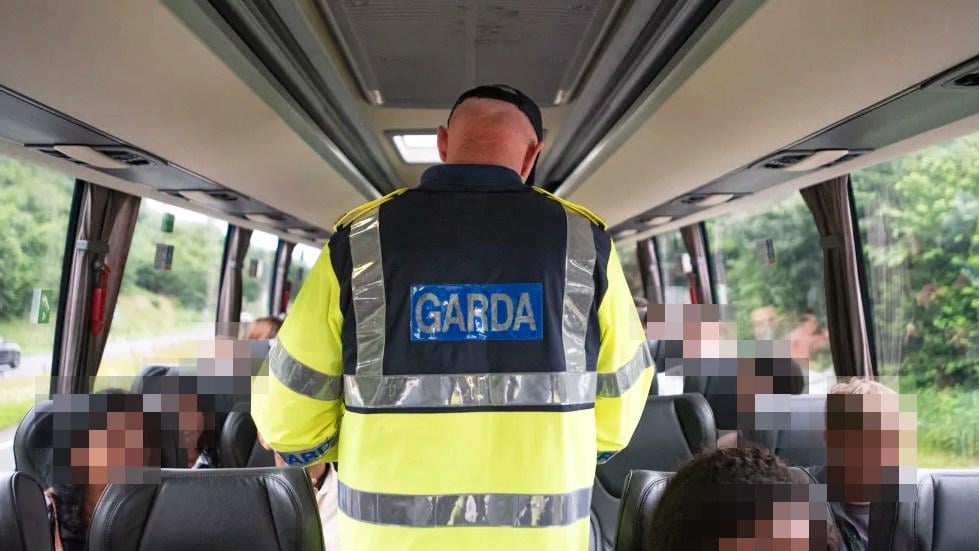
> His initial application for asylum in the UK was accepted on June 16. On July 9 he took a flight from Manchester to Belfast and, despite being advised by UK immigration officials not to leave the jurisdiction until his case was processed, boarded a bus to Dublin. His long journey came to an abrupt end minutes after crossing the Irish border when his bus was flagged down and boarded by Garda National Immigration Bureau (GNIB) officers.
> As they moved down the aisle, they asked passengers — tourists, day-trippers, workers — for ID while engaging in friendly chit-chat aimed at rooting out undocumented migrants. After sparking suspicion, Zafar was told to collect his backpack and step off. As the bus went on its way, he struggled to speak English by the side of the M1 motorway between Belfast and Dublin before producing a UK asylum application registration card. At 2.25pm a call was placed to an official at the Home Office in London who said Zafar had been living at a hotel in Leeds. Gardai, leading him to one of 16 tiny cells in the prison van, confirmed he would be back in Britain before the day was out.
> One of the nine officers involved in what was the GNIB’s 71st “day of action” under Operation Sonnet, which targets illegal immigrants attempting to cross the Irish border, said: “He was most likely going to claim asylum at the International Protection Office in Dublin,” adding that he was confident that Zafar, an Afghan, was aiming to criss-cross back and forth across the border, from the UK to Ireland, to collect benefits. “We see that all the time,” the officer said. “But he’s going to be driven to Dublin Port this evening along with the others and put on the ferry.”Zafar was one of seven men detained — “refused leave to land” — by gardai during inspections of about 12 buses that day. An eighth, a Sudanese citizen, was also held before a Home Office inquiry revealed that he was wanted by police over an alleged sex offence in Northern Ireland and he was driven to the border for handover to the Police Service of Northern Ireland (PSNI).
> Among the people removed from Dublin-bound coaches during the operation was a distressed Indian woman who had a student visa for the UK but had taken a one-way flight to Belfast. Before being allowed to continue, she was asked to prove she had plans to leave Ireland so she bought a plane ticket on her phone while in the back of a garda vehicle. One officer said: “She doesn’t fit the profile of the people we are looking for, but she needs to be able to show she has a ticket home before she can stay.”Of greater interest was Hassan who, after being taken off a bus, was found to have three mobile phones. Questioned, he broke down while refusing to provide passcodes for his phones. Inquiries revealed he had successfully applied for refugee status in Britain as a Pakistani, despite having told gardai that he was from Afghanistan.
> One officer said: “He had nothing to prove that he was an Afghan asylum seeker here. He wouldn’t open his phone to prove who he was and kept putting in the wrong number. “We said to him, ‘Look, you’re going back to the UK anyway, we just need to send you back with your correct identity.’ He did open a phone and he had photographs of his Pakistani passport.”Hassan was working in the UK while visiting Ireland weekly to collect welfare money. An officer said: “We’ve passed that information on to the Department of Social Protection and he’ll be cut off. Yesterday they cut off 15 people because of this checkpoint.”
> At 4pm the prison van, with its seven detainees, pulled away from the layby bound for Dublin Port. People with Mexican, Brazilian, Somali, Nigerian, Vietnamese, Malaysian, Algerian, Antiguan, Nepalese and Afghani nationality were among 50 detained during a three-day clampdown. Gardai estimate 200 or more migrants are likely to have successfully crossed into the Republic of Ireland in the same week. In June, 1,002 asylum applications were filed at the IPO in Dublin, bringing the year’s total so far to 6,042. Irish government officials estimate about 90 per cent would have travelled via Northern Ireland after arriving from Britain.
> About 300 roads cross the 310-mile border, but the M1 remains the only route to have an occasional GNIB mobile checkpoint. “We’re just working at the tip of the iceberg,” the officer said. Despite the relatively small numbers of detainees, these operations — also focusing on Belfast trains into Dublin’s Connolly station — are considered significant. They help the UK and Ireland build intelligence on people-smuggling gangs, drug criminality, and benefit fraud scams. In May and June last year, 2,010 and 1,404 people respectively applied for international protection in Ireland, compared with 941 and 1,002 in the corresponding months this year, suggesting that the garda operations are a deterrent.

1 Comment
> Zafar thought he had done the hard bit. He had travelled from Afghanistan across mainland Europe to France, then survived a perilous Channel crossing on a small boat. But it was the final leg to Ireland that proved his undoing and ended with him in the back of a prison van. Irish police officers believe that after applying for refugee status in the UK he was on his way to do so again in Dublin, a move that could enable him to claim a further set of more generous benefits.
> Yet thanks to a police operation at the Irish border, Zafar did not reach the International Protection Office (IPO) in Dublin to lodge his application. He was returned to the UK that same day under a deal agreed by both governments in 2019 aimed at protecting the integrity of the Common Travel Area that ensures free movement between the jurisdictions post-Brexit. A total of 443 migrants have been immediately returned to Britain from Ireland since the start of 2024 as a result of the agreement.
> His initial application for asylum in the UK was accepted on June 16. On July 9 he took a flight from Manchester to Belfast and, despite being advised by UK immigration officials not to leave the jurisdiction until his case was processed, boarded a bus to Dublin. His long journey came to an abrupt end minutes after crossing the Irish border when his bus was flagged down and boarded by Garda National Immigration Bureau (GNIB) officers.
> As they moved down the aisle, they asked passengers — tourists, day-trippers, workers — for ID while engaging in friendly chit-chat aimed at rooting out undocumented migrants. After sparking suspicion, Zafar was told to collect his backpack and step off. As the bus went on its way, he struggled to speak English by the side of the M1 motorway between Belfast and Dublin before producing a UK asylum application registration card. At 2.25pm a call was placed to an official at the Home Office in London who said Zafar had been living at a hotel in Leeds. Gardai, leading him to one of 16 tiny cells in the prison van, confirmed he would be back in Britain before the day was out.
> One of the nine officers involved in what was the GNIB’s 71st “day of action” under Operation Sonnet, which targets illegal immigrants attempting to cross the Irish border, said: “He was most likely going to claim asylum at the International Protection Office in Dublin,” adding that he was confident that Zafar, an Afghan, was aiming to criss-cross back and forth across the border, from the UK to Ireland, to collect benefits. “We see that all the time,” the officer said. “But he’s going to be driven to Dublin Port this evening along with the others and put on the ferry.”Zafar was one of seven men detained — “refused leave to land” — by gardai during inspections of about 12 buses that day. An eighth, a Sudanese citizen, was also held before a Home Office inquiry revealed that he was wanted by police over an alleged sex offence in Northern Ireland and he was driven to the border for handover to the Police Service of Northern Ireland (PSNI).
> Among the people removed from Dublin-bound coaches during the operation was a distressed Indian woman who had a student visa for the UK but had taken a one-way flight to Belfast. Before being allowed to continue, she was asked to prove she had plans to leave Ireland so she bought a plane ticket on her phone while in the back of a garda vehicle. One officer said: “She doesn’t fit the profile of the people we are looking for, but she needs to be able to show she has a ticket home before she can stay.”Of greater interest was Hassan who, after being taken off a bus, was found to have three mobile phones. Questioned, he broke down while refusing to provide passcodes for his phones. Inquiries revealed he had successfully applied for refugee status in Britain as a Pakistani, despite having told gardai that he was from Afghanistan.
> One officer said: “He had nothing to prove that he was an Afghan asylum seeker here. He wouldn’t open his phone to prove who he was and kept putting in the wrong number. “We said to him, ‘Look, you’re going back to the UK anyway, we just need to send you back with your correct identity.’ He did open a phone and he had photographs of his Pakistani passport.”Hassan was working in the UK while visiting Ireland weekly to collect welfare money. An officer said: “We’ve passed that information on to the Department of Social Protection and he’ll be cut off. Yesterday they cut off 15 people because of this checkpoint.”
> At 4pm the prison van, with its seven detainees, pulled away from the layby bound for Dublin Port. People with Mexican, Brazilian, Somali, Nigerian, Vietnamese, Malaysian, Algerian, Antiguan, Nepalese and Afghani nationality were among 50 detained during a three-day clampdown. Gardai estimate 200 or more migrants are likely to have successfully crossed into the Republic of Ireland in the same week. In June, 1,002 asylum applications were filed at the IPO in Dublin, bringing the year’s total so far to 6,042. Irish government officials estimate about 90 per cent would have travelled via Northern Ireland after arriving from Britain.
> About 300 roads cross the 310-mile border, but the M1 remains the only route to have an occasional GNIB mobile checkpoint. “We’re just working at the tip of the iceberg,” the officer said. Despite the relatively small numbers of detainees, these operations — also focusing on Belfast trains into Dublin’s Connolly station — are considered significant. They help the UK and Ireland build intelligence on people-smuggling gangs, drug criminality, and benefit fraud scams. In May and June last year, 2,010 and 1,404 people respectively applied for international protection in Ireland, compared with 941 and 1,002 in the corresponding months this year, suggesting that the garda operations are a deterrent.