* Home prices have fallen by 20% in the GTA over the past three years, which has helped the region make some progress towards affordability.
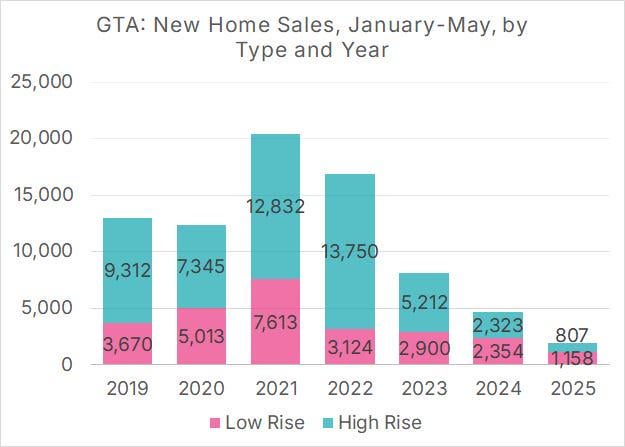
* However, the sale of newly constructed and pre-construction homes has decreased by over 90% in the GTA in the last three years, encompassing all forms of housing, from high-rise condos to single-family homes.
* A Bank of Canada study suggests that a 20% price drop from a demand shock should have led to home sales falling by 20-40%, not 90%.
* The oversized reduction can be attributed to an inherent “price floor” for new housing. Once a certain threshold is reached, prices are insufficient to cover the cost of building, and activity stops.
* This poses a significant challenge for governments, which aim to achieve both housing affordability *and* robust growth in housing supply. However, all else being equal, lower prices reduce the viability of building.
* The only way to achieve both housing affordability and robust supply growth is through a program of substantial cost reductions.
* The most direct lever that governments have to reduce costs is through tax reductions. This can include exempting newly constructed homes from land transfer taxes, reforming development charges, and enhancing the [HST New Housing Rebate](https://www.missingmiddleinitiative.ca/p/is-ontario-ready-to-spend-895m-to), which can reduce costs by over 10%.
* While tax reforms have a fiscal cost, governments are facing a [$6.6 billion](https://www.missingmiddleinitiative.ca/p/torontos-housing-collapse-will-cost) reduction in annual tax revenue from the GTA’s housing decline. Both action and inaction have a fiscal cost.
!ping Can&YIMBY
WinonasChainsaw on
No mention of the costs imposed by zoning and regulations but suggests tax credits/relief will spur development..
* Loosen up zoning laws to allow for more high density buildings.
* Create first time home buyer grants. This helps people who don’t have a home afford the down payment and get into ownership if they want without hurting home prices for current home owners. It also will stimulate demand for homes and therefore production of homes.
* Create incentives for home builders to build smaller homes. Part of our affordability issue is that we’re building homes that have much more sqft per capita than we used to. This is because new home builds are generally focused on people with the most money. However, this way of building things means fewer homes and higher prices.

3 Comments
* Home prices have fallen by 20% in the GTA over the past three years, which has helped the region make some progress towards affordability.
* However, the sale of newly constructed and pre-construction homes has decreased by over 90% in the GTA in the last three years, encompassing all forms of housing, from high-rise condos to single-family homes.
* A Bank of Canada study suggests that a 20% price drop from a demand shock should have led to home sales falling by 20-40%, not 90%.
* The oversized reduction can be attributed to an inherent “price floor” for new housing. Once a certain threshold is reached, prices are insufficient to cover the cost of building, and activity stops.
* This poses a significant challenge for governments, which aim to achieve both housing affordability *and* robust growth in housing supply. However, all else being equal, lower prices reduce the viability of building.
* The only way to achieve both housing affordability and robust supply growth is through a program of substantial cost reductions.
* The most direct lever that governments have to reduce costs is through tax reductions. This can include exempting newly constructed homes from land transfer taxes, reforming development charges, and enhancing the [HST New Housing Rebate](https://www.missingmiddleinitiative.ca/p/is-ontario-ready-to-spend-895m-to), which can reduce costs by over 10%.
* While tax reforms have a fiscal cost, governments are facing a [$6.6 billion](https://www.missingmiddleinitiative.ca/p/torontos-housing-collapse-will-cost) reduction in annual tax revenue from the GTA’s housing decline. Both action and inaction have a fiscal cost.
!ping Can&YIMBY
No mention of the costs imposed by zoning and regulations but suggests tax credits/relief will spur development..
https://preview.redd.it/sm1ircdttgef1.jpeg?width=640&format=pjpg&auto=webp&s=deba51d143f70d180cc841327bc48ac2d15b9ac3
Here’s my plan for home affordability:
* Loosen up zoning laws to allow for more high density buildings.
* Create first time home buyer grants. This helps people who don’t have a home afford the down payment and get into ownership if they want without hurting home prices for current home owners. It also will stimulate demand for homes and therefore production of homes.
* Create incentives for home builders to build smaller homes. Part of our affordability issue is that we’re building homes that have much more sqft per capita than we used to. This is because new home builds are generally focused on people with the most money. However, this way of building things means fewer homes and higher prices.