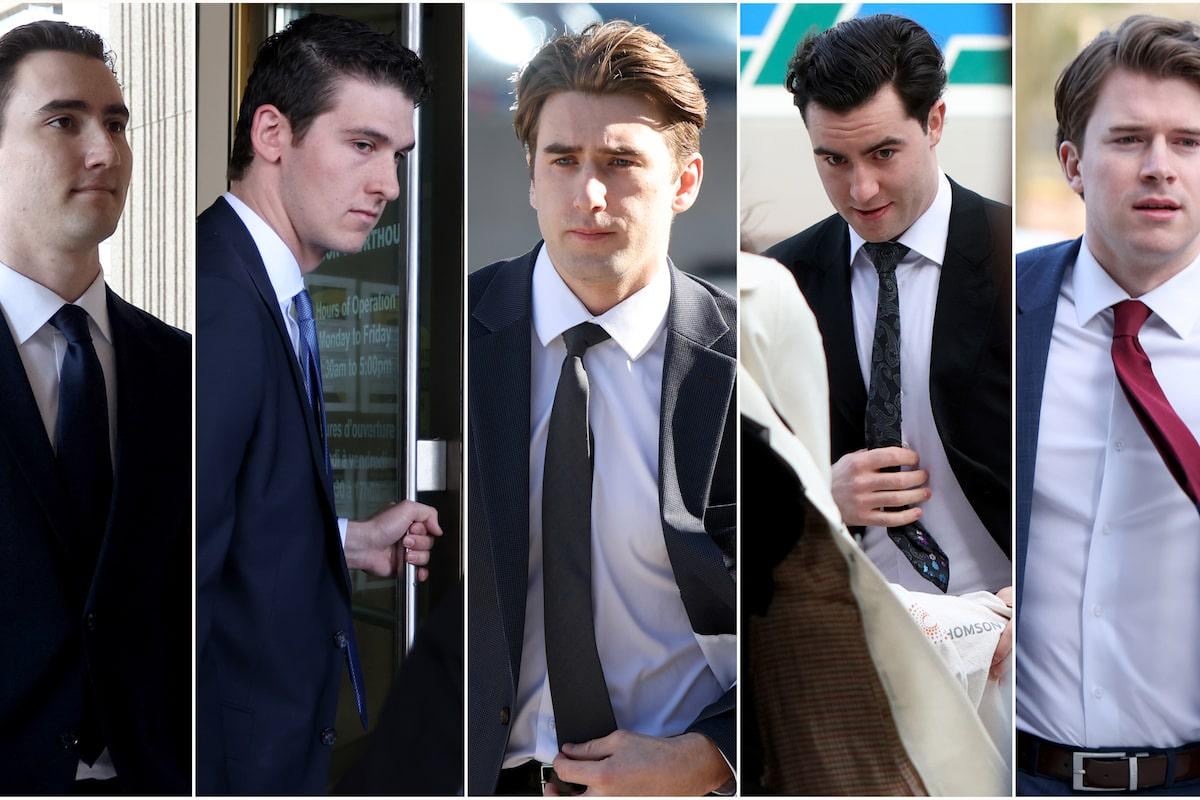
>A verdict this week in the prosecution of five hockey players on sexual-assault charges could break new ground on the question of what constitutes voluntary consent, in cases of an apparent power imbalance – in this instance, multiple men in a hotel room with an intoxicated woman most of them had never met.
>The trial, which heard closing submissions last month, has given a rare national profile to how the criminal-justice system addresses sexual assault. The trial’s many unusual elements, including seven days of cross-examination of the complainant, and allegations against five young men from Canada’s 2018 gold medal-winning world junior team, have combined to give this case a broad importance in social and legal terms.
>Front and centre is the issue of consent.
>It has long been established in Canadian law that consent is not just the absence of a “no.” Consent requires an affirmation – a yes, in words or conduct. But what about when there is a yes, in circumstances in which an individual might not see a way out?
>At the heart of the decision facing Ontario Superior Court Justice Maria Carroccia is whether E.M., the complainant in the case whose name is protected by a publication ban, communicated to the five men at the time of sexual activity with each of them that she was voluntarily consenting. In part, that rests on the judge’s assessment of the facts, such as whether E.M. was requesting sex at various times, as the court heard during the trial in London, Ont.
>But then the judge must decide whether E.M. was just “going along to get along,” said Toronto lawyer David Butt, who was not involved in the case. And if so, did she induce an honest belief in the men, even if a mistaken one, that she was consenting?
>That defence – known as honest but mistaken belief – has been diminishing over the past several years, as a result of legislative changes and court precedents, said Janine Benedet, who teaches at the University of British Columbia’s Peter A. Allard School of Law.
>[…]
>A similar issue may arise with what have become known as consent videos, taken of the complainant in the hotel room after the sexual activity, in which she said it was consensual.
>“If the circumstances around the alleged sexual assault were intimidating, the consent video might also be made in intimidating circumstances, which would undermine its value,” Lisa Dufraimont, who teaches at York University’s Osgoode Hall Law School, said.
>[…]
>It was only in 1982 that the Criminal Code was updated to say no consent exists where an individual submits or does not resist because of force or threats. Even so, judges often continued telling juries to look for “emphatic verbal or physical resistance” as evidence of non-consent, Prof. Benedet wrote in the Alberta Law Review in 2014.
>So in 1992, the federal government defined consent in legislation for the first time – “the voluntary agreement of the complainant to engage in the sexual activity in question.” It was now clear that a yes in some form was necessary.
Stingray_17 on
It could only in the sense that the prosecution is relying on a legal Hail Mary.

3 Comments
Is the new ground “it applies to rich teenagers who are good at hockey”?
Archived version: https://archive.fo/nCn3m.
>A verdict this week in the prosecution of five hockey players on sexual-assault charges could break new ground on the question of what constitutes voluntary consent, in cases of an apparent power imbalance – in this instance, multiple men in a hotel room with an intoxicated woman most of them had never met.
>The trial, which heard closing submissions last month, has given a rare national profile to how the criminal-justice system addresses sexual assault. The trial’s many unusual elements, including seven days of cross-examination of the complainant, and allegations against five young men from Canada’s 2018 gold medal-winning world junior team, have combined to give this case a broad importance in social and legal terms.
>Front and centre is the issue of consent.
>It has long been established in Canadian law that consent is not just the absence of a “no.” Consent requires an affirmation – a yes, in words or conduct. But what about when there is a yes, in circumstances in which an individual might not see a way out?
>At the heart of the decision facing Ontario Superior Court Justice Maria Carroccia is whether E.M., the complainant in the case whose name is protected by a publication ban, communicated to the five men at the time of sexual activity with each of them that she was voluntarily consenting. In part, that rests on the judge’s assessment of the facts, such as whether E.M. was requesting sex at various times, as the court heard during the trial in London, Ont.
>But then the judge must decide whether E.M. was just “going along to get along,” said Toronto lawyer David Butt, who was not involved in the case. And if so, did she induce an honest belief in the men, even if a mistaken one, that she was consenting?
>That defence – known as honest but mistaken belief – has been diminishing over the past several years, as a result of legislative changes and court precedents, said Janine Benedet, who teaches at the University of British Columbia’s Peter A. Allard School of Law.
>[…]
>A similar issue may arise with what have become known as consent videos, taken of the complainant in the hotel room after the sexual activity, in which she said it was consensual.
>“If the circumstances around the alleged sexual assault were intimidating, the consent video might also be made in intimidating circumstances, which would undermine its value,” Lisa Dufraimont, who teaches at York University’s Osgoode Hall Law School, said.
>[…]
>It was only in 1982 that the Criminal Code was updated to say no consent exists where an individual submits or does not resist because of force or threats. Even so, judges often continued telling juries to look for “emphatic verbal or physical resistance” as evidence of non-consent, Prof. Benedet wrote in the Alberta Law Review in 2014.
>So in 1992, the federal government defined consent in legislation for the first time – “the voluntary agreement of the complainant to engage in the sexual activity in question.” It was now clear that a yes in some form was necessary.
It could only in the sense that the prosecution is relying on a legal Hail Mary.