
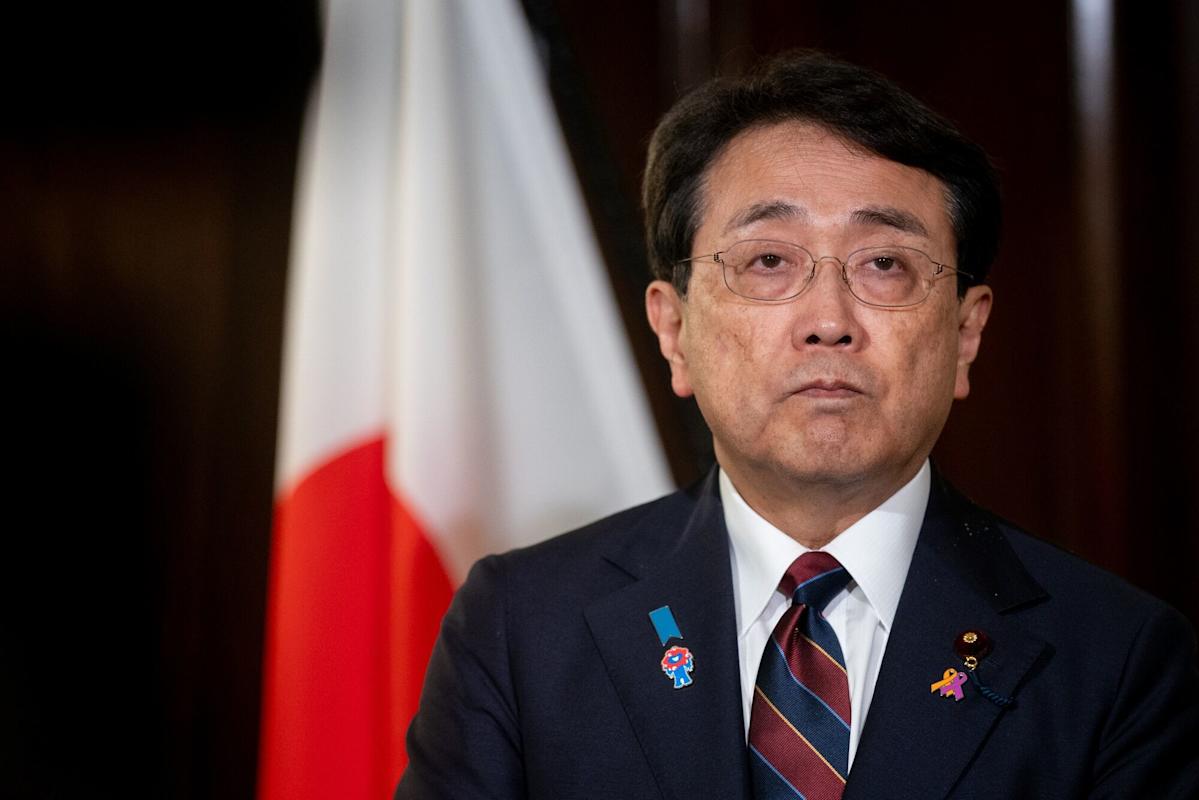
Japan expects only 1% to 2% of its recently agreed upon $550 billion US fund to be deployed as investment, with loans making up the bulk of the rest, according to the nation’s top chief negotiator Ryosei Akazawa.
Meanwhile, Tokyo stands to save roughly ¥10 trillion ($68 billion) through lower tariff rates in its deal with the US, Akazawa told public broadcaster NHK on Saturday.
The $550 billion investment framework combines investments, loans and loan guarantees provided by financial institutions backed by the Japanese government, Akazawa said. Of the total, investment will comprise 1% or 2% and the US and Japan will split the profits of that investment at a ratio of 90-10, he said. Japan had originally proposed a 50-50 ratio, he added.
For the loans provided through the program, Japan will collect interest payments; and for loan guarantees, if nothing happens Japan will collect fees, Akazawa said. “For that part, Japan’s just making money,” he said.
Akazawa also clarified that the investment program won’t be only supporting Japanese and US firms. As a potential example, he cited a Taiwanese semiconductor firm building a factory in the US.
The Japan side has cited JBIC and NEXI as the government-backed organizations that will be leading financing for the projects. For JBIC, in the year ended March, around 77% of its assets were in loans, and 6.6% in loan guarantees.
Further details of the implementation of the US-Japan deal remain unclear, including when the new tariff rates will take effect and when the new investment vehicle will kick off. There’s been no joint document signed by both sides for the deal, although the White House has published a fact sheet.
Posted by John3262005
2 Comments
Tokyo is saving money on tariffs with this deal?
Donald Trump has the mandate of heaven and we just need to accept that I guess.