> In the spring of 2019, a polite middle-aged Iranian walked into a lawyer’s office in the Swiss town of Zug. Speaking with a subtle lisp, in excellent English, he introduced himself as Saeed Alikhani.
> Alikhani told the lawyer he was an accountant working with a Panama-registered commodity broker, Ocean Glory Giant, that was seeking to establish offshore companies for an unusual trading arrangement.
> The company wanted to set up naval mortgages — in this case a fixed charge secured on a ship, rather than a conventional loan to purchase one — against certain oil tankers to serve as guarantees for trades with Chinese buyers. If Ocean Glory did not receive payment for the oil it delivered, it could call in the mortgage and claim ownership of the vessel from the counterparty.
> When asked about the origin of the oil, Alikhani produced two bills of lading, the lawyer recalls. One described a cargo of Malaysian crude and the other listed crude from Basra, in Iraq.
> Over the next six months the lawyer agreed mortgages against at least nine oil tankers before passing on the work to two Swiss friends. They continued to arrange naval mortgages for Alikhani until at least 2023.
> In total, the three Swiss signed mortgages against more than 30 tankers worth almost $1bn, according to documents lodged with the Panama Maritime Authority, where the vessels were registered at the time.
> But their cargoes were not as innocuous as Alikhani had claimed. Analysis of ship tracking data by the FT and C4ADS, a non-profit research group that studies illicit networks, suggests the vessels were used almost exclusively to transport billions of dollars’ worth of oil from Iran, Venezuela and later Russia.
> It was also not clear who exactly was buying the oil. Each tanker was registered to a different holding company administered by a different Chinese director with little or no public profile. When the FT visited some of the directors’ listed addresses in China it mostly found men and women with little apparent knowledge of the multimillion-dollar vessels they purportedly owned.
> However, phone numbers and other details on the mortgage documents show that some of the holding companies shared links to Chinese individuals and entities placed under sanctions by the US during President Donald Trump’s first term in office.
> Together, the networks identified by the FT shed new light on the systems developed to send Iranian oil to China — and how they have been adapted to ship oil from Russia and Venezuela. The revelations come just as Trump is once again seeking to choke Tehran’s exports and weighing new measures against Moscow.
> “This oil network and its suppliers show in intimate detail how tools and tactics used to resist western sanctions have proliferated among sanctioned states,” says Andrew Boling, an investigator at C4ADS.
> By diversifying into Russian and Venezuelan shipments, Ocean Glory appears to have acted, he adds, as a “sort of ‘super-broker’ for sanctioned crude”.
> The trade in Iranian oil, the Islamic republic’s most important source of foreign currency, has faced various restrictions since 1979, when the US first imposed sanctions following the Tehran hostage crisis.
> The net tightened further in 2012, when the EU imposed its own embargo in response to Iran’s nuclear enrichment programme. In 2018, Trump pulled out of a deal signed with the US and others that had briefly eased sanctions in return for Iran limiting its nuclear ambitions, and a year later he ended temporary exemptions that had allowed eight countries, including China, to continue buying Iranian oil without fear of US penalties.
> “Any nation or entity interacting with Iran should do its diligence and err on the side of caution,” warned Trump’s then secretary of state Mike Pompeo in May 2019. “The risks are simply not going to be worth the benefits.”
> That same month, Alikhani asked the Swiss lawyer for help, providing a home address on the edge of Lausanne. The lawyer, who asked not to be identified so that he could discuss the events freely, says his limited background checks, including searching Alikhani’s name against online sanctions lists, did not turn up any reasons to refuse him as a client.
> Alikhani was charming and plausible, and the pair met again at Club zum Rennweg, a smart restaurant and members’ club in Zurich. When the lawyer asked for more information on Ocean Glory, Alikhani told him that the broker was owned by an Iranian commodity trader named Amanollah Khalafi and shared a copy of the man’s passport. It stated that Khalafi was born in Tehran in February 1983.
> Khalafi’s name, however, did not appear on Ocean Glory’s incorporation document. That listed three directors, who all provided the same registered address in northern India and are also listed as directors of two other Panamanian companies, Sea Glory Circle and Red Sea Ring. They and Ocean Glory were all incorporated on the same day in October 2017. Neither Khalafi nor the three directors could be reached for comment.
> Other than these two meetings, the pair mainly communicated on the popular Chinese messaging service WeChat, which Alikhani had asked the lawyer to download. “He said, ‘listen, we deal with the Chinese, the Chinese love WeChat, so we do WeChat’,” the lawyer says.
> To administer the mortgages the lawyer acquired a newly established British Virgin Islands company, registering as its director in May 2019, records show.
> One of the first mortgages he processed was for $24mn against a vessel named Affluence, an enormous 330-metre-long tanker that was later renamed Ceres I and was registered to Hong Kong-based Chart Ocean Limited. Chart Ocean’s registered company secretary did not respond to a request for comment.
> Given the large amounts of money involved in oil trades — Ceres I can carry over $120mn worth of oil — traders usually require buyers to provide a letter of credit guaranteeing the trader will get paid once the cargo has been delivered.
> But since US sanctions meant banks were reluctant to deal with Iranian counterparties, Alikhani told the lawyer that the mortgages would serve as collateral instead. No money would pass from the Chinese buyer to the BVI company, but if Ocean Glory did not get paid for the oil it could call in the mortgage and take ownership of the vessel.
> “The procedure was always identical,” the lawyer says. “I received a draft mortgage agreement, I checked whether the counterparty or the vessel was on any sanctions list, and . . . I signed the document.”
> The mortgages remained in place for as long as Ocean Glory continued to trade with the counterparty, the lawyer says. Records reviewed by the FT and C4ADS show that in some cases the mortgages were cancelled after as little as several weeks, likely reflecting the execution of a single trade. But in others they remained in place for several years and in some examples, like Ceres I, the FT did not identify records of the mortgage ever being cancelled.
> The lawyer ceased the work in October 2019, after his firm stopped its employees from serving as directors at companies in offshore jurisdictions such as the BVI. But he introduced Alikhani to two other Swiss nationals, who continued to use BVI companies to arrange mortgages. One of them retired in 2023 and the other ceased the work in 2024 after becoming suspicious about the true nature of the underlying trades, the lawyer says.
> Claire Jungman, an expert in Iranian oil smuggling and director of maritime risk at Vortexa, says this is the first time she had heard of naval mortgages being used in this way.
> “It shows the increasing boldness of these networks, operating in the grey zones between maritime law, finance and geopolitics,” she adds. “Since 2019, Iran’s oil trading networks have become increasingly sophisticated and decentralised, reliant on front companies, informal intermediaries and registries willing to look the other way.”
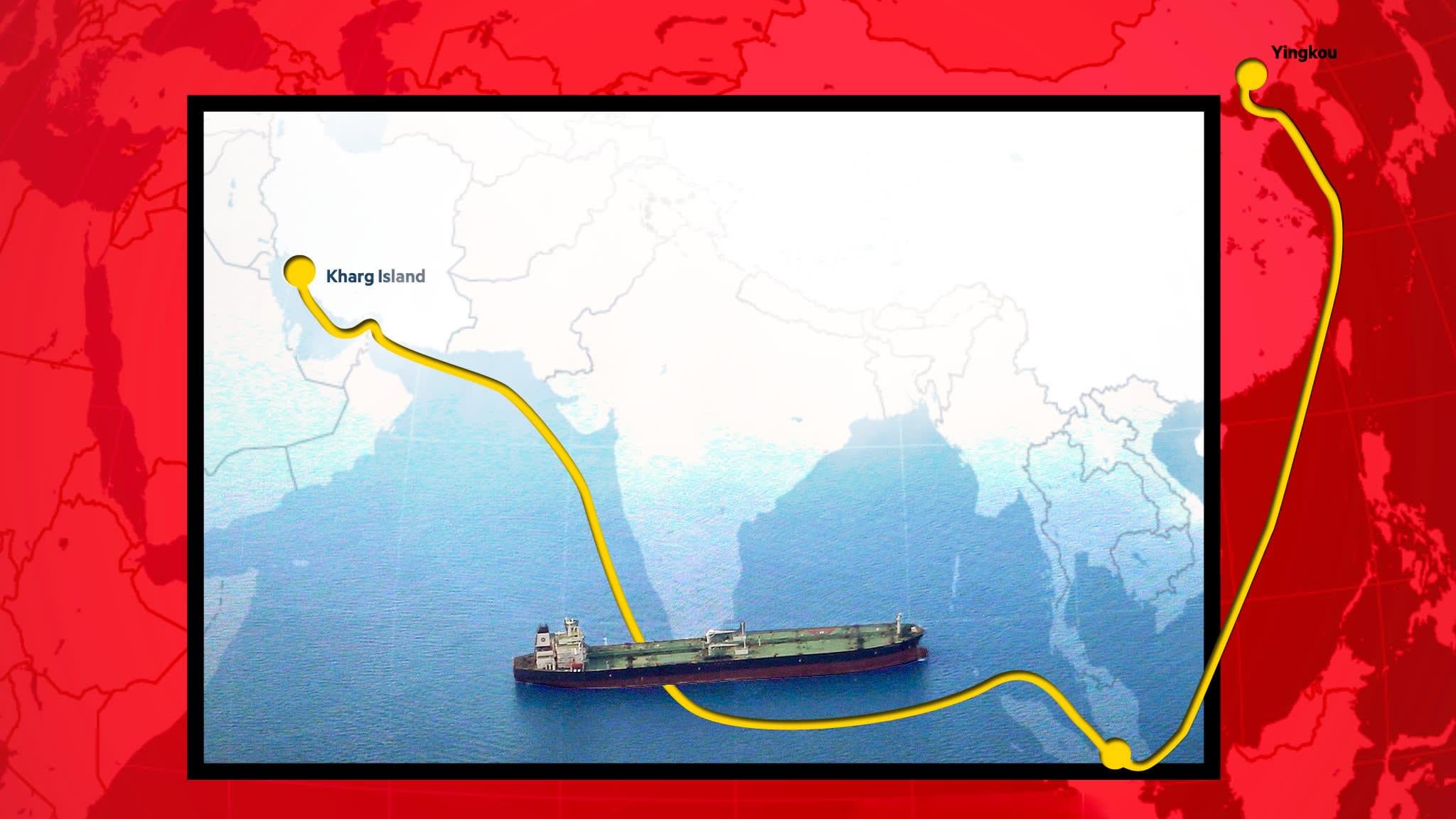
> Ship tracking data analysed by the FT and C4ADS shows that after the vessels were mortgaged they immediately began transporting oil from Iran and, in some cases, Venezuela. For example, in November 2019 Ceres I pulled alongside a tanker in the Malacca Strait and loaded, in a ship-to-ship transfer, almost 2mn barrels of crude previously collected from Iran’s Kharg Island before delivering it to China, the tracking data shows.
> Of the 34 naval mortgages agreed between 2019 and 2023, at least 19 were signed in September or November 2022, just as so-called dark fleet vessels were starting to move Russian oil in response to western sanctions on Moscow.
> One tanker, Skadi, was mortgaged for $20mn in November 2022 in an agreement that remained in place until December 2024. Ship tracking data shows that in February 2023 it collected a cargo of Urals crude from the Russian port of Primorsk and then unloaded part of it on to another mortgaged vessel, An Shun II, in a ship-to-ship transfer off the coast of Spain. An Shun II then delivered the oil to China.
> In the two years that it was mortgaged, the Skadi was involved in similar shipments at least five times and in Iranian shipments at least three times, the tracking data shows. The registered owners of Skadi and An Shun II did not respond to requests for comment.
> While the mortgages were in place, the various ships moved at least 130mn barrels of oil worth an estimated $9.6bn, according to analysis by C4ADS. Roughly half of that originated in Iran, about a quarter came from Russia and just under a fifth was from Venezuela. Almost all of it — 93 per cent — ended up in China.
jesterboyd on
I was hoping that the removal of Habeas Corpus would spell the new dawn for privateering and give individual states the right to issue Letters of Marque to hunt down this shadow fleet with Sea Babies and fiber optic FPV drones.

2 Comments
!ping FOREIGN-POLICY&COMMODITIES&CONTAINERS
> In the spring of 2019, a polite middle-aged Iranian walked into a lawyer’s office in the Swiss town of Zug. Speaking with a subtle lisp, in excellent English, he introduced himself as Saeed Alikhani.
> Alikhani told the lawyer he was an accountant working with a Panama-registered commodity broker, Ocean Glory Giant, that was seeking to establish offshore companies for an unusual trading arrangement.
> The company wanted to set up naval mortgages — in this case a fixed charge secured on a ship, rather than a conventional loan to purchase one — against certain oil tankers to serve as guarantees for trades with Chinese buyers. If Ocean Glory did not receive payment for the oil it delivered, it could call in the mortgage and claim ownership of the vessel from the counterparty.
> When asked about the origin of the oil, Alikhani produced two bills of lading, the lawyer recalls. One described a cargo of Malaysian crude and the other listed crude from Basra, in Iraq.
> Over the next six months the lawyer agreed mortgages against at least nine oil tankers before passing on the work to two Swiss friends. They continued to arrange naval mortgages for Alikhani until at least 2023.
> In total, the three Swiss signed mortgages against more than 30 tankers worth almost $1bn, according to documents lodged with the Panama Maritime Authority, where the vessels were registered at the time.
> But their cargoes were not as innocuous as Alikhani had claimed. Analysis of ship tracking data by the FT and C4ADS, a non-profit research group that studies illicit networks, suggests the vessels were used almost exclusively to transport billions of dollars’ worth of oil from Iran, Venezuela and later Russia.
> It was also not clear who exactly was buying the oil. Each tanker was registered to a different holding company administered by a different Chinese director with little or no public profile. When the FT visited some of the directors’ listed addresses in China it mostly found men and women with little apparent knowledge of the multimillion-dollar vessels they purportedly owned.
> However, phone numbers and other details on the mortgage documents show that some of the holding companies shared links to Chinese individuals and entities placed under sanctions by the US during President Donald Trump’s first term in office.
> Together, the networks identified by the FT shed new light on the systems developed to send Iranian oil to China — and how they have been adapted to ship oil from Russia and Venezuela. The revelations come just as Trump is once again seeking to choke Tehran’s exports and weighing new measures against Moscow.
> “This oil network and its suppliers show in intimate detail how tools and tactics used to resist western sanctions have proliferated among sanctioned states,” says Andrew Boling, an investigator at C4ADS.
> By diversifying into Russian and Venezuelan shipments, Ocean Glory appears to have acted, he adds, as a “sort of ‘super-broker’ for sanctioned crude”.
> The trade in Iranian oil, the Islamic republic’s most important source of foreign currency, has faced various restrictions since 1979, when the US first imposed sanctions following the Tehran hostage crisis.
> The net tightened further in 2012, when the EU imposed its own embargo in response to Iran’s nuclear enrichment programme. In 2018, Trump pulled out of a deal signed with the US and others that had briefly eased sanctions in return for Iran limiting its nuclear ambitions, and a year later he ended temporary exemptions that had allowed eight countries, including China, to continue buying Iranian oil without fear of US penalties.
> “Any nation or entity interacting with Iran should do its diligence and err on the side of caution,” warned Trump’s then secretary of state Mike Pompeo in May 2019. “The risks are simply not going to be worth the benefits.”
> That same month, Alikhani asked the Swiss lawyer for help, providing a home address on the edge of Lausanne. The lawyer, who asked not to be identified so that he could discuss the events freely, says his limited background checks, including searching Alikhani’s name against online sanctions lists, did not turn up any reasons to refuse him as a client.
> Alikhani was charming and plausible, and the pair met again at Club zum Rennweg, a smart restaurant and members’ club in Zurich. When the lawyer asked for more information on Ocean Glory, Alikhani told him that the broker was owned by an Iranian commodity trader named Amanollah Khalafi and shared a copy of the man’s passport. It stated that Khalafi was born in Tehran in February 1983.
> Khalafi’s name, however, did not appear on Ocean Glory’s incorporation document. That listed three directors, who all provided the same registered address in northern India and are also listed as directors of two other Panamanian companies, Sea Glory Circle and Red Sea Ring. They and Ocean Glory were all incorporated on the same day in October 2017. Neither Khalafi nor the three directors could be reached for comment.
> Other than these two meetings, the pair mainly communicated on the popular Chinese messaging service WeChat, which Alikhani had asked the lawyer to download. “He said, ‘listen, we deal with the Chinese, the Chinese love WeChat, so we do WeChat’,” the lawyer says.
> To administer the mortgages the lawyer acquired a newly established British Virgin Islands company, registering as its director in May 2019, records show.
> One of the first mortgages he processed was for $24mn against a vessel named Affluence, an enormous 330-metre-long tanker that was later renamed Ceres I and was registered to Hong Kong-based Chart Ocean Limited. Chart Ocean’s registered company secretary did not respond to a request for comment.
> Given the large amounts of money involved in oil trades — Ceres I can carry over $120mn worth of oil — traders usually require buyers to provide a letter of credit guaranteeing the trader will get paid once the cargo has been delivered.
> But since US sanctions meant banks were reluctant to deal with Iranian counterparties, Alikhani told the lawyer that the mortgages would serve as collateral instead. No money would pass from the Chinese buyer to the BVI company, but if Ocean Glory did not get paid for the oil it could call in the mortgage and take ownership of the vessel.
> “The procedure was always identical,” the lawyer says. “I received a draft mortgage agreement, I checked whether the counterparty or the vessel was on any sanctions list, and . . . I signed the document.”
> The mortgages remained in place for as long as Ocean Glory continued to trade with the counterparty, the lawyer says. Records reviewed by the FT and C4ADS show that in some cases the mortgages were cancelled after as little as several weeks, likely reflecting the execution of a single trade. But in others they remained in place for several years and in some examples, like Ceres I, the FT did not identify records of the mortgage ever being cancelled.
> The lawyer ceased the work in October 2019, after his firm stopped its employees from serving as directors at companies in offshore jurisdictions such as the BVI. But he introduced Alikhani to two other Swiss nationals, who continued to use BVI companies to arrange mortgages. One of them retired in 2023 and the other ceased the work in 2024 after becoming suspicious about the true nature of the underlying trades, the lawyer says.
> Claire Jungman, an expert in Iranian oil smuggling and director of maritime risk at Vortexa, says this is the first time she had heard of naval mortgages being used in this way.
> “It shows the increasing boldness of these networks, operating in the grey zones between maritime law, finance and geopolitics,” she adds. “Since 2019, Iran’s oil trading networks have become increasingly sophisticated and decentralised, reliant on front companies, informal intermediaries and registries willing to look the other way.”
> Ship tracking data analysed by the FT and C4ADS shows that after the vessels were mortgaged they immediately began transporting oil from Iran and, in some cases, Venezuela. For example, in November 2019 Ceres I pulled alongside a tanker in the Malacca Strait and loaded, in a ship-to-ship transfer, almost 2mn barrels of crude previously collected from Iran’s Kharg Island before delivering it to China, the tracking data shows.
> Of the 34 naval mortgages agreed between 2019 and 2023, at least 19 were signed in September or November 2022, just as so-called dark fleet vessels were starting to move Russian oil in response to western sanctions on Moscow.
> One tanker, Skadi, was mortgaged for $20mn in November 2022 in an agreement that remained in place until December 2024. Ship tracking data shows that in February 2023 it collected a cargo of Urals crude from the Russian port of Primorsk and then unloaded part of it on to another mortgaged vessel, An Shun II, in a ship-to-ship transfer off the coast of Spain. An Shun II then delivered the oil to China.
> In the two years that it was mortgaged, the Skadi was involved in similar shipments at least five times and in Iranian shipments at least three times, the tracking data shows. The registered owners of Skadi and An Shun II did not respond to requests for comment.
> While the mortgages were in place, the various ships moved at least 130mn barrels of oil worth an estimated $9.6bn, according to analysis by C4ADS. Roughly half of that originated in Iran, about a quarter came from Russia and just under a fifth was from Venezuela. Almost all of it — 93 per cent — ended up in China.
I was hoping that the removal of Habeas Corpus would spell the new dawn for privateering and give individual states the right to issue Letters of Marque to hunt down this shadow fleet with Sea Babies and fiber optic FPV drones.