
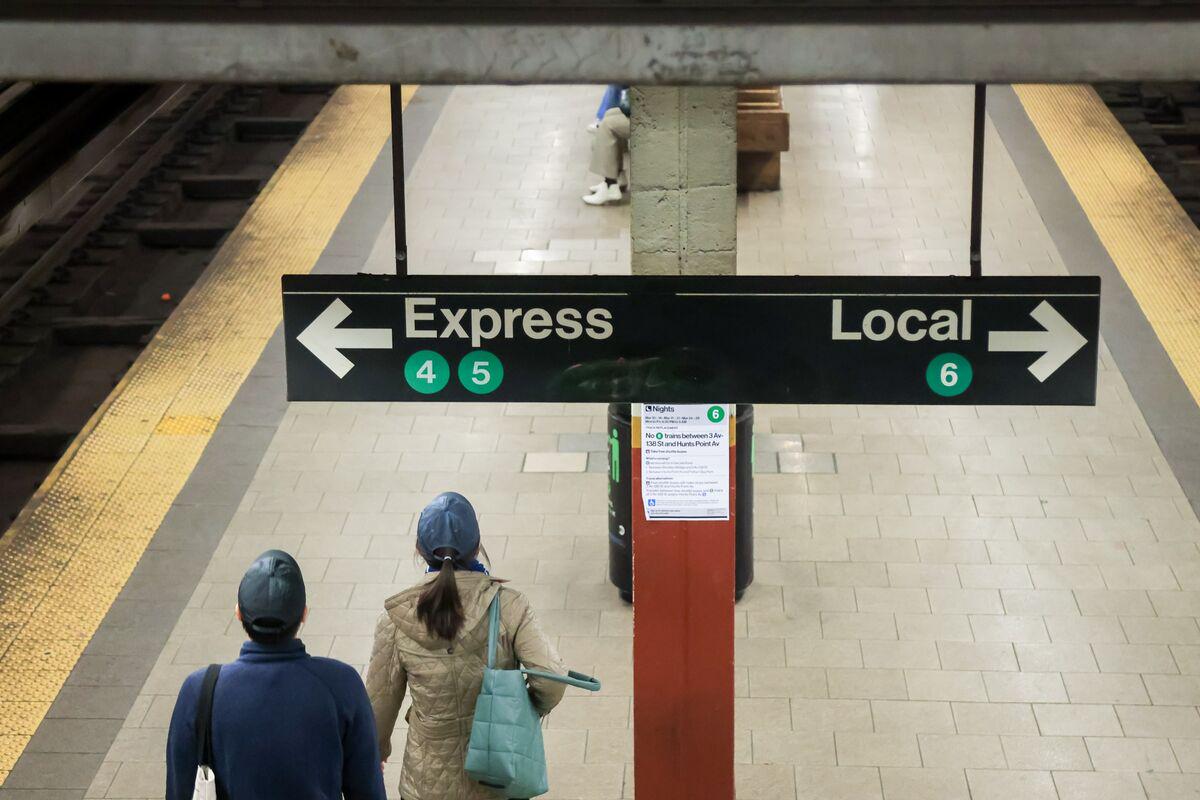
We need a reality check on crime, safety and transit | Despite common assumptions, traveling by bus, subway or train is far safer than driving. How can transit agencies correct misinformation about the real risks?
Posted by ONETRILLIONAMERICANS
We need a reality check on crime, safety and transit | Despite common assumptions, traveling by bus, subway or train is far safer than driving. How can transit agencies correct misinformation about the real risks?
Posted by ONETRILLIONAMERICANS
4 Comments
Absolutely fantastic article, a must-read imo
> US Transportation Secretary Sean Duffy and Manhattan Congressman Jerry Nadler recently had a heated debate about public transit safety at a House Transportation and Infrastructure committee hearing. Duffy claimed that assaults on New York City’s subway are up 60% this year; Nadler responded with figures showing a decline in major crimes since 2019. It turned into a shouting match over competing crime trend statistics.
> Their exchange made headlines, but it overlooked a more important issue: how risks compare between different transportation modes. In fact, transit is far safer than auto travel. **In New York City and everywhere else, you are far less likely to be the victim of a crime or an injury-causing crash if you take public transportation. And both crime and crash risks tend to decline in communities where travelers drive less and rely more on non-auto modes.**
> Of course, driving seems safer than getting on a bus or climbing down into a subway station. Motorists have a sense of control and feel protected in their vehicles. In contrast, transit travel means sharing enclosed spaces with crowds of unpredictable strangers, which naturally invokes anxiety.
> News and social media amplify this fear. Major transit crashes and crimes are infrequent, so they receive considerable coverage; since automobile crashes and crimes are hundreds of times more common, they receive far less media attention. In a city like New York — a global media hub that’s also full of transit riders — that message gets boosted further. If a subway passenger is killed or seriously injured in a crash or assault, it often becomes international news.
> The transit industry compounds this with messages intended to encourage caution but that unintentionally instill fear. Passengers are bombarded with safety warnings and announcements like, “If you see something, say something,” without counterbalancing information about transit’s outstanding safety record.
> There is, of course, a political context to these narratives. Conservatives like Duffy often criticize transit agencies in order to undermine the Democratic leadership of most US cities, and right-wing populists love to portray urban areas as unruly and dangerous. Villainizing the governance of America’s cities has been a core strategy of President Donald Trump for decades, long before he embarked on his current campaign to wrest control of local law enforcement in Washington, DC.
> But some progressive groups have added to the problem by advocating for the right to shelter and panhandle in transit facilities, drug and smoking decriminalization, and fare-free buses without considering negative impacts such policies can have on transit passengers. Minor “quality of life” infractions in these public spaces can have major impacts on riders’ comfort levels.
> As a result of this distorted information, most people underestimate driving’s dangers and transit’s safety. In fact, automobile travel has about ten times the death rate as public transit, and transit vehicles also impose less risk on non-occupants like cyclists, pedestrians and other road users. Cars should come with warnings: “Driving causes painful injuries, disabilities and death.”
> As transit travel increases and driving declines, communities become much safer. Sprawled-out areas have about five times the traffic fatality rates as transit-oriented neighborhoods. Even moderate increases in transit travel are associated with large reductions in traffic casualty rates.
> Several factors contribute to these outcomes. Transit-oriented communities tend to have less total driving, slower traffic speeds and less high-risk driving. For example, in compact, multimodal neighborhoods customers normally walk or take transit to restaurants, pubs and bars, but in automobile-dependent areas they take their cars — and often drive home impaired. Age is a factor, too: In suburban and rural areas, parents often give teenagers access to cars to reduce their chauffeuring burdens, and older people often continue driving despite declining abilities because they lack alternatives. Since most fatal or high-injury crashes involve multiple vehicles, even a perfect driver who never errs is safer if their higher-risk neighbors shift from driving to transit.
> But what about crime risks? Many people have the impression that cities in general and transit vehicles in particular are hotbeds of criminality. They are mostly wrong.
> During the last three decades, US crime rates declined significantly, as illustrated below. This occurred for virtually all crime types in virtually all communities, but the declines were particularly large in major cities, greatly reducing the risk disparity that once existed between urban, suburban and rural areas.
> Transit travel has different but generally less crime risk than driving. Despite the high profile of incidents like New York City subway attacks, only a tiny portion of serious crimes occur on transit properties: About 1 in 1,000 murders and 1 in 10,000 reported rapes take place in transit stations or vehicles across the US. Travel by car exposes drivers and passengers to a wider range of criminal threats, including vehicle homicide, road rage and carjacking attacks, and robberies and assaults in parking lots, plus vehicle thefts and vandalism. In 2023, 118 motorists were killed and 365 seriously wounded by guns in road rage incidents — far more than transit gun casualties.
> The crimes that do occur on buses and trains also tend to be less costly. A typical transit theft involves a phone, wallet or backpack worth a few hundred dollars; a stolen or vandalized vehicle usually costs thousands of dollars to repair or replace.
!ping YIMBY&TRANSIT
https://preview.redd.it/ss7e8ihs26lf1.png?width=800&format=png&auto=webp&s=e60780126f292df658352cbdb93ef32675e1e240
I mean, how likely are you to witness hard drug use in your car
Months ago i saw a commenter say we need movies where a rural person moves to the city and learns it’s not scary, this feels like a formal nerd version of that post and i’m all for it