
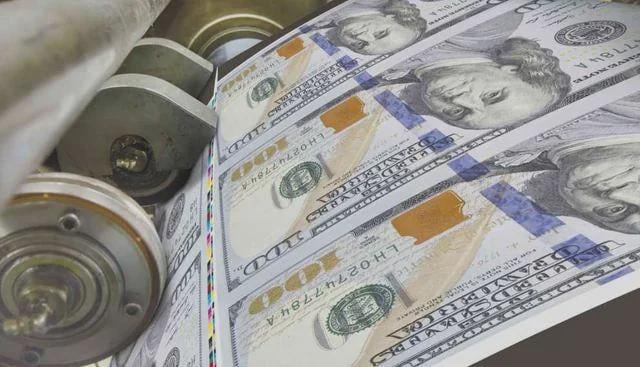
It is because individual and companies will loose money and get caught because without dollars, they cannot make FREE money and can no longer HIDE the game
Since USD is no longer pegged to Gold, this kind of risks can never be found out. If Gold was there, at least every month end or year end, when gold and USD is reconciled, people will understand that USD is missing.
But since there is no reconciliation – even audits cannot find this.
Real-Life Example (Hypothetical)
Who Makes Money
- Blackstone → management fees + asset growth illusion.
- Rothschild → bond spread profits.
- Goldman Sachs → derivatives premiums.
- Citadel → trading profits with leverage.
- JP Morgan → clearing + interest fees.
Who Loses (Unseen)
- General public → through inflation, currency dilution, and bailouts.
- Loss is never tracked to one firm — it is spread across the system and absorbed into the dollar’s overall devaluation.
Full Example
Assume 4 players – Rothschild, JP Morgan, Goldman Sachs, Citadel
- Day 1 – The Add (Phantom Credit)
- Blackstone wants to buy $50B worth of assets.
- Its clearing bank (say JP Morgan) “credits” $50B on Blackstone’s books (not real dollars, just internal ledger credit).
- Looks like cash, so Blackstone can trade instantly.
- Day 2 – Passing the Hot Potato
- Blackstone buys $50B in government bonds from Rothschild’s fund.
- Rothschild sees $50B “cash” on their books (still phantom, but usable).
- They then use it to buy $50B worth of derivatives from Goldman Sachs.
- Day 3 – Multiplication of the Same $50B
- Goldman now shows $50B incoming, so they extend $200B in leveraged positions to Citadel.
- Citadel uses that leverage to short stocks, earning quick trading profits.
- Day 10 – All Firms Book Gains
- Blackstone: earns fees for managing a “$50B investment.”
- Rothschild: sells bonds at a profit + commissions.
- Goldman: books derivative premiums.
- Citadel: earns trading profits on shorts.
- JP Morgan: collects interest + clearing fees.
- But Where’s the Loss?
- The original $50B never existed. It was just a ledger credit.
- If markets crash, the hole is absorbed by the Federal Reserve repo market (they inject liquidity to prevent collapse).
- The loss is socialized (hidden in QE, inflation, taxpayer bailouts), not recorded as “Blackstone lost $50B.”
- Why It Never Gets Tracked
- Each firm’s balance sheet shows a legit transaction.
- Auditors only see credits/debits, not whether original money existed.
- By month’s end, most trades are “rolled over” (closed and rebooked), so the phantom cash vanishes before any annual audit.
In short: They all print profits from the same phantom $50B, and the loss is invisible because it gets hidden inside Fed operations and systemic accounting gaps.
Concepts:
- Debt-Backed, Not Asset-Backed The U.S. dollar is no longer backed by gold (since 1971). Its value relies only on government debt and trust, not hard assets.
- Unlimited Printing Power The Federal Reserve can create trillions of dollars digitally with keystrokes, inflating supply without matching productivity.
- Phantom Bank Credits Large banks often create internal credits (ledger entries) that act like real cash for clients—until settlement, they’re spendable but not real dollars.
- Shadow Balance Sheets Hedge funds, clearing houses, and even central banks run complex swaps, repos, and derivatives that simulate cash flows—phantom money hidden in balance sheets.
- Double Counting of Dollars The same dollar can appear on multiple books (e.g., repo lending). Both sides treat it as theirs—so the system shows more money than exists.
- Derivatives Explosion Global derivatives exceed $600 trillion, vastly more than real dollars in circulation. These contracts inflate phantom liquidity that can vanish in crises.
- Foreign Dependency Most global trade is dollar-denominated, so countries hold USD reserves. But those reserves are often just U.S. Treasury IOUs, not physical dollars.
- Bailouts Create Fake Capital In 2008 and 2020, trillions were injected into markets as electronic credits, propping up failing firms—phantom cash that diluted real value.
- Audit Gaps The U.S. Fed has never had a full independent audit. Phantom dollars created through swap lines, QE, and repo markets rarely face scrutiny.
- Illusion of Stability As long as confidence holds, phantom dollars circulate like real money. But if trust collapses, the illusion breaks—causing sudden crashes (e.g., Lehman 2008, SVB 2023).
Why This Is Never Found Out & Why No One Exposes It
1. Audits See Only What They’re Allowed To
- Auditors don’t check the origin of dollars, only whether entries balance.
- If Blackstone’s books show $50B credited by JP Morgan, it looks legitimate because one party’s liability = another’s asset.
- Audits are about consistency, not reality. That’s the loophole.
2. Regulators Are Captured
- SEC, CFTC, Fed regulators come from Wall Street and return to Wall Street (“revolving door”).
- If a Goldman or JPM insider sees phantom liquidity, they will not blow the whistle—their next job or bonus depends on silence.
3. Everyone Makes Money While It Lasts
- Blackstone earns management fees.
- Rothschild profits on bond spreads.
- Goldman milks derivative premiums.
- Citadel makes leveraged profits.
- If everyone is winning, nobody wants to stop the game.
- Even if they know it’s fake, they’d be “the fool” for pointing it out.
4. Losses Are Socialized
- When phantom dollars blow up, Fed prints new liquidity (QE, repo, swap lines).
- That means no one institution ever shows a big loss—the hole is filled collectively by taxpayers, inflation, or debt.
- Since the public absorbs it, insiders keep quiet.
5. Fear of Retaliation
- Insiders who tried exposing things (e.g., Harry Markopolos vs. Madoff, Brooksley Born warning about derivatives in 1998) were discredited, sidelined, or destroyed.
- If someone at JPM openly said “these dollars don’t exist,” they’d lose their career, face lawsuits, or worse.
- Silencing = career assassination, NDA pressure, and sometimes physical threats.
6. Incentivized Silence
- Big bonuses, carried interest, stock options → every insider is financially rewarded for keeping quiet.
- Example: Citadel pays billions in bonuses to traders—it’s a golden handcuff.
- Why risk billions in future wealth to “tell the truth” when the Fed will always bail them out?
7. Complexity Protects the Scam
- Derivatives, swaps, repos are so complex most people (even in finance) don’t understand them.
- If 99% of accountants, politicians, and journalists can’t grasp it, there’s no pressure to investigate.
- Complexity = camouflage.
8. Media Complicity
- Media outlets (Bloomberg, WSJ, CNBC) depend on ad money, investment banking access, and Wall Street scoops.
- They won’t run “phantom dollar” stories unless told by regulators—who themselves are captured.
- Result: silence is bought through access and sponsorship.
9. Foreign Players Don’t Speak Up Either
- Even China, Russia, and Saudi Arabia know phantom USD games exist.
- But they stay silent because they also hold trillions in U.S. treasuries.
- Exposing it would collapse their own reserves—so they complain politically, but still play along.
10. The System Rewards Collusion, Not Truth
- In a debt-backed, dollar-dominant world, the illusion of stability is more valuable than truth.
- Anyone exposing phantom dollars = threat to the system.
- And when the Fed can print unlimited money, truth is always “delayed” until confidence breaks.
Why It Will Never Be Voluntarily Revealed
Because everyone who could expose it is either:
- Silenced (via career destruction or fear),
- Incentivized (via bonuses and bailouts), or
- Dependent (foreign central banks holding USD reserves).
The game only ends when dedollarization forces outside accountability (i.e., other countries stop accepting USD at face value). Until then, phantom money keeps circulating.
Dont trust me? – Ask these questions to US FED and banks
Questions (and what they probably say) That Expose the Phantom Dollar Game
To the Federal Reserve
- Audit of Repo Operations – “Can you provide a full, line-by-line audit of all emergency repo operations since 2008, including counterparties and exact amounts credited?”
- They will say not possible because it would reveal which firms received phantom liquidity.
- Internal Bank Credits – “How many dollars exist in internal bank credits (ledger balances not yet settled externally)?”
- No answer, since phantom credits are never reconciled.
- QE Dollar Creation Point – “When QE dollars are created, where exactly do they first appear on the Fed’s balance sheet before they enter commercial banks?”
- Silence, because creation is literally just keystrokes.
To the U.S. Treasury
- Dollar Supply Reconciliation – “Can you reconcile the total U.S. dollar supply against physical cash + digital reserves held at the Fed?”
- Impossible, since double counting would be exposed.
- Rehypothecated Treasuries – “Do you track the difference between Treasury bonds held domestically vs. ‘rehypothecated’ in overseas collateral chains?”
- Dodged, since the same bond can be pledged multiple times.
To the SEC / CFTC
- Derivatives vs. Real Cash – “How many derivative contracts are backed by actual cash collateral vs. internal bank credits?”
- Not disclosed, since $600T+ derivatives are not fully dollar-backed.
- Hedge Fund Liquidity Reporting – “Can you show how hedge funds report phantom liquidity on balance sheets, and whether auditors check if the dollars actually exist?”
- Marked as confidential.
To the IMF / BIS
- Reserve Verification – “When you publish global dollar reserve statistics, do you verify that those reserves are not double-counted U.S. Treasury IOUs?”
- No, since data is based on self-reporting by central banks.
- Swap Lines Transparency – “How many swap lines (emergency dollar injections) exist right now between the Fed and foreign central banks, and who are the counterparties?”
- Refused, since it exposes foreign dependency on phantom dollars.
To Big Banks (JPM, Goldman, Citi, etc.)
- Reconciliation with Fed – “On what date did you last reconcile internal dollar credits against actual settlement dollars at the Fed?”
- No reconciliation is done; the system runs on assumed trust.
Posted by AncientWelder987
1 Comment
Thank you so much for the explanation, I noticed many manipulative people make use of consistency over reality when creating a controlled environment around people, providing the external reinforcements backed by nothing.
People at the top refuse to point it out as they benefit, people at the bottom are silenced or know better or are dumb as in unaware of environmental change.