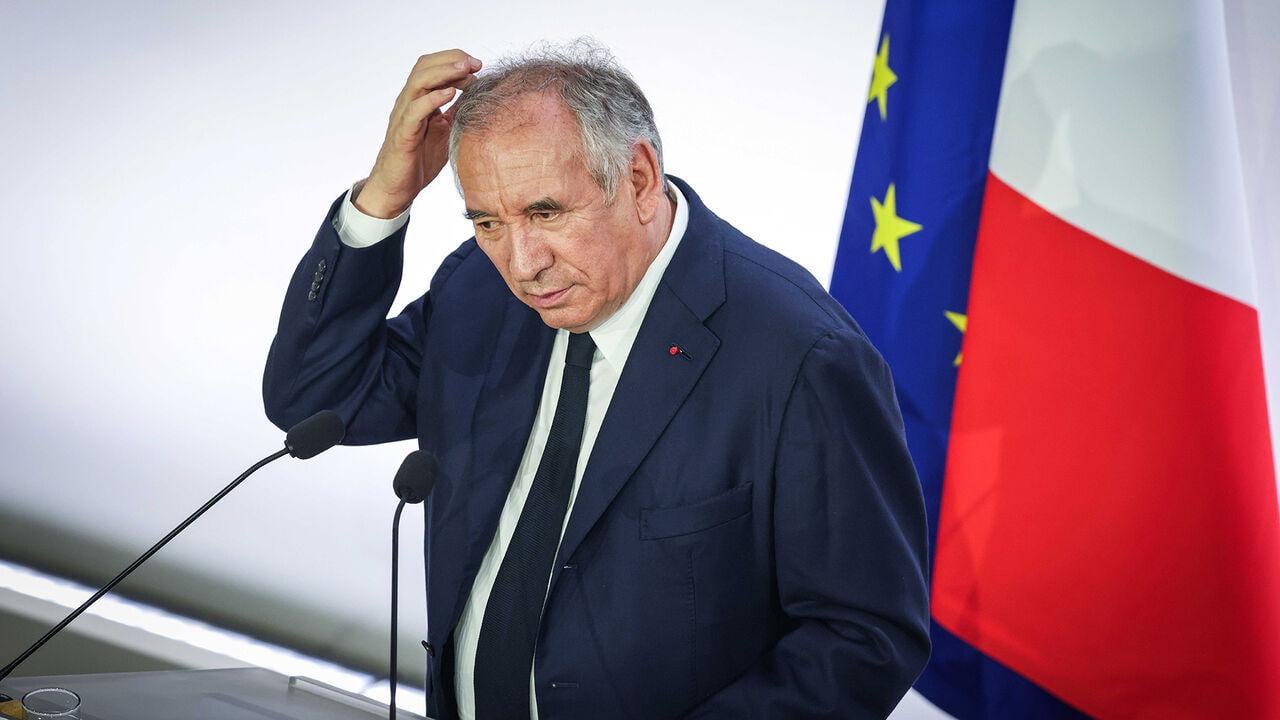
>For the third time in little over a year, France looks likely to lose its prime minister. François Bayrou’s decision on August 25th to put his government’s survival on the line with a vote of confidence on September 8th was as unexpected as it was risky. The centrist prime minister runs a minority government in a deadlocked parliament split into three blocs, two of which are set on bringing him down. The 74-year-old Mr Bayrou will need to muster uncommon political skill if he is to keep the job he secured less than nine months ago after his predecessor, Michel Barnier, was toppled. Markets are already nervous as France heads into yet another spell of political instability. After Mr Bayrou’s announcement the yield spread on French ten-year bonds compared to German bunds, the euro zone’s benchmark, widened from 0.69 to 0.73.
>
>The end of the summer was always going to be a tricky political moment for Mr Bayrou. He has been putting together a budget for 2026, which includes the promise of €44bn ($51bn) in savings in order to try to curb the budget deficit from 5.4% of GDP in 2025 to a still-too-high 4.6% in 2026. These include plenty of unpopular measures, notably the abolition of two of the country’s 11 public holidays. Time spent on the beach this summer seems only to have hardened popular hostility to losing those extra days off. Fully 84% told a poll in August that they were against the idea, up from 73% in July.
>
>Rather than wait to put his unpopular budget to parliament, however, Mr Bayrou has gone for a pre-emptive strike. “Our country is in danger”, he declared in a grave and martial tone on the afternoon of August 25th. France’s public debt, at 114% of GDP, is lower only than that of Greece and Italy within the EU. “Dependence on debt has become chronic,” Mr Bayrou went on. France this year will spend more on servicing debt (€66bn) than on either education or defence, he noted. Mr Bayrou, who campaigned for the French presidency in 2012 on a crusade against the country’s addiction to public spending, urged parliament to take seriously the risk of doing nothing. The vote of confidence next month, he said, would not concern the budget measures themselves, but a simple question: does parliament agree that there is a “national emergency” that requires fixing the public finances?
Unterfahrt on
I’m genuinely wondering if a few sovereign debt crises might be long-term good for European countries. It would provide the political cover to make the long-term structural changes to things like pensions and health, especially in France and Britain.
A lot of short term pain, but if it means they can reform pensions it will solve a lot of problems. Of course, both countries will be under a hard right government in a couple of years, so that will add more chaos.

2 Comments
>For the third time in little over a year, France looks likely to lose its prime minister. François Bayrou’s decision on August 25th to put his government’s survival on the line with a vote of confidence on September 8th was as unexpected as it was risky. The centrist prime minister runs a minority government in a deadlocked parliament split into three blocs, two of which are set on bringing him down. The 74-year-old Mr Bayrou will need to muster uncommon political skill if he is to keep the job he secured less than nine months ago after his predecessor, Michel Barnier, was toppled. Markets are already nervous as France heads into yet another spell of political instability. After Mr Bayrou’s announcement the yield spread on French ten-year bonds compared to German bunds, the euro zone’s benchmark, widened from 0.69 to 0.73.
>
>The end of the summer was always going to be a tricky political moment for Mr Bayrou. He has been putting together a budget for 2026, which includes the promise of €44bn ($51bn) in savings in order to try to curb the budget deficit from 5.4% of GDP in 2025 to a still-too-high 4.6% in 2026. These include plenty of unpopular measures, notably the abolition of two of the country’s 11 public holidays. Time spent on the beach this summer seems only to have hardened popular hostility to losing those extra days off. Fully 84% told a poll in August that they were against the idea, up from 73% in July.
>
>Rather than wait to put his unpopular budget to parliament, however, Mr Bayrou has gone for a pre-emptive strike. “Our country is in danger”, he declared in a grave and martial tone on the afternoon of August 25th. France’s public debt, at 114% of GDP, is lower only than that of Greece and Italy within the EU. “Dependence on debt has become chronic,” Mr Bayrou went on. France this year will spend more on servicing debt (€66bn) than on either education or defence, he noted. Mr Bayrou, who campaigned for the French presidency in 2012 on a crusade against the country’s addiction to public spending, urged parliament to take seriously the risk of doing nothing. The vote of confidence next month, he said, would not concern the budget measures themselves, but a simple question: does parliament agree that there is a “national emergency” that requires fixing the public finances?
I’m genuinely wondering if a few sovereign debt crises might be long-term good for European countries. It would provide the political cover to make the long-term structural changes to things like pensions and health, especially in France and Britain.
A lot of short term pain, but if it means they can reform pensions it will solve a lot of problems. Of course, both countries will be under a hard right government in a couple of years, so that will add more chaos.