
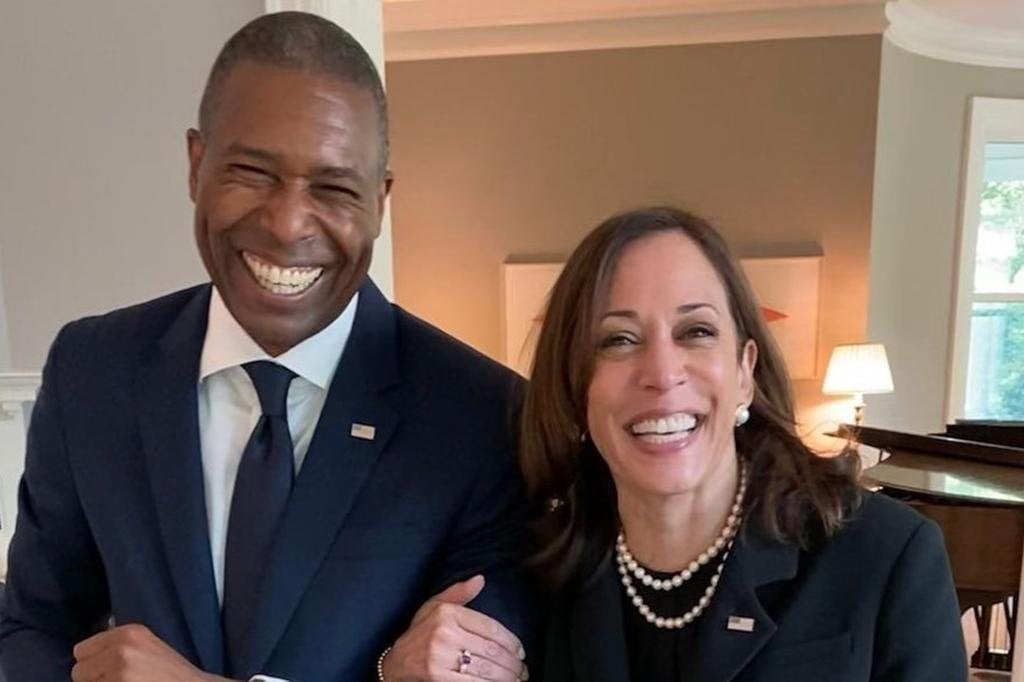
Recently Tony West, Kamala's brother in law, and husband to Maya Harris, joined the Harris campaign as an advisor.
You can read more about him here.
Going back in time, we can draw a clear connection between the Harris family, their corruption, and how it all plays into the game of the Democratic party.
The Democratic Party's political maneuvers and internal communications, revealed in emails from WikiLeaks, paint a picture of a party prioritizing political gain over transparency, accountability, and the public interest. A key player in these behind-the-scenes dealings is Maya Harris, Vice President Kamala Harris's sister, who played a significant role in shaping the Clinton campaign’s strategy and messaging. These emails raise serious concerns about the integrity of the Democratic Party’s actions and decision-making processes.
Covering Up The Clinton Emails, and "Needy Latinos"
Emails between Clinton aides and the White House show efforts to manage the fallout from Clinton's private email scandal, contradicting their calls for transparency and accountability. Further emails, like those titled "Needy Latinos," reveal a dismissive and calculated approach to engaging minority communities, prioritizing political optics over genuine connections. This pattern highlights a broader tendency within the party to manipulate narratives and decisions to serve special interests and maintain political power, raising doubts about their sincerity and integrity.
Political Maneuvering and Lack of Transparency
The leaked emails reveal how the Clinton campaign, in coordination with Maya Harris, frequently engaged in political maneuvering rather than making clear policy decisions. For instance, the campaign discussions around delaying public statements and aligning messaging with external political events demonstrate an effort to manipulate public perception and limit scrutiny. Decisions were strategically delayed to fit the political calendar, prioritizing optics over substantive policy commitments. Maya Harris’s involvement in crafting such strategies illustrates her active role in these calculated moves, contributing to a pattern of evasive communication that undermines public trust.
Influence of Special Interests and Potential Conflicts of Interest
The emails also highlight the influence of special interests within the Democratic Party, suggesting that the party’s decisions were driven more by political alliances than by the merits of the policies themselves. For example, efforts to manage and appease specific groups, such as the Building Trades unions, indicate that the campaign was more focused on maintaining political support than advocating for the public’s best interest. Maya Harris, as a key campaign strategist, appears to have coordinated with policy experts to navigate these alliances, raising concerns about whether her actions were aligned with genuine reform or merely tactical maneuvers to maintain political power.
Furthermore, there are indications of potential conflicts of interest, with the Clinton campaign coordinating its stance on the Keystone XL pipeline in tandem with the Obama administration's decisions. This suggests a possible collusion between different political entities to align messaging rather than independently arriving at policy decisions. Harris’s involvement in these strategic discussions could be perceived as an effort to align political entities in ways that serve special interests rather than the public.
Special interest groups and powerful lobbyists played a significant role in shaping Obama's cabinet. For instance, Larry Summers, with close ties to Wall Street, was considered for Treasury Secretary despite his controversial past, suggesting financial interests were prioritized over public interest. Similarly, Michael Froman, an executive at Citigroup, was involved in vetting cabinet candidates, raising concerns about conflicts of interest.
Lack of Transparency in VP Selection
The VP selection process was marked by insider control and a lack of transparency. Potential candidates were chosen for their political appeal or financial backing, rather than alignment with policy goals or public service credentials. The inclusion of business figures like Michael Bloomberg and Howard Schultz reflects a focus on political calculus over genuine public interest.
Appointments Based on Connections
Emails show that many of Obama's key appointments were based on loyalty and political connections rather than qualifications. Familiar figures like Tom Daschle, Valerie Jarrett, and Eric Holder were favored for their political ties, despite potentially more qualified candidates being available. This practice suggests a pattern of cronyism, prioritizing political loyalty over effective governance.
Policy Ambiguity and Strategic Messaging
Maya Harris's role in the campaign's approach to campaign finance reform exemplifies a broader issue of policy ambiguity within the Democratic Party. While Harris was involved in advocating for campaign finance reform, her discussions about supporting Super PACs while appearing reform-minded suggest a calculated effort to balance different political pressures rather than a sincere commitment to reducing the influence of money in politics. This ambiguity might lead to skepticism among voters about the party’s true intentions, as it appears that the Democratic Party is more interested in preserving flexibility for fundraising rather than making substantial reforms.
Additionally, Harris's reliance on external expertise and polling, as indicated in the emails, might be interpreted as a lack of a clear, internally driven policy vision. This dependence on external input, while not inherently negative, could be framed as evidence that the party lacks a genuine commitment to specific policy positions and is more focused on navigating political pressures.
Manipulating Diversity Optics
"I'm not the diversity police but there is grumbling on the 4 white boys running next presidential cycle. So I recommend rolling out some people who look like the rest of America soon!"
"And the liberals love her. She should be someone who goes on tv or something for sure."
The emails also reflect a troubling approach to diversity within the Democratic Party, with discussions indicating a focus on managing the optics of diversity rather than genuinely embracing it. The suggestion to “roll out” diverse figures to counter perceptions of a lack of inclusivity reveals an effort to use diversity as a political tool rather than a genuine commitment to representation. Maya Harris’s involvement in these discussions further highlights the party's use of strategic optics to appeal to certain voter demographics, raising questions about the sincerity of their diversity efforts.
Inconsistencies and Hypocrisy in Policy Positions
The Clinton campaign's handling of the Greenpeace pledge issue reveals further inconsistencies in its policy positions. The decision to issue a statement rather than sign the Greenpeace pledge, despite aligning with the principles the campaign claimed to support, suggests a lack of genuine commitment to environmental causes. The campaign's strategy to "embrace the principles" without making a full commitment is indicative of an effort to maintain flexibility for campaign financing while trying to appear supportive of environmental advocacy. This approach, in which Maya Harris was actively involved, underscores the party’s tendency to prioritize political calculations over substantive policy commitments.
Conclusion: A Pattern of Political Calculations
The involvement of Maya Harris in these strategic maneuvers points to a broader issue within the Democratic Party: a pattern of political calculations, ambiguity, and manipulation. The leaked emails suggest that key figures within the party, including Harris, are more focused on managing optics, appeasing special interests, and navigating political pressures than on advancing transparent, accountable, and genuinely reform-minded policies. This approach raises serious concerns about the party's authenticity, integrity, and commitment to the public interest, ultimately damaging the trust of voters who expect clear, honest leadership.
Posted by bacanotor5151
2 Comments
When you can’t win on the issues, attack the opposing candidate’s family.
> focused on managing optics, appeasing special interests, and navigating political pressures
Breaking news… politicians are politicians.
If you want to elect a President who’s focused on “transparent, accountable, and genuinely reform-minded policies” above practicing general politics… I dunno, maybe run for office yourself because I can’t think of anyone who qualifies.