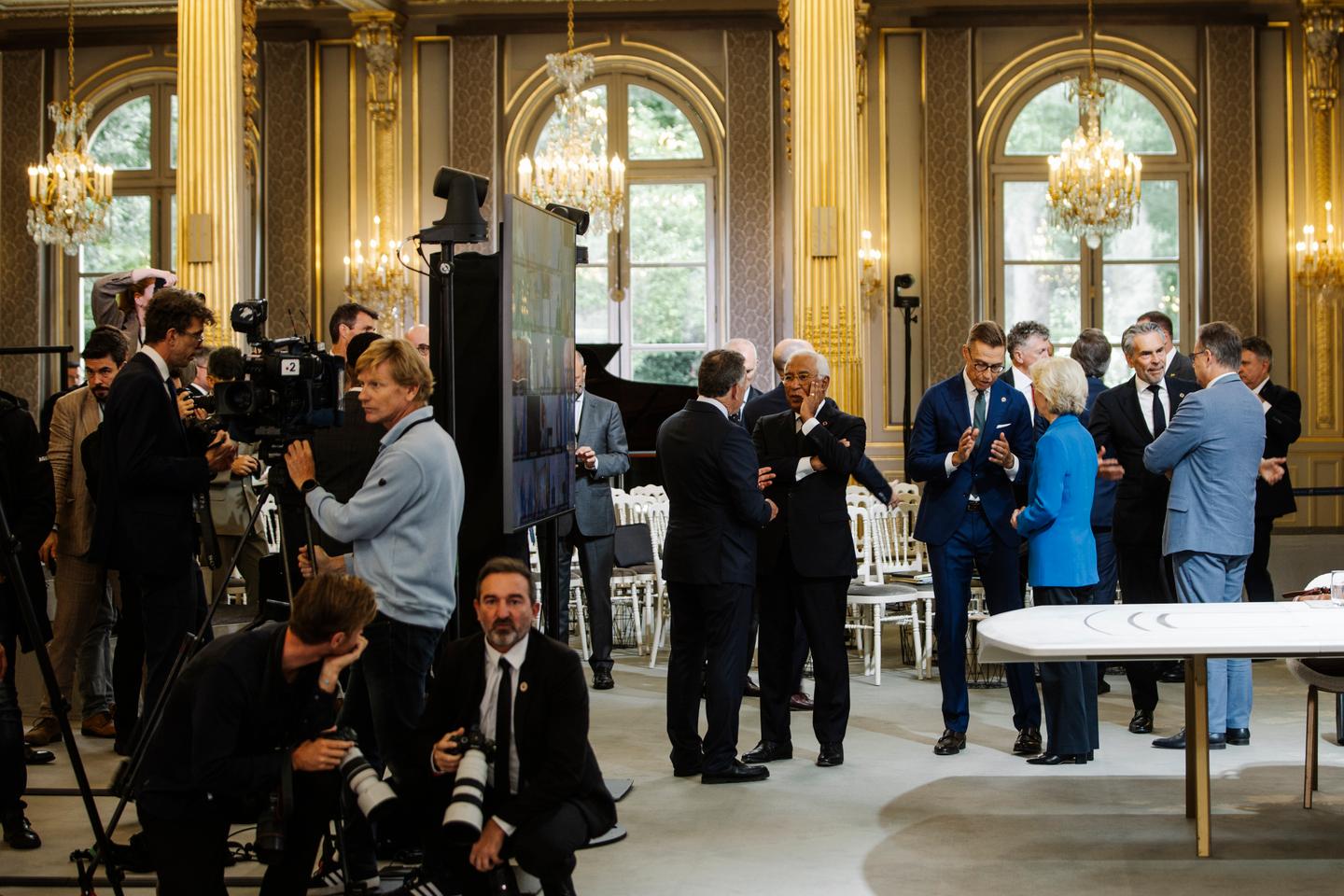
European partners of the US experienced this first-hand once again on Thursday, September 4, during a lengthy phone conversation with the American president, who was with his vice president, JD Vance. The meeting, organized from Paris following a hybrid summit of leaders from the “coalition of the willing” – which brings together 35 countries prepared to support Ukraine’s defense if a peace agreement is reached with Moscow – was mainly intended to secure from Trump a concrete commitment from the US military to support the European effort.
Once again, the American president hesitated to make that commitment, instead voicing his frustration with Europe and China. According to French President Emmanuel Macron, Trump was “very clear” about his intention to support the security guarantees that Europeans are prepared to provide Ukraine, but he did not specify how this support would take shape on the ground. This, Macron explained to the press, is a matter of “planning” that remains to be “finalized” in “the coming days.”
No one can accuse the Europeans, or Ukrainian President Volodymyr Zelensky, who was present in Paris, of failing to do everything possible to bring Trump to their side. After the disastrous US-Russia summit on August 15 in Alaska, where Trump rolled out the red carpet for Vladimir Putin and lifted his threat of sanctions with no concessions, the Europeans traveled together to Washington on August 18, united in their efforts to persuade him to take a firmer stance. Keeping up the pressure on Washington was the purpose of Thursday’s meeting in Paris.

1 Comment
Donald Trump has decided to rename the US Department of Defense the [“Department of War,”](https://www.lemonde.fr/en/international/article/2025/09/05/trump-renames-department-of-defense-the-department-of-war_6745054_4.html) arguing that under this name, which was used until 1947, the United States “won everything,” as he put it. Unfortunately, such resolve is far less obvious when it comes to the Russian war in Ukraine.
European partners of the US experienced this first-hand once again on Thursday, September 4, during a lengthy phone conversation with the American president, who was with his vice president, JD Vance. The meeting, organized from Paris following a hybrid summit of leaders from the “coalition of the willing” – which brings together 35 countries prepared to support Ukraine’s defense if a peace agreement is reached with Moscow – was mainly intended to secure from Trump a concrete commitment from the US military to support the European effort.
Once again, the American president hesitated to make that commitment, instead voicing his frustration with Europe and China. According to French President Emmanuel Macron, Trump was “very clear” about his intention to support the security guarantees that Europeans are prepared to provide Ukraine, but he did not specify how this support would take shape on the ground. This, Macron explained to the press, is a matter of “planning” that remains to be “finalized” in “the coming days.”
No one can accuse the Europeans, or Ukrainian President Volodymyr Zelensky, who was present in Paris, of failing to do everything possible to bring Trump to their side. After the disastrous US-Russia summit on August 15 in Alaska, where Trump rolled out the red carpet for Vladimir Putin and lifted his threat of sanctions with no concessions, the Europeans traveled together to Washington on August 18, united in their efforts to persuade him to take a firmer stance. Keeping up the pressure on Washington was the purpose of Thursday’s meeting in Paris.