> Over the past quarter century, American tech companies to a large degree designed and built China’s surveillance state, playing a far greater role in enabling human rights abuses than previously known, an Associated Press investigation found. They sold billions of dollars of technology to the Chinese police, government and surveillance companies, despite repeated warnings from the U.S. Congress and in the media that such tools were being used to quash dissent, persecute religious sects and target minorities.
>Critically, American surveillance technologies allowed a brutal mass detention campaign in the far west region of Xinjiang — targeting, tracking and grading virtually the entire native Uyghur population to forcibly assimilate and subdue them.
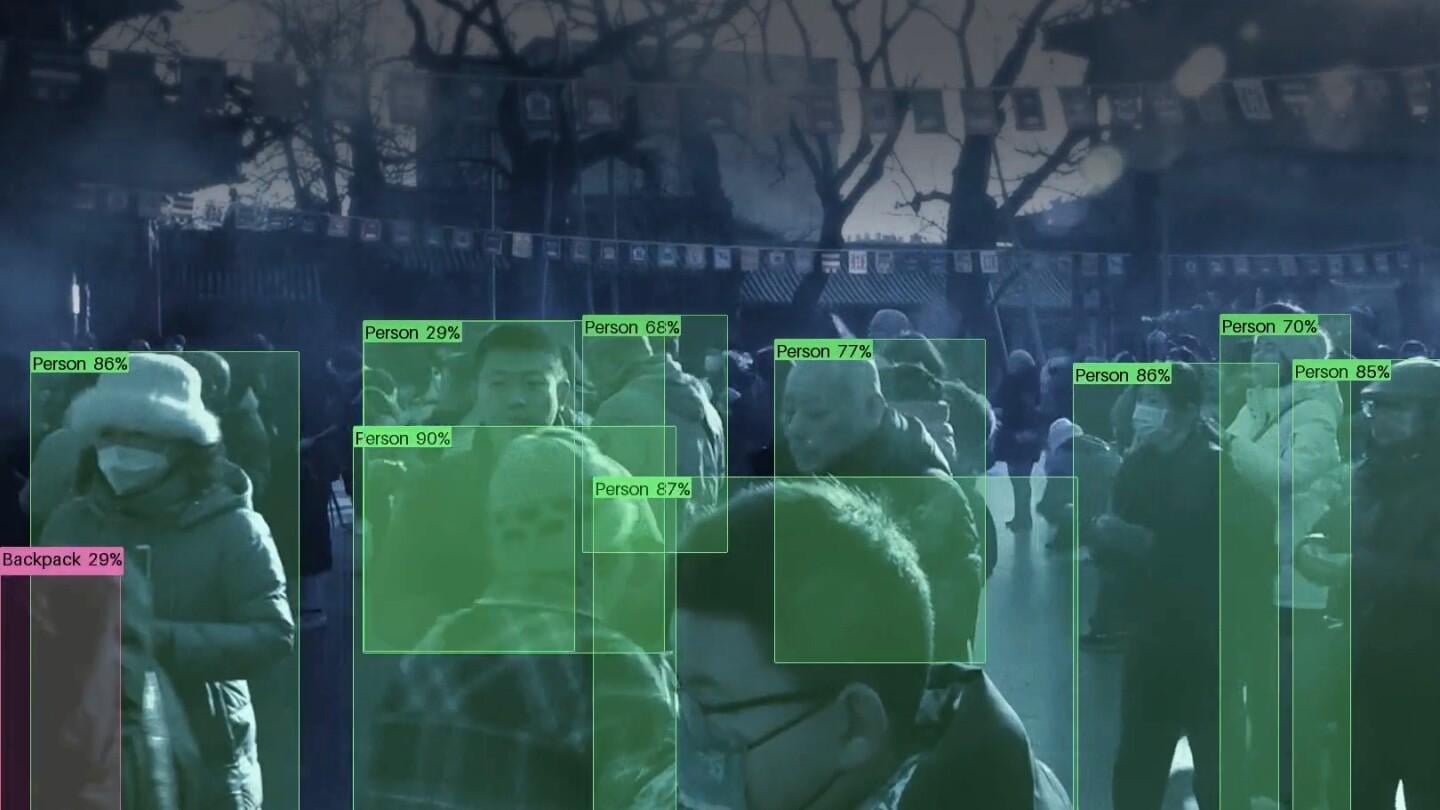
>U.S. companies did this by bringing “predictive policing” to China — technology that sucks in and analyzes data to prevent crime, protests, or terror attacks before they happen. Such systems mine a vast array of information — texts, calls, payments, flights, video, DNA swabs, mail deliveries, the internet, even water and power use — to unearth individuals deemed suspicious and predict their behavior. But they also allow Chinese police to threaten friends and family and preemptively detain people for crimes they have not even committed.
>For example, the AP found a Chinese defense contractor, Huadi, worked with IBM to design the main policing system known as the “Golden Shield” for Beijing to censor the internet and crack down on alleged terrorists, the Falun Gong religious sect, and even villagers deemed troublesome, according to thousands of pages of classified government blueprints taken out of China by a whistleblower, verified by AP and revealed here for the first time. IBM and other companies that responded said they fully complied with all laws, sanctions and U.S. export controls governing business in China, past and present.
>Across China, surveillance systems track blacklisted “key persons,” whose movements are restricted and monitored. In Xinjiang, administrators logged people as high, medium, or low risk, often according to 100-point scores with deductions for factors like growing a beard, being 15 to 55 years old, or just being Uyghur.
>Some tech companies even specifically addressed race in their marketing. Dell and a Chinese surveillance firm promoted a “military-grade” AI-powered laptop with “all-race recognition” on Dell’s official WeChat account in 2019. And until contacted by AP in August, biotech giant Thermo Fisher Scientific’s website marketed DNA kits to the Chinese police as “designed” for the Chinese population, including “ethnic minorities like Uyghurs and Tibetans.”
>While the flood of American technology slowed considerably starting in 2019 after outrage and sanctions over atrocities in Xinjiang, it laid the foundation for China’s surveillance apparatus that Chinese companies have since built on and in some cases replaced. To this day, concerns remain over where technology sold to China will end up.
>[…]
>What started in China more than a decade ago could be seen as a cautionary tale for other countries at a time when the use of surveillance technology worldwide is rising sharply, including in the United States. Emboldened by the Trump administration, U.S. tech companies are more powerful than ever, and President Donald Trump has rolled back a Biden-era executive order meant to safeguard civil rights from new surveillance technologies.
>As the capacity and sophistication of such technologies has grown, so has their reach. Surveillance technologies now include AI systems that help track and detain migrants in the U.S. and identify people to kill in the Israel-Hamas war. China, in the meantime, has used what it learned from the U.S. to turn itself into a surveillance superpower, selling technologies to countries like Iran and Russia.
NoMoreSkiingAllowed on
The post Tiananmen Square law should’ve been updated to prevent the sale of this policing technology it is unacceptable
CatLords on
Tech companies rot societies from the inside out if they are not regulated.

4 Comments
> Over the past quarter century, American tech companies to a large degree designed and built China’s surveillance state, playing a far greater role in enabling human rights abuses than previously known, an Associated Press investigation found. They sold billions of dollars of technology to the Chinese police, government and surveillance companies, despite repeated warnings from the U.S. Congress and in the media that such tools were being used to quash dissent, persecute religious sects and target minorities.
>Critically, American surveillance technologies allowed a brutal mass detention campaign in the far west region of Xinjiang — targeting, tracking and grading virtually the entire native Uyghur population to forcibly assimilate and subdue them.
>U.S. companies did this by bringing “predictive policing” to China — technology that sucks in and analyzes data to prevent crime, protests, or terror attacks before they happen. Such systems mine a vast array of information — texts, calls, payments, flights, video, DNA swabs, mail deliveries, the internet, even water and power use — to unearth individuals deemed suspicious and predict their behavior. But they also allow Chinese police to threaten friends and family and preemptively detain people for crimes they have not even committed.
>For example, the AP found a Chinese defense contractor, Huadi, worked with IBM to design the main policing system known as the “Golden Shield” for Beijing to censor the internet and crack down on alleged terrorists, the Falun Gong religious sect, and even villagers deemed troublesome, according to thousands of pages of classified government blueprints taken out of China by a whistleblower, verified by AP and revealed here for the first time. IBM and other companies that responded said they fully complied with all laws, sanctions and U.S. export controls governing business in China, past and present.
>Across China, surveillance systems track blacklisted “key persons,” whose movements are restricted and monitored. In Xinjiang, administrators logged people as high, medium, or low risk, often according to 100-point scores with deductions for factors like growing a beard, being 15 to 55 years old, or just being Uyghur.
>Some tech companies even specifically addressed race in their marketing. Dell and a Chinese surveillance firm promoted a “military-grade” AI-powered laptop with “all-race recognition” on Dell’s official WeChat account in 2019. And until contacted by AP in August, biotech giant Thermo Fisher Scientific’s website marketed DNA kits to the Chinese police as “designed” for the Chinese population, including “ethnic minorities like Uyghurs and Tibetans.”
>While the flood of American technology slowed considerably starting in 2019 after outrage and sanctions over atrocities in Xinjiang, it laid the foundation for China’s surveillance apparatus that Chinese companies have since built on and in some cases replaced. To this day, concerns remain over where technology sold to China will end up.
>[…]
>What started in China more than a decade ago could be seen as a cautionary tale for other countries at a time when the use of surveillance technology worldwide is rising sharply, including in the United States. Emboldened by the Trump administration, U.S. tech companies are more powerful than ever, and President Donald Trump has rolled back a Biden-era executive order meant to safeguard civil rights from new surveillance technologies.
>As the capacity and sophistication of such technologies has grown, so has their reach. Surveillance technologies now include AI systems that help track and detain migrants in the U.S. and identify people to kill in the Israel-Hamas war. China, in the meantime, has used what it learned from the U.S. to turn itself into a surveillance superpower, selling technologies to countries like Iran and Russia.
The post Tiananmen Square law should’ve been updated to prevent the sale of this policing technology it is unacceptable
Tech companies rot societies from the inside out if they are not regulated.
Max Zorin did nothing wrong?