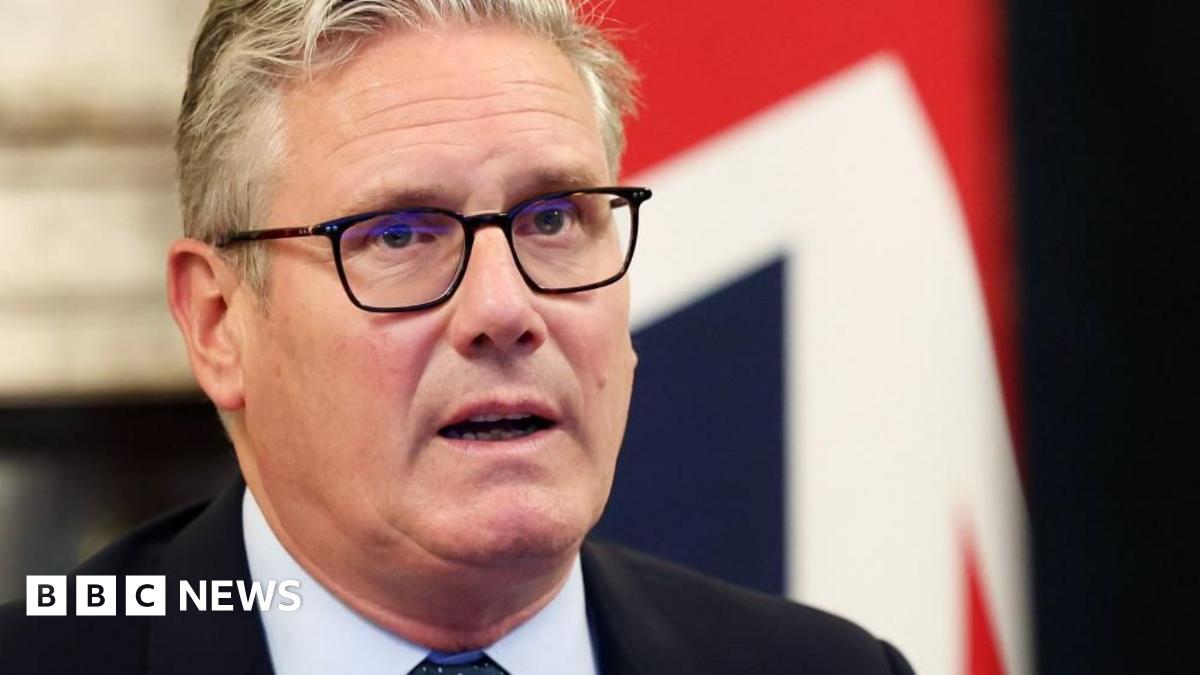
UK Prime Minister Keir Starmer confirms the government will introduce digital IDs to ensure Britain’s “borders are more secure”.
Unveiling the announcement, Starmer says “you will not be able to work in the United Kingdom if you do not have digital ID”.
“It’s as simple as that.”
“We won’t solve our problems if we don’t take on the root causes,” the PM adds.
Echoing his article in the Telegraph overnight, Starmer says that Britain has “shied away from the topic of illegal immigration”.
“We’ve been squeamish,” he says.
Starmer says the simple fact is every nation needs control of its borders, but the immigration system needs to be “fair” or it undermines the trust and faith of people.
As we’ve now finished hearing from the PM about the government’s plans to introduce a digital ID scheme, it’s worth revisiting our earlier questions about what we do and don’t know about this proposal.
So far, we now know:
It will include a name, date of birth, nationality or residency status, and a photo
You won’t have to carry IDs around
You’ll never be asked to produce it – other than when proving a right to work in the UK
The ID will be on people’s phones – similar to contactless cards
It will be compulsory for anyone looking to work in the UK
What we still don’t know:
When exactly the scheme will be introduced – the government says it will be mandatory “by the end of the Parliament”
Whether the card will include people’s address – this will be considered in the government’s consultation
What those without smartphones will use – the government says it’s working on this element
2Lore2Law on
Compulsory phone ownership, awesome
Like genuinely what if your phone gets destroyed and you can’t afford a new one? You won’t be able to prove your right to work. I guess you just won’t get a job.
And for the kids- I hope they have someone in their life willing and able to provide them their first smartphone
iIoveoof on
The Netherlands is a good contrast. To work there you need a citizen service number (BSN), which is the back-end identifier that links you to taxes, social security, etc. This is linked to a digital ID service called DigiD, which is optional and just makes it easy to log into government websites that need you to prove your identity, like paying taxes, or releasing medical records. DigiD is optional and only used for online convenience. If you’re applying for a job, you don’t need DigiD at all, because what’s the point? You just show your physical, government ID card to prove your identity, which has your BSN, and the employer records it. No need to gatekeep your basic rights behind a phone app or web service.
KernunQc7 on
This is how it works in other countries, not the end of the world. It should be physical tho.
upthetruth1 on
Blair finally wins
Designated_Lurker_32 on
This man is legitimately trying to hand Reform UK a win. I wouldn’t be surprised if, when Nigel Farage enters office, he finds a gift basket left there by Starmer. Maybe even a box of chocolates, too.
WAGRAMWAGRAM on
People make fun of mandatory phones, but really this is leapfrogging, in countries that have paper ID you have to convince people (especially elderly) to switch to the digital one, in the UK they’ll make the transition way faster
catonakeyboard on
Western governments have a bad habit of undermining good tech ideas with bad rollout. See this instance or Canada’s ArriveCan. There will always be some public resistance. The fix is simple and relies on basic behavioural science. Instead of fighting resistance with the “stick” approach, flip the script. Offer a “carrot” to early adopters. Attach benefits to signing up (e.g. express lanes, less paperwork). Encourage adoption, don’t force it.
Steamed_Clams_ on
I have never understood opposition to national identity cards, its something that should be issued to every citizen and to non citizens also, the government should work to ensure even the most vulnerable people have one.

9 Comments
UK Prime Minister Keir Starmer confirms the government will introduce digital IDs to ensure Britain’s “borders are more secure”.
Unveiling the announcement, Starmer says “you will not be able to work in the United Kingdom if you do not have digital ID”.
“It’s as simple as that.”
“We won’t solve our problems if we don’t take on the root causes,” the PM adds.
Echoing his article in the Telegraph overnight, Starmer says that Britain has “shied away from the topic of illegal immigration”.
“We’ve been squeamish,” he says.
Starmer says the simple fact is every nation needs control of its borders, but the immigration system needs to be “fair” or it undermines the trust and faith of people.
As we’ve now finished hearing from the PM about the government’s plans to introduce a digital ID scheme, it’s worth revisiting our earlier questions about what we do and don’t know about this proposal.
So far, we now know:
It will include a name, date of birth, nationality or residency status, and a photo
You won’t have to carry IDs around
You’ll never be asked to produce it – other than when proving a right to work in the UK
The ID will be on people’s phones – similar to contactless cards
It will be compulsory for anyone looking to work in the UK
What we still don’t know:
When exactly the scheme will be introduced – the government says it will be mandatory “by the end of the Parliament”
Whether the card will include people’s address – this will be considered in the government’s consultation
What those without smartphones will use – the government says it’s working on this element
Compulsory phone ownership, awesome
Like genuinely what if your phone gets destroyed and you can’t afford a new one? You won’t be able to prove your right to work. I guess you just won’t get a job.
And for the kids- I hope they have someone in their life willing and able to provide them their first smartphone
The Netherlands is a good contrast. To work there you need a citizen service number (BSN), which is the back-end identifier that links you to taxes, social security, etc. This is linked to a digital ID service called DigiD, which is optional and just makes it easy to log into government websites that need you to prove your identity, like paying taxes, or releasing medical records. DigiD is optional and only used for online convenience. If you’re applying for a job, you don’t need DigiD at all, because what’s the point? You just show your physical, government ID card to prove your identity, which has your BSN, and the employer records it. No need to gatekeep your basic rights behind a phone app or web service.
This is how it works in other countries, not the end of the world. It should be physical tho.
Blair finally wins
This man is legitimately trying to hand Reform UK a win. I wouldn’t be surprised if, when Nigel Farage enters office, he finds a gift basket left there by Starmer. Maybe even a box of chocolates, too.
People make fun of mandatory phones, but really this is leapfrogging, in countries that have paper ID you have to convince people (especially elderly) to switch to the digital one, in the UK they’ll make the transition way faster
Western governments have a bad habit of undermining good tech ideas with bad rollout. See this instance or Canada’s ArriveCan. There will always be some public resistance. The fix is simple and relies on basic behavioural science. Instead of fighting resistance with the “stick” approach, flip the script. Offer a “carrot” to early adopters. Attach benefits to signing up (e.g. express lanes, less paperwork). Encourage adoption, don’t force it.
I have never understood opposition to national identity cards, its something that should be issued to every citizen and to non citizens also, the government should work to ensure even the most vulnerable people have one.