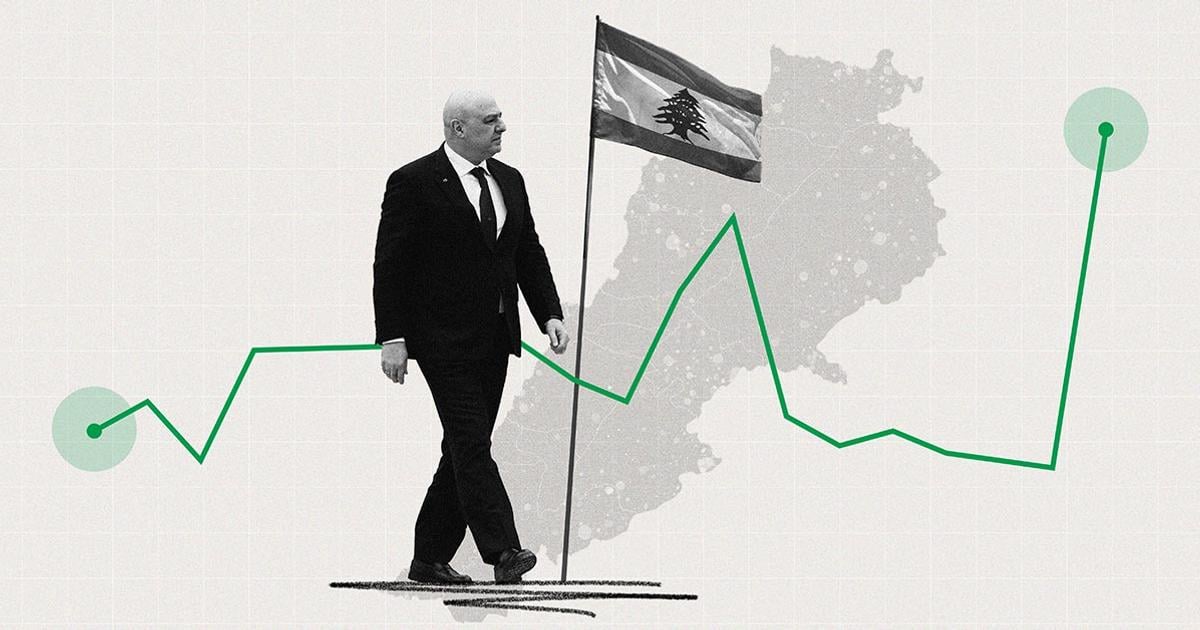
WASHINGTON, D.C. — The Lebanese people are more enthusiastic about their country’s leadership today than at any point in the Gallup World Poll’s 20-year history. A record-high 62% of Lebanese adults, up from 16% in 2024, approve of their country’s leadership when asked about it generally, according to a May 5-June 5 survey.
The 46-percentage-point swing is not only the largest for Lebanon but also one of the largest year-over-year increases in leadership approval ever recorded as part of the World Poll.
The latest survey was conducted several months after a ceasefire deal was reached between Israel and Lebanon last fall and after the formation of a new Lebanese government in February. The nationwide survey excludes approximately 10% of the population, including several inaccessible areas under Hezbollah’s strict control in the country’s south, the Bekaa Valley and Beirut’s southern suburbs.
Lebanese adults’ approval of their own leadership has historically been among the lowest in the world, reflecting the country’s persistent political deadlock. Yet, the new government — Lebanon’s first full one since 2022 — may have inspired rare hope among many Lebanese.
The relative popularity of Lebanon’s ruling officials marks a major departure from 2019 to 2024, a period in which most Lebanese (between 70% and 81%) disapproved of their country’s leadership. That difficult period, bookmarked by both economic collapse and war with Israel, also saw the [2020 Beirut Port Explosion](https://news.gallup.com/poll/394952/port-explosion-investigation-saps-lebanese-trust-courts.aspx), a preventable disaster resulting in the loss of at least 218 lives and the widespread destruction of Central Beirut, a calamity for which no official has yet been held accountable
A separate question on the poll measured approval of President Joseph Aoun specifically. Approval of the former army commander stands at 81%, the highest Gallup has ever recorded for a Lebanese leader. Similarly, Prime Minister Nawaf Salam, former head of the International Court of Justice, enjoys majority-level support among Lebanese (56% approve vs. 36% disapprove), many of whom regard him as a reformer.
#Confidence Rises in Elections, but Not Financial Institutions
Nearly half of Lebanese (48%) now say they have confidence in the national government, a figure that had not previously risen any higher than 12% since 2020. Attitudes toward other key institutions have seen varying levels of improvement in 2025 as well, including confidence in the country’s educational system (67%, up from 49% in 2024) and its judicial system (28%, up from 21% in 2024).
Significantly, confidence in the honesty of Lebanese elections has jumped to 45%, up from 17% last year. This comes as a Lebanese president or prime minister has assumed office without Syrian interference for the first time since the 1970s. The new government is also pushing to ensure Lebanese living abroad can vote in their home districts, which could make local races more competitive and less tied to patronage.
Despite these warming attitudes toward some institutions, Lebanese remain cold toward the country’s financial system. Just 4% of Lebanese say they have confidence in the country’s financial institutions, the world’s worst performer on this measure. Roughly 1.3 million deposits in Lebanese bank accounts continue to be frozen or restricted, while international partners such as the International Monetary Fund continue to withhold needed financial support for the country’s reconstruction until critical reforms are made.
[Chart of Lebanese views of Election Integrity, National Government, and Financial Institutions since 2006](https://i.imgur.com/gO5zaAk.png)
Lebanon’s transitional government has enormous challenges ahead. Priorities include rebuilding the country’s collapsed economy, restructuring the banking sector, and restoring a level of public trust amid perceived widespread corruption. If not challenging enough, the international support and funding needed to achieve many of these goals remains predicated on efforts to disarm Hezbollah, which continues to defy calls for its disarmament.
Hezbollah’s weakened position after Lebanon’s ceasefire with Israel has presented the country with a once-in-a-generation opportunity for change. For the first time in decades, the country has in place both a president and a cabinet with the capacity and inclination to push for long-overdue reforms. But with parliamentary elections scheduled for May 2026, the window could be as short as it is fragile.
For now, international actors have the chance to engage with a government that enjoys unprecedented domestic legitimacy, making this a crucial moment to invest in partnerships, humanitarian projects and institutional reform efforts.
Pope Leo plans to visit Lebanon, the country’s senior Catholic official announced on Wednesday, in what could be the first visit outside Italy by the new leader of the global Church.
The pope will travel to Lebanon “by December”, Cardinal Bechara al-Rai told the Al Arabiya television channel.
Rai, leader of the 3.5-million-member Maronite Catholic Church, did not give a specific date for the visit but said “preparations are already underway”.
Leo, the first U.S. pope, was elected by the world’s Catholic cardinals on May 8 to replace the late Pope Francis, who had planned to visit Lebanon but was unable to go because of health issues.
This seems significant. Trust in Lebanese institutions has been in the gutter for many years, with most institutions scoring under 25% trust. Their dysfunction undoubtedly plays a major role in that lack of trust, but the confessionalism in Lebanon’s political system also makes it harder for institutions to gain majority support.
The LAF was the main exception to that dynamic, with something like 90% trust in earlier surveys. But the LAF had to work for that reputation in ways that can’t easily be replicated by other institutions, and the LAF repeatedly frustrated Western allies in the process.
This appears to be major departure from that trend. These gains aren’t equally distributed, especially when it comes to the financial institutions. But the speed and magnitude of the overall change in public opinion are remarkable:

5 Comments
[deleted]
September 25th, 2025
#Lebanon Sees Leadership Approval Spike
**New government earns record-high 62% support as confidence in key institutions rises**
[Header Image](https://imagekit.gallup.com/fusion/tr:n-emd_art_heroimg_lg/POLL/1a64485b-ec86-4483-894e-a39c181b2b77.jpg)
BY JAY LOSCHKY
—-
WASHINGTON, D.C. — The Lebanese people are more enthusiastic about their country’s leadership today than at any point in the Gallup World Poll’s 20-year history. A record-high 62% of Lebanese adults, up from 16% in 2024, approve of their country’s leadership when asked about it generally, according to a May 5-June 5 survey.
The 46-percentage-point swing is not only the largest for Lebanon but also one of the largest year-over-year increases in leadership approval ever recorded as part of the World Poll.
[Graph showing largest jumps in leadership approval worldwide](https://i.imgur.com/fAcAlRq.png)
The latest survey was conducted several months after a ceasefire deal was reached between Israel and Lebanon last fall and after the formation of a new Lebanese government in February. The nationwide survey excludes approximately 10% of the population, including several inaccessible areas under Hezbollah’s strict control in the country’s south, the Bekaa Valley and Beirut’s southern suburbs.
Lebanese adults’ approval of their own leadership has historically been among the lowest in the world, reflecting the country’s persistent political deadlock. Yet, the new government — Lebanon’s first full one since 2022 — may have inspired rare hope among many Lebanese.
The relative popularity of Lebanon’s ruling officials marks a major departure from 2019 to 2024, a period in which most Lebanese (between 70% and 81%) disapproved of their country’s leadership. That difficult period, bookmarked by both economic collapse and war with Israel, also saw the [2020 Beirut Port Explosion](https://news.gallup.com/poll/394952/port-explosion-investigation-saps-lebanese-trust-courts.aspx), a preventable disaster resulting in the loss of at least 218 lives and the widespread destruction of Central Beirut, a calamity for which no official has yet been held accountable
[Graph of Lebanon Government Approval since 2006](https://i.imgur.com/3V8szFg.png)
A separate question on the poll measured approval of President Joseph Aoun specifically. Approval of the former army commander stands at 81%, the highest Gallup has ever recorded for a Lebanese leader. Similarly, Prime Minister Nawaf Salam, former head of the International Court of Justice, enjoys majority-level support among Lebanese (56% approve vs. 36% disapprove), many of whom regard him as a reformer.
#Confidence Rises in Elections, but Not Financial Institutions
Nearly half of Lebanese (48%) now say they have confidence in the national government, a figure that had not previously risen any higher than 12% since 2020. Attitudes toward other key institutions have seen varying levels of improvement in 2025 as well, including confidence in the country’s educational system (67%, up from 49% in 2024) and its judicial system (28%, up from 21% in 2024).
Significantly, confidence in the honesty of Lebanese elections has jumped to 45%, up from 17% last year. This comes as a Lebanese president or prime minister has assumed office without Syrian interference for the first time since the 1970s. The new government is also pushing to ensure Lebanese living abroad can vote in their home districts, which could make local races more competitive and less tied to patronage.
Despite these warming attitudes toward some institutions, Lebanese remain cold toward the country’s financial system. Just 4% of Lebanese say they have confidence in the country’s financial institutions, the world’s worst performer on this measure. Roughly 1.3 million deposits in Lebanese bank accounts continue to be frozen or restricted, while international partners such as the International Monetary Fund continue to withhold needed financial support for the country’s reconstruction until critical reforms are made.
[Chart of Lebanese views of Election Integrity, National Government, and Financial Institutions since 2006](https://i.imgur.com/gO5zaAk.png)
#Corruption Views in Decline, but Remain High
[Graph of Lebanese Views on Corruption in Government and Business since 2006](https://imgur.com/undefined)
#Bottom Line
Lebanon’s transitional government has enormous challenges ahead. Priorities include rebuilding the country’s collapsed economy, restructuring the banking sector, and restoring a level of public trust amid perceived widespread corruption. If not challenging enough, the international support and funding needed to achieve many of these goals remains predicated on efforts to disarm Hezbollah, which continues to defy calls for its disarmament.
Hezbollah’s weakened position after Lebanon’s ceasefire with Israel has presented the country with a once-in-a-generation opportunity for change. For the first time in decades, the country has in place both a president and a cabinet with the capacity and inclination to push for long-overdue reforms. But with parliamentary elections scheduled for May 2026, the window could be as short as it is fragile.
For now, international actors have the chance to engage with a government that enjoys unprecedented domestic legitimacy, making this a crucial moment to invest in partnerships, humanitarian projects and institutional reform efforts.
—-
_For complete methodology and specific survey dates, please review [Gallup’s Country Data Set details](https://www.gallup.com/services/177797/country-data-set-details.aspx). Learn more about how the [Gallup World Poll](https://www.gallup.com/178667/gallup-world-poll-work.aspx) works_
Pope Leo plans to visit Lebanon, the country’s senior Catholic official announced on Wednesday, in what could be the first visit outside Italy by the new leader of the global Church.
The pope will travel to Lebanon “by December”, Cardinal Bechara al-Rai told the Al Arabiya television channel.
Rai, leader of the 3.5-million-member Maronite Catholic Church, did not give a specific date for the visit but said “preparations are already underway”.
Leo, the first U.S. pope, was elected by the world’s Catholic cardinals on May 8 to replace the late Pope Francis, who had planned to visit Lebanon but was unable to go because of health issues.
https://preview.redd.it/x2nxaobf4jrf1.jpeg?width=2746&format=pjpg&auto=webp&s=c5218798a04a5bfab34c725220044178b41f7e34
JD Netanyahu: ‘Have you said thank you once?’
This seems significant. Trust in Lebanese institutions has been in the gutter for many years, with most institutions scoring under 25% trust. Their dysfunction undoubtedly plays a major role in that lack of trust, but the confessionalism in Lebanon’s political system also makes it harder for institutions to gain majority support.
The LAF was the main exception to that dynamic, with something like 90% trust in earlier surveys. But the LAF had to work for that reputation in ways that can’t easily be replicated by other institutions, and the LAF repeatedly frustrated Western allies in the process.
This appears to be major departure from that trend. These gains aren’t equally distributed, especially when it comes to the financial institutions. But the speed and magnitude of the overall change in public opinion are remarkable:
https://preview.redd.it/yv4rdbqr4jrf1.jpeg?width=969&format=pjpg&auto=webp&s=83085a6e732e09eabe17bb7ce438b331b0f616de