>Every few decades, the world lauds a new form of miracle capitalism.
>In the 1950s, it was Germany’s stakeholder capitalism that propelled the Wirtschaftswunder (economic miracle) of postwar Europe. In the 1970s, Japan’s developmental capitalism inspired the east Asian economic miracle. In the 1990s, US shareholder capitalism driven by Wall Street generated seemingly miraculous stock market returns.
>Since the 2010s, it has arguably been technological capitalism as a few US tech companies have come to dominate the global digital economy and stock market valuations. But history suggests that just as a model of miracle capitalism becomes universally fashionable, its flaws surface and market bubbles burst. Will the same be true today?
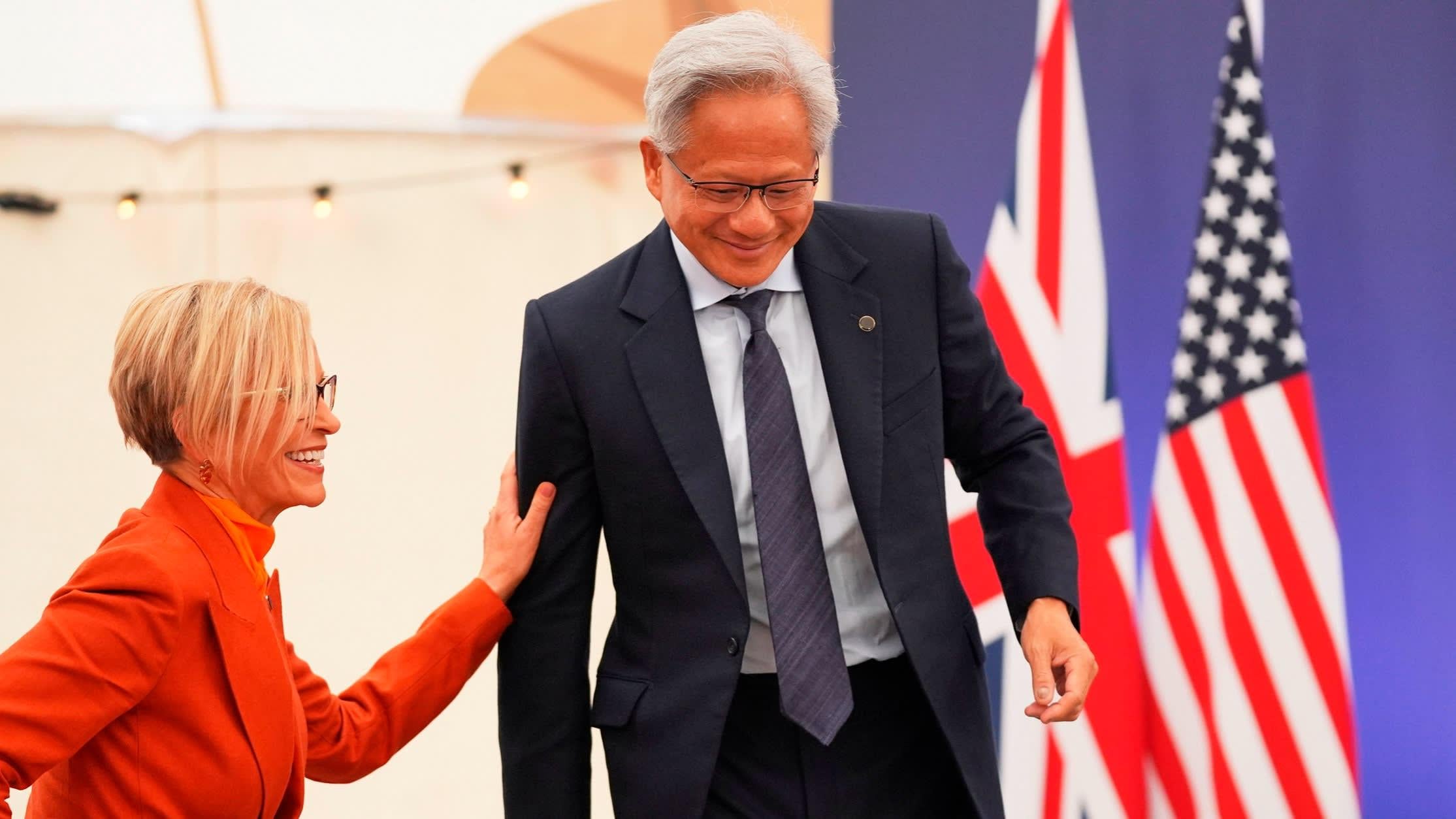
>The infatuation with US tech capitalism was on dazzling display in London last week as Jensen Huang, Nvidia co-founder, held court, dispensing $500mn cheques to British start-ups like lollipops and inviting Prime Minister Sir Keir Starmer on stage as his support act. The chipmaker is the prime example of the US venture capital-backed start-ups that have generated vast wealth. With a market capitalisation of $4.3tn, it far exceeds the $3tn value of the UK’s FTSE 100. In total, the Magnificent Seven US tech stocks — all VC-backed — are worth a cool $21tn.
>In its latest report on Britain’s growth imperative, the non-profit group The Purposeful Company argues that the UK is facing a “five minutes to midnight” moment and urgently needs to follow this VC-driven innovation approach. “A growth strategy that does not put the development of great companies at its heart is Hamlet without the prince,” it concludes. Across the Channel, the former Italian prime minister Mario Draghi has been saying something similar, arguing that the EU is facing an “existential challenge” because of a lack of economic competitiveness and needs to fire up its innovation engine. There is no doubt that Europe would benefit immensely from fully embracing many aspects of technological capitalism and creating a far bigger pan-European Nasdaq to empower the region’s fastest-growing start-ups. Y
>et stock market valuations can sometimes flatter to deceive and the Magnificent Seven are currently doped up by speculative artificial intelligence mania. There is also a certain irony in others eulogising the US innovation machine at the very moment when its foundations are being dismantled. As the economist William Janeway has argued, the US innovation economy is being systematically undermined by President Donald Trump’s assault on the research universities and government agencies that gird its technological prowess. The administration’s latest crackdown on H-1B foreign worker visa holders is also likely to slow the inflow of entrepreneurs who have been so critical for Silicon Valley’s success. “We expect financial markets to blow up episodically. But here it is the state that’s imploding,” Janeway tells me. Perhaps Europe could learn more from China’s “engineering state”, as the author Dan Wang calls it, which has its own claims to being the next miracle capitalism.
>As Wang explains in his book Breakneck, Beijing has absorbed many of the lessons of US technological capitalism, stirring in some Chinese characteristics, too. Like the US, China has tremendous entrepreneurial hustle, vibrant VC investors and ferocious competition between start-ups. Unlike the US today, China also has a mission-driven government that invests heavily in fundamental research, green energy and public infrastructure. Yet, as Wang says, this model is marred by repressive political control and the arbitrary rule of law. In any event, Europe has all the resources to reinvigorate its own innovation model, says Nicolas Colin, author of the Drift Signal newsletter. VC investment may have been the perfect mechanism to finance capital-light and massively scalable software companies but the future productivity gains of AI will come from applying the technology to manufacturing hardware, he argues. In that realm, Europe’s rich industrial heritage, highly trained workforce and sophisticated bank financing expertise are an advantage. Colin points to the recent tie-up between the Dutch semiconductor equipment manufacturer ASML and French AI start-up Mistral as an example of how hardware and software expertise will increasingly fuse. It is always fanciful to imagine that countries can simply copy others’ forms of capitalism, so deeply rooted in national cultures, histories and psychoses. Europe has to reinvent its own model — and fast. But a pussycat cannot become a tiger just by visiting the zoo.
Firm-Examination2134 on
AI will be the next big change in the economic, social and historical development of the world, and we simply don’t know how and who it will benefit first
Open source Chinese AIs are less than half a year behind SOTA, which could lead to very decentralized adoption once the tech is good enough, making the relative power of the US and other rich countries decline very fast, as an AI superdoctor is more useful when you have no doctor to begin with
On the other hand, maybe compute and energy are such bottlenecks that either tue US or China will absolutely dominate all others, depending on which one of the two is a bigger bottleneck
Maybe the recursive forces are so strong that soon after it starts to significantly impact the economy, ASI quickly emerges and we have no idea what to do next
The point is, miracle capitalism is more cloudy than ever, we cannot gaze into the future at all but in the shortest of terms

2 Comments
>Every few decades, the world lauds a new form of miracle capitalism.
>In the 1950s, it was Germany’s stakeholder capitalism that propelled the Wirtschaftswunder (economic miracle) of postwar Europe. In the 1970s, Japan’s developmental capitalism inspired the east Asian economic miracle. In the 1990s, US shareholder capitalism driven by Wall Street generated seemingly miraculous stock market returns.
>Since the 2010s, it has arguably been technological capitalism as a few US tech companies have come to dominate the global digital economy and stock market valuations. But history suggests that just as a model of miracle capitalism becomes universally fashionable, its flaws surface and market bubbles burst. Will the same be true today?
>The infatuation with US tech capitalism was on dazzling display in London last week as Jensen Huang, Nvidia co-founder, held court, dispensing $500mn cheques to British start-ups like lollipops and inviting Prime Minister Sir Keir Starmer on stage as his support act. The chipmaker is the prime example of the US venture capital-backed start-ups that have generated vast wealth. With a market capitalisation of $4.3tn, it far exceeds the $3tn value of the UK’s FTSE 100. In total, the Magnificent Seven US tech stocks — all VC-backed — are worth a cool $21tn.
>In its latest report on Britain’s growth imperative, the non-profit group The Purposeful Company argues that the UK is facing a “five minutes to midnight” moment and urgently needs to follow this VC-driven innovation approach. “A growth strategy that does not put the development of great companies at its heart is Hamlet without the prince,” it concludes. Across the Channel, the former Italian prime minister Mario Draghi has been saying something similar, arguing that the EU is facing an “existential challenge” because of a lack of economic competitiveness and needs to fire up its innovation engine. There is no doubt that Europe would benefit immensely from fully embracing many aspects of technological capitalism and creating a far bigger pan-European Nasdaq to empower the region’s fastest-growing start-ups. Y
>et stock market valuations can sometimes flatter to deceive and the Magnificent Seven are currently doped up by speculative artificial intelligence mania. There is also a certain irony in others eulogising the US innovation machine at the very moment when its foundations are being dismantled. As the economist William Janeway has argued, the US innovation economy is being systematically undermined by President Donald Trump’s assault on the research universities and government agencies that gird its technological prowess. The administration’s latest crackdown on H-1B foreign worker visa holders is also likely to slow the inflow of entrepreneurs who have been so critical for Silicon Valley’s success. “We expect financial markets to blow up episodically. But here it is the state that’s imploding,” Janeway tells me. Perhaps Europe could learn more from China’s “engineering state”, as the author Dan Wang calls it, which has its own claims to being the next miracle capitalism.
>As Wang explains in his book Breakneck, Beijing has absorbed many of the lessons of US technological capitalism, stirring in some Chinese characteristics, too. Like the US, China has tremendous entrepreneurial hustle, vibrant VC investors and ferocious competition between start-ups. Unlike the US today, China also has a mission-driven government that invests heavily in fundamental research, green energy and public infrastructure. Yet, as Wang says, this model is marred by repressive political control and the arbitrary rule of law. In any event, Europe has all the resources to reinvigorate its own innovation model, says Nicolas Colin, author of the Drift Signal newsletter. VC investment may have been the perfect mechanism to finance capital-light and massively scalable software companies but the future productivity gains of AI will come from applying the technology to manufacturing hardware, he argues. In that realm, Europe’s rich industrial heritage, highly trained workforce and sophisticated bank financing expertise are an advantage. Colin points to the recent tie-up between the Dutch semiconductor equipment manufacturer ASML and French AI start-up Mistral as an example of how hardware and software expertise will increasingly fuse. It is always fanciful to imagine that countries can simply copy others’ forms of capitalism, so deeply rooted in national cultures, histories and psychoses. Europe has to reinvent its own model — and fast. But a pussycat cannot become a tiger just by visiting the zoo.
AI will be the next big change in the economic, social and historical development of the world, and we simply don’t know how and who it will benefit first
Open source Chinese AIs are less than half a year behind SOTA, which could lead to very decentralized adoption once the tech is good enough, making the relative power of the US and other rich countries decline very fast, as an AI superdoctor is more useful when you have no doctor to begin with
On the other hand, maybe compute and energy are such bottlenecks that either tue US or China will absolutely dominate all others, depending on which one of the two is a bigger bottleneck
Maybe the recursive forces are so strong that soon after it starts to significantly impact the economy, ASI quickly emerges and we have no idea what to do next
The point is, miracle capitalism is more cloudy than ever, we cannot gaze into the future at all but in the shortest of terms