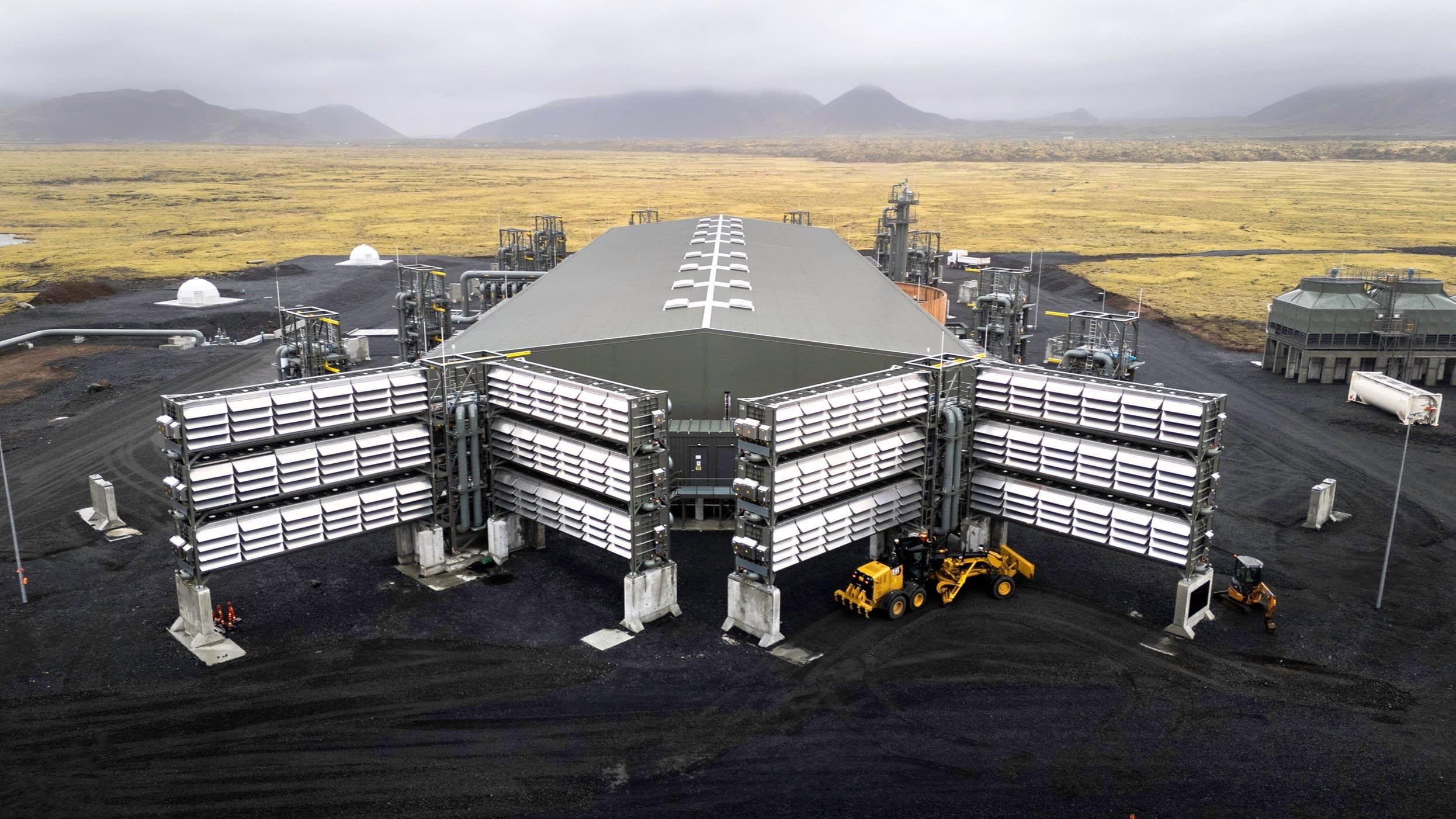
Direct Air Capture (DAC) has often been touted as a tool to combat climate change however costs are not falling as quickly as expected. While part of this may be blamed on a drop in investment in green technologies and firms, it is also worth reassessing the long term role of DACs and how realistic future estimations of their impact are. Ultimately, Direct carbon sequestration will be necessary at some level to achieve net zero goals or otherwise meeting climate goals, but the time they may be broadly viable might be further than we thought.
randommathaccount on
!ping ECO
DEEP_STATE_NATE on
I am once again begging someone to start Stratospheric aerosol injections
TrappedInASkinnerBox on
This shouldn’t surprise anyone – with the low concentration of CO2 in air, it’s going to be extremely energy intensive to do direct air capture.
It’s only possibly viable in a future where we’ve heavily overbuilt renewables to deal with their intermittency, so when it’s sunny and windy electricity is free.
sleepyrivertroll on
While I do think that long term we will need DAC, there are plenty of other carbon mitigation efforts to be made with current technology. Biochar and advanced weathering are technologies that can be implemented today.
DAC has to compete with turning crop waste and weeds into carbon and mixing it into the soil. If we are serious about things, we would be scaling those up as soon as we can. Sadly, I don’t think we’re really serious since people got wooed into dumping money into DAC using unproven technology.
Juggerginge on
CO2 capture should and always will be focused on scrubbing CO2 exhaust streams from commercial plants, and the tech to do so is pretty good and implemented.
DAC was sorta a pipe dream and NSF funding hole but I think some of the fundamentals gained from studying DAC will help other parts of the CO2 chemistry field.

6 Comments
[archive link](https://archive.is/20250928081503/https://www.ft.com/content/fa4ce69b-e925-4324-a027-cdf86e66163f)
Direct Air Capture (DAC) has often been touted as a tool to combat climate change however costs are not falling as quickly as expected. While part of this may be blamed on a drop in investment in green technologies and firms, it is also worth reassessing the long term role of DACs and how realistic future estimations of their impact are. Ultimately, Direct carbon sequestration will be necessary at some level to achieve net zero goals or otherwise meeting climate goals, but the time they may be broadly viable might be further than we thought.
!ping ECO
I am once again begging someone to start Stratospheric aerosol injections
This shouldn’t surprise anyone – with the low concentration of CO2 in air, it’s going to be extremely energy intensive to do direct air capture.
It’s only possibly viable in a future where we’ve heavily overbuilt renewables to deal with their intermittency, so when it’s sunny and windy electricity is free.
While I do think that long term we will need DAC, there are plenty of other carbon mitigation efforts to be made with current technology. Biochar and advanced weathering are technologies that can be implemented today.
DAC has to compete with turning crop waste and weeds into carbon and mixing it into the soil. If we are serious about things, we would be scaling those up as soon as we can. Sadly, I don’t think we’re really serious since people got wooed into dumping money into DAC using unproven technology.
CO2 capture should and always will be focused on scrubbing CO2 exhaust streams from commercial plants, and the tech to do so is pretty good and implemented.
DAC was sorta a pipe dream and NSF funding hole but I think some of the fundamentals gained from studying DAC will help other parts of the CO2 chemistry field.