
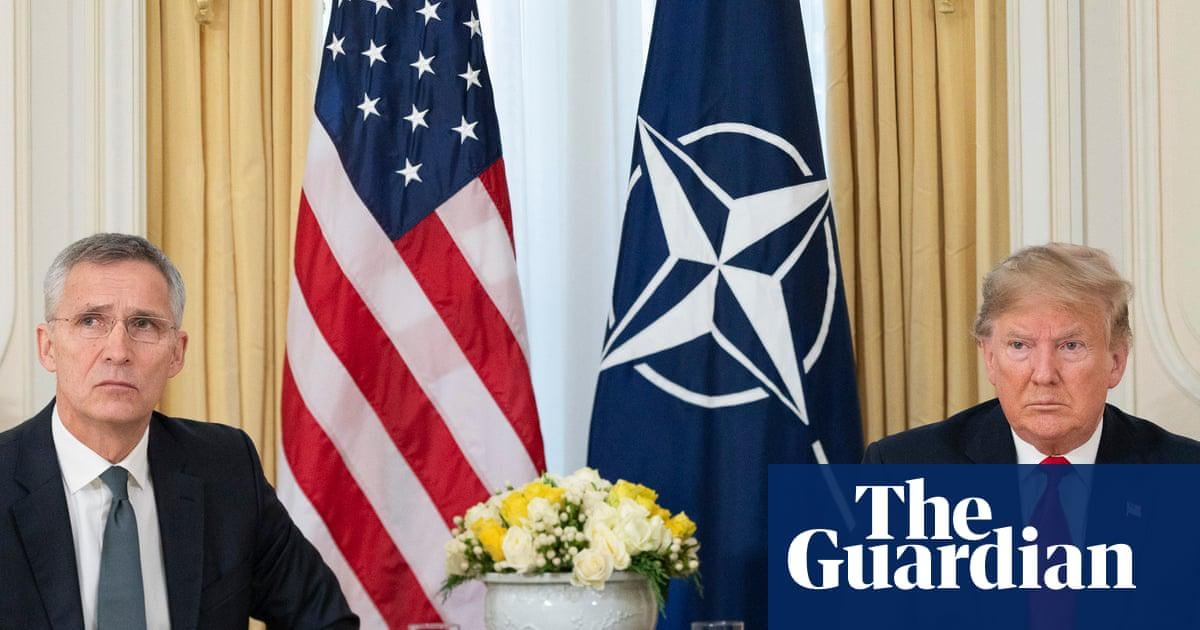
‘I’m leaving,’ Trump said. ‘There’s no reason to be here any more’: inside the meeting that brought Nato to the brink
Posted by IHateTrains123
‘I’m leaving,’ Trump said. ‘There’s no reason to be here any more’: inside the meeting that brought Nato to the brink
Posted by IHateTrains123
2 Comments
>Then, as I had done in many other conversations, I [Jens Stoltenberg] referenced Norway’s experiences. “You know, Mr President, as former prime minister of Norway, I know that it’s possible to speak with the Russians.”
>Trump cast a questioning look. “Are you Norwegian?”
>I understood why he was asking – over the years I’ve received many heads of organisations myself, and it isn’t always easy to remember where each comes from. I smiled. “Yes, I’m Norwegian.”
>“Do you know Celina Midelfart?”
>“Yes, I’ve met her several times. She’s a well-known person in Norway,” I replied.
>“Nice girl. What they wrote about us in the Norwegian papers – was it good or bad?”
>I remembered seeing newspaper images of Trump and the Norwegian cosmetics heiress and investor at some sporting event or other, but more than that I couldn’t recall. I had no idea what the papers had said.
>“Oh yes, the reporting was positive. She’s married to a rich Norwegian now,” I said.
>“He’s not rich.”
>So the president of the United States clearly knew who investor Tor Olav Trøim was. But were you rich if you had a few billion kroner to your name? Possibly not, in Donald Trump’s eyes.
>After about 20 minutes, our private conversation was over. Trump’s advisers and several members of my delegation joined us. I noticed my colleagues looking on anxiously as Trump and I shook hands once more for the photographers. But everyone was cheated out of a potentially amusing anecdote.
>For Trump, the most important issue was Nato members’ defence spending. I wanted him to take a more positive view of the alliance and had brought along a graph that illustrated spending was increasing. Trump was most concerned with the fact that only five member states had achieved the goal of spending 2% of GDP on defence. I pointed out that several countries were close, and six or seven set to reach the target in the near future. Then there was Iceland: it has no armed forces, so would never spend 2% of its GDP on defence. It was therefore actually five out of 27 countries who had achieved the goal, rather than five out of 28, I said, thinking I may be coming across as rather nerdy with all these figures.
>But this caught Trump’s interest, if not in the way I had intended. “Then what do we want with Iceland?”
>Before I could say anything further, Jim Mattis came to my aid, explaining how important Nato’s bases there were for the alliance’s submarines, ships and planes: “Mr President, they’re good to have if you want to track down Russian subs.” Trump thought for a moment. “Well, then we’ll let Iceland stay a member,” he said.
!ping Foreign-policy
I swear to god if Trump kills the greatest and most powerful alliance in history.