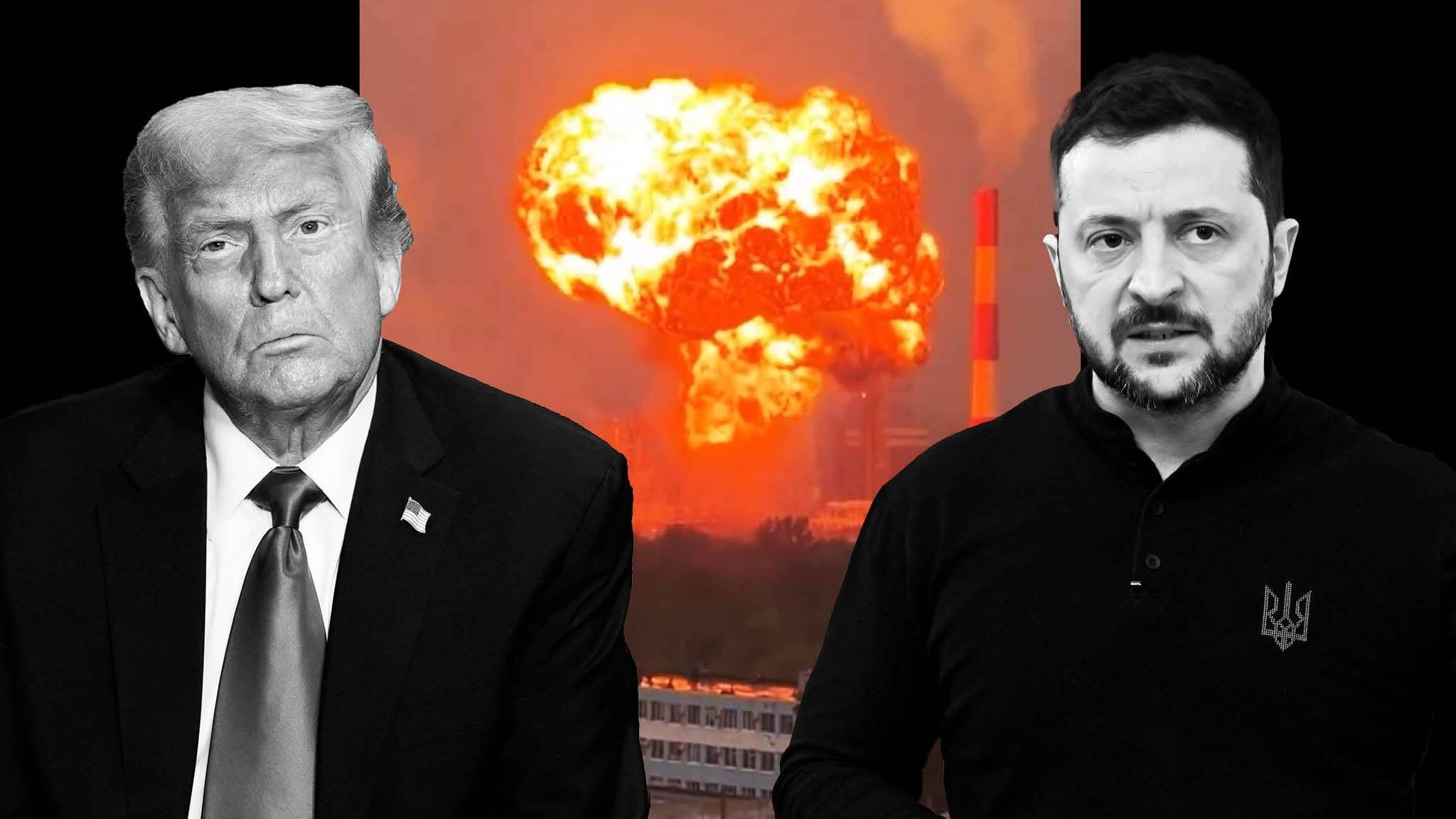
The US has for months been helping Ukraine mount long-range strikes on Russian energy facilities, in what officials say is a co-ordinated effort to weaken Vladimir Putin’s economy and force him to the negotiating table.
American intelligence shared with Kyiv has enabled strikes on important Russian energy assets including oil refineries far beyond the frontline, according to multiple Ukrainian and US officials familiar with the campaign.
**The previously unreported support has intensified since midsummer and has been crucial in helping Ukraine carry out attacks that Joe Biden’s White House discouraged. Kyiv’s strikes have driven up energy prices in Russia and prompted Moscow to cut diesel exports and import fuel.**
The intelligence sharing is the latest sign that Trump has deepened his support for Ukraine as his frustration with Russia has grown.
The shift came after a phone call between Donald Trump and Volodymyr Zelenskyy in July, when the FT reported the US president asked whether Ukraine could strike Moscow if Washington provided long-range weapons.
Trump signalled his backing for a strategy to “make them [Russians] feel the pain” and compel the Kremlin to negotiate, said the two people briefed on the call. The White House later said Trump was “merely asking a question, not encouraging further killing”.
The US intelligence helps Kyiv shape route planning, altitude, timing and mission decisions, enabling Ukraine’s long-range, one-way attack drones to evade Russian air defences, said the officials familiar with the matter.
Three people familiar with the operation said Washington was closely involved in all stages of planning. A US official said Ukraine selected the targets for long-range strikes and Washington then provided intelligence on the sites’ vulnerabilities.
But others involved and briefed on the operations said the US had also set out target priorities for the Ukrainians. One of them described Kyiv’s drone force as the “instrument” for Washington to undermine Russia’s economy and push Putin towards a settlement.
Trump has been open about his disappointment with Putin since he rolled out the red carpet for his Russian counterpart at an Alaska summit that made little tangible progress. This was a factor in Trump’s shift in support of deeper strikes, the people said.
Washington has long shared intelligence with Kyiv to assist in attacks on Russian military targets in occupied areas of Ukraine, and to provide advanced warning of Russian missile and drone strikes. The Biden administration approved strikes with US Himars and Atacms missiles inside a Russian region bordering Ukraine after North Korea deployed troops there to bolster Moscow’s forces.
But the US has not acknowledged a direct role in Ukraine’s strikes on Russian energy facilities. Washington has long remained cautious about actions that could escalate the war and draw it more directly into conflict with Moscow.
The growing operational support from the Trump administration starkly contrasts with earlier in the US president’s second term, when he briefly halted intelligence sharing and military aid to Kyiv to pressure it into peace talks with Moscow.
Zelenskyy declined to speak about US intelligence’s role in his army’s deep strikes inside Russia in a briefing in Kyiv on Wednesday. But he said Ukraine was “working with US intelligence, primarily to defend ourselves”, referring to the Patriot, Nasams and Iris-T air defence systems provided by western partners.
Ukraine’s recent success with deep strikes was mostly because of technological upgrades to drones and increased domestic production, which has allowed Kyiv to launch more at once. “Our drones, drone-missiles and some missiles are getting better: more uses, greater production,” he said.
Right_Lecture3147 on
Impressive. Very nice
Golda_M on
Spook talk. Leaks and strategic half truths.
The political messaging here is “the thing itself” though, regardless of accuracy or honesty. The US is currently behind the “Russia gonna get its ask kicked” messaging, and this is inteneded as a negotiating ever.
How we got here:
Europe had a very hard time turning financial comittments into “force generation.” You can allocate cash, but that doesnt mean you can find ammo and arms to fill your order.
But… a lot of money *is* a lot of money. Ukraine’s military industry rapidly grew.. and extends into europe. US supplies becoming limited and unreliable “helped” with this.
Ukraine developed deep strike hardware and gradually put Russia’s energy at risk. Ukraine’s allies weren’t helpful here.
Like with Kursk… support came with success. Once Ukraine was successful, then people jump on.
This is a lesson to learn. Bandwagon is a major force on geopolitics, and projecting success is a first order strategic requirement.
Also see Israel: (1) Trump jumped into the Israel-Iran war (2) the world supported Israel’s war with Lebanon, because pagers and decapitation. (3) Hamas is flying flags and executing people in the streets all morning… to project success.
This is analogous also to politics, euntrepreneurship, social movements. Bandwagon is a big deal.

3 Comments
The US has for months been helping Ukraine mount long-range strikes on Russian energy facilities, in what officials say is a co-ordinated effort to weaken Vladimir Putin’s economy and force him to the negotiating table.
American intelligence shared with Kyiv has enabled strikes on important Russian energy assets including oil refineries far beyond the frontline, according to multiple Ukrainian and US officials familiar with the campaign.
**The previously unreported support has intensified since midsummer and has been crucial in helping Ukraine carry out attacks that Joe Biden’s White House discouraged. Kyiv’s strikes have driven up energy prices in Russia and prompted Moscow to cut diesel exports and import fuel.**
The intelligence sharing is the latest sign that Trump has deepened his support for Ukraine as his frustration with Russia has grown.
The shift came after a phone call between Donald Trump and Volodymyr Zelenskyy in July, when the FT reported the US president asked whether Ukraine could strike Moscow if Washington provided long-range weapons.
Trump signalled his backing for a strategy to “make them [Russians] feel the pain” and compel the Kremlin to negotiate, said the two people briefed on the call. The White House later said Trump was “merely asking a question, not encouraging further killing”.
The US intelligence helps Kyiv shape route planning, altitude, timing and mission decisions, enabling Ukraine’s long-range, one-way attack drones to evade Russian air defences, said the officials familiar with the matter.
Three people familiar with the operation said Washington was closely involved in all stages of planning. A US official said Ukraine selected the targets for long-range strikes and Washington then provided intelligence on the sites’ vulnerabilities.
But others involved and briefed on the operations said the US had also set out target priorities for the Ukrainians. One of them described Kyiv’s drone force as the “instrument” for Washington to undermine Russia’s economy and push Putin towards a settlement.
Trump has been open about his disappointment with Putin since he rolled out the red carpet for his Russian counterpart at an Alaska summit that made little tangible progress. This was a factor in Trump’s shift in support of deeper strikes, the people said.
Washington has long shared intelligence with Kyiv to assist in attacks on Russian military targets in occupied areas of Ukraine, and to provide advanced warning of Russian missile and drone strikes. The Biden administration approved strikes with US Himars and Atacms missiles inside a Russian region bordering Ukraine after North Korea deployed troops there to bolster Moscow’s forces.
But the US has not acknowledged a direct role in Ukraine’s strikes on Russian energy facilities. Washington has long remained cautious about actions that could escalate the war and draw it more directly into conflict with Moscow.
The growing operational support from the Trump administration starkly contrasts with earlier in the US president’s second term, when he briefly halted intelligence sharing and military aid to Kyiv to pressure it into peace talks with Moscow.
Zelenskyy declined to speak about US intelligence’s role in his army’s deep strikes inside Russia in a briefing in Kyiv on Wednesday. But he said Ukraine was “working with US intelligence, primarily to defend ourselves”, referring to the Patriot, Nasams and Iris-T air defence systems provided by western partners.
Ukraine’s recent success with deep strikes was mostly because of technological upgrades to drones and increased domestic production, which has allowed Kyiv to launch more at once. “Our drones, drone-missiles and some missiles are getting better: more uses, greater production,” he said.
Impressive. Very nice
Spook talk. Leaks and strategic half truths.
The political messaging here is “the thing itself” though, regardless of accuracy or honesty. The US is currently behind the “Russia gonna get its ask kicked” messaging, and this is inteneded as a negotiating ever.
How we got here:
Europe had a very hard time turning financial comittments into “force generation.” You can allocate cash, but that doesnt mean you can find ammo and arms to fill your order.
But… a lot of money *is* a lot of money. Ukraine’s military industry rapidly grew.. and extends into europe. US supplies becoming limited and unreliable “helped” with this.
Ukraine developed deep strike hardware and gradually put Russia’s energy at risk. Ukraine’s allies weren’t helpful here.
Like with Kursk… support came with success. Once Ukraine was successful, then people jump on.
This is a lesson to learn. Bandwagon is a major force on geopolitics, and projecting success is a first order strategic requirement.
Also see Israel: (1) Trump jumped into the Israel-Iran war (2) the world supported Israel’s war with Lebanon, because pagers and decapitation. (3) Hamas is flying flags and executing people in the streets all morning… to project success.
This is analogous also to politics, euntrepreneurship, social movements. Bandwagon is a big deal.