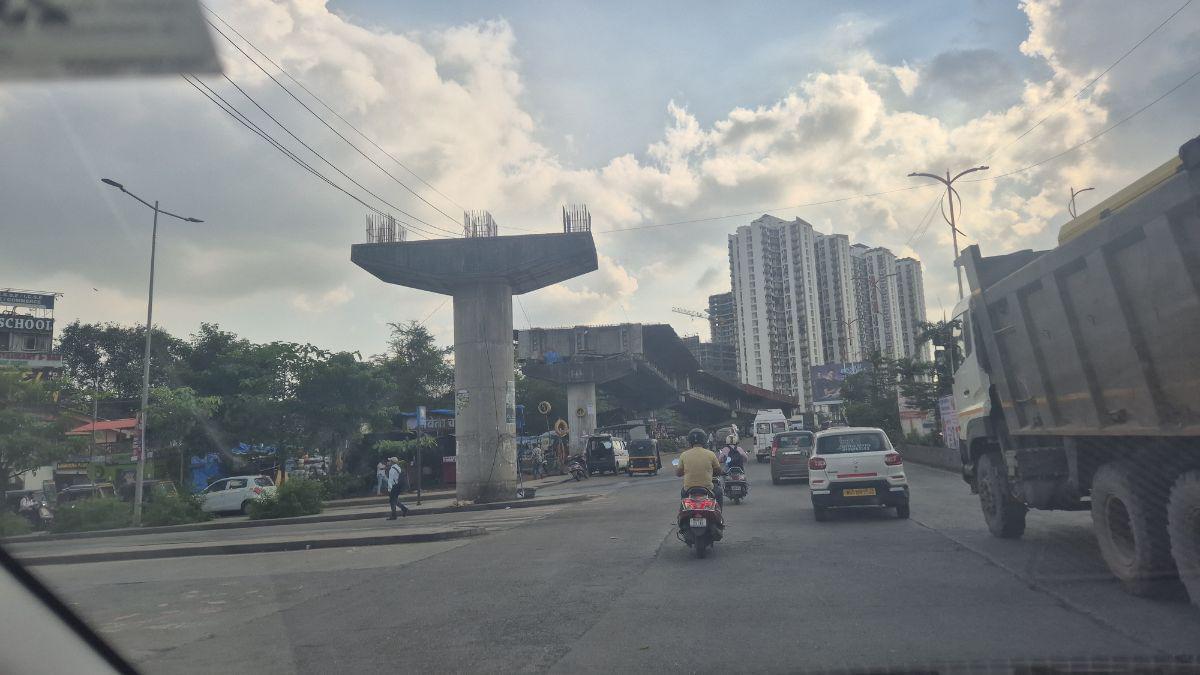
**Mumbai:** The Palava flyover in Mumbai had to be shut for traffic barely seven days after its inauguration on 4 July. The arterial infrastructure in Kalyan had taken seven years to be ready. Blocks of gravel melting at the roadside, bulldozers, and JCBs are now back at work, tearing up this newly built road and relaying it with fresh asphalt. The bridge wears the badge of making it to the long list of great Indian infrastructure debacles.
Bridges are being built with sharp right-angle turns, many are falling, and highways are cutting through people’s balconies. Flyovers are folding. India is having a civil engineering crisis, unable to keep up with its infrastructure ambitions.
India’s financial capital, which is spending billions of dollars for an infrastructure uplift, has become one of the biggest examples telling everything that’s wrong with the sector. Mumbai seems to be falling apart, and at the centre of it is poor civil engineering. The Gokhale bridge in Andheri took a long time to reopen, but was misaligned. Patchwork is already underway at Atal Setu, the bridge built to last 100 years, and the National Highway 66 has been under construction since 2008, evoking protests by residents in neighbourhood towns and villages.
India is building itself from the ground up. Swanky expressways, highways, and flyovers are springing up across the country, as the Ministry of Road Transport and Highways pours thousands of crores into infrastructure. In 2024-25 alone, the capital expenditure of the Ministry of Road Transport and Highways was Rs 3.1 lakh crore—5.7 times more than the Rs 53,000 crore budget in [2013-14](https://morth.nic.in/sites/default/files/Annual-Report-English-with-Cover.pdf) on highways and bridges. But this infrastructure push hasn’t come with the quality upgrade. Currently, nearly [580 highway projects](https://economictimes.indiatimes.com/news/economy/infrastructure/highway-projects-worth-4-lakh-crore-face-delays-200-more-worth-1-6-lakh-crore-await-construction-start/articleshow/123139930.cms?from=mdr) worth Rs 4 lakh crore reportedly face delays, mostly facing land acquisition issues. And fingers invariably point at India’s civil engineers, raising questions about their abilities. These engineers, who often describe themselves as nation-builders, work in a field riddled with corruption, exhausting work hours, poor pay, and minimal opportunities for career progression. Several civil engineers ThePrint spoke to described civil as the single most exploitative branch of engineering.
The popularity of civil engineering among students is dipping too.
altacan on
Dang, even the worse of tofu dreg Chinese corruption isn’t as bad as the examples in this article. At least they’re failing before enough people start to use them to get hurt.

2 Comments
**Mumbai:** The Palava flyover in Mumbai had to be shut for traffic barely seven days after its inauguration on 4 July. The arterial infrastructure in Kalyan had taken seven years to be ready. Blocks of gravel melting at the roadside, bulldozers, and JCBs are now back at work, tearing up this newly built road and relaying it with fresh asphalt. The bridge wears the badge of making it to the long list of great Indian infrastructure debacles.
Bridges are being built with sharp right-angle turns, many are falling, and highways are cutting through people’s balconies. Flyovers are folding. India is having a civil engineering crisis, unable to keep up with its infrastructure ambitions.
[](https://vdo.ai/contact?utm_medium=video&utm_term=theprint.in&utm_source=vdoai_logo)
India’s financial capital, which is spending billions of dollars for an infrastructure uplift, has become one of the biggest examples telling everything that’s wrong with the sector. Mumbai seems to be falling apart, and at the centre of it is poor civil engineering. The Gokhale bridge in Andheri took a long time to reopen, but was misaligned. Patchwork is already underway at Atal Setu, the bridge built to last 100 years, and the National Highway 66 has been under construction since 2008, evoking protests by residents in neighbourhood towns and villages.
India is building itself from the ground up. Swanky expressways, highways, and flyovers are springing up across the country, as the Ministry of Road Transport and Highways pours thousands of crores into infrastructure. In 2024-25 alone, the capital expenditure of the Ministry of Road Transport and Highways was Rs 3.1 lakh crore—5.7 times more than the Rs 53,000 crore budget in [2013-14](https://morth.nic.in/sites/default/files/Annual-Report-English-with-Cover.pdf) on highways and bridges. But this infrastructure push hasn’t come with the quality upgrade. Currently, nearly [580 highway projects](https://economictimes.indiatimes.com/news/economy/infrastructure/highway-projects-worth-4-lakh-crore-face-delays-200-more-worth-1-6-lakh-crore-await-construction-start/articleshow/123139930.cms?from=mdr) worth Rs 4 lakh crore reportedly face delays, mostly facing land acquisition issues. And fingers invariably point at India’s civil engineers, raising questions about their abilities. These engineers, who often describe themselves as nation-builders, work in a field riddled with corruption, exhausting work hours, poor pay, and minimal opportunities for career progression. Several civil engineers ThePrint spoke to described civil as the single most exploitative branch of engineering.
The L-1 contracts awarded by the government agencies further contribute toward denting the quality of India’s infrastructure. An L1 contract means that after technical qualifications have been ascertained, the government hands over the work to the lowest [bidder.](https://sansad.in/getFile/lsscommittee/Public%20Accounts/18_Public_Accounts_33.pdf?source=loksabhadocs)
The popularity of civil engineering among students is dipping too.
Dang, even the worse of tofu dreg Chinese corruption isn’t as bad as the examples in this article. At least they’re failing before enough people start to use them to get hurt.