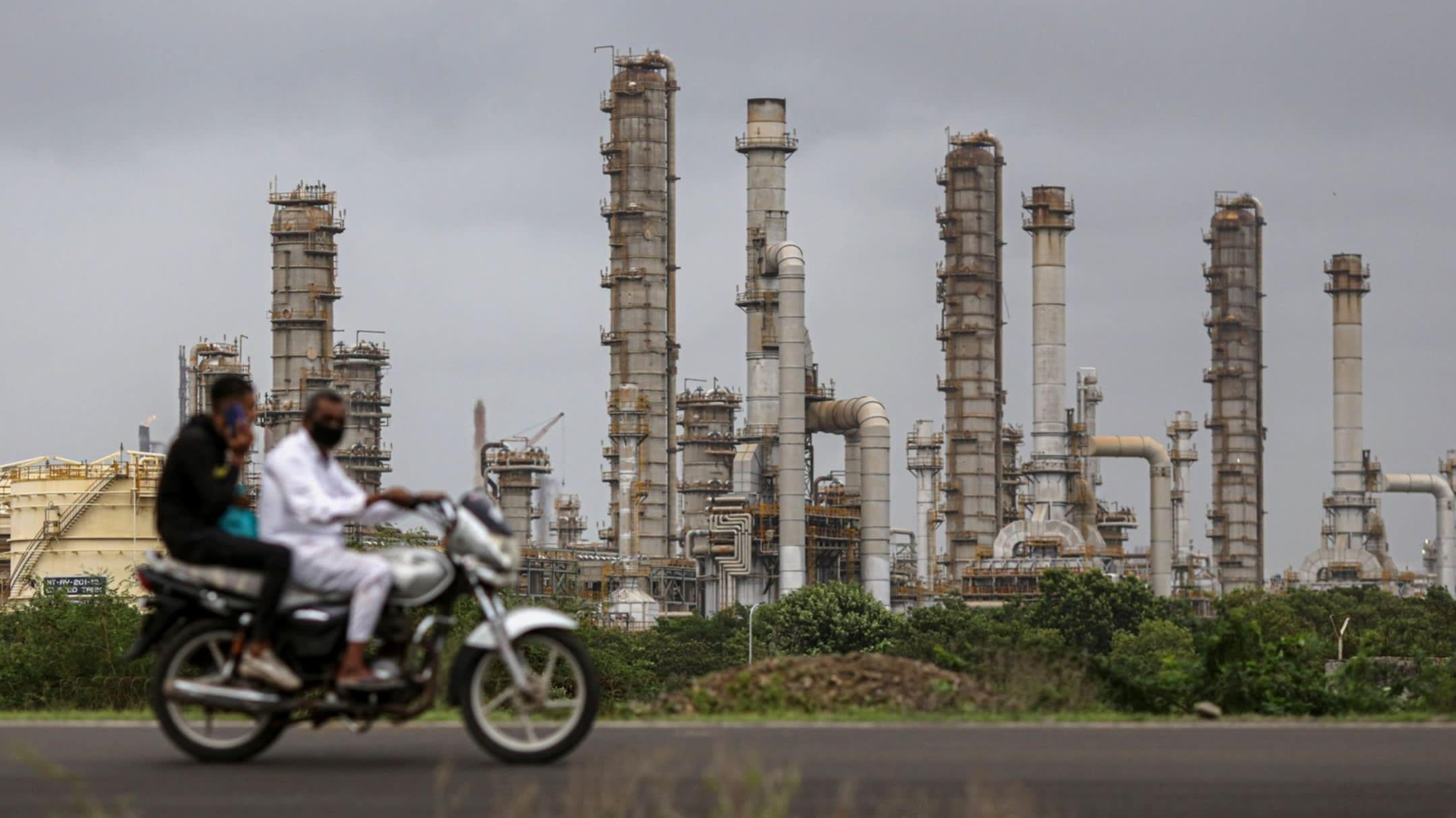
India and China’s largest refineries are looking at curbing imports of Russian oil, cutting off a key source of funds for Vladimir Putin’s war machine following Donald Trump’s sharp escalation of US sanctions.
Senior traders and officials said refineries, including the world’s largest facility in India and state-backed Chinese operators, were pausing most purchases as Trump tries to drive Putin to the negotiating table with Ukraine.
India’s Reliance Industries said on Thursday it would “recalibrate” its imports in line with government guidelines, as oil prices rose more than 5 per cent after the US measures against Russian groups Rosneft and Lukoil reverberated through global energy markets.
One person familiar with the discussions added that Reliance was unlikely to “take a chance” that could result in punishment by the US, after sanctions were announced on Wednesday night.
A person who works closely with the largest Chinese state-backed oil companies and Indian refineries said they had all paused purchases following the imposition of US sanctions, though smaller independent Chinese refiners would continue to import Russian crude.
Beijing has requested that several Chinese state oil majors suspend purchases of seaborne Russian oil following US and European sanctions, according to a Chinese trader with one of the state-owned groups. But the trader said the pause may only prove to be temporary.
China’s foreign ministry did not immediately comment.
The Trump administration’s move to step up economic measures against Moscow comes after relations between the US president and Russia’s President Vladimir Putin have deteriorated, with the cancellation of a planned summit in Budapest.
On Thursday, Putin said: “This is an attempt to put pressure on Russia. No self-respecting country ever does anything under pressure.”
“The new western sanctions will not have a significant impact on the Russian economy,” he added, arguing that replacing Russian oil on the global market would take time.
One Opec delegate said that the cartel would be ready to increase oil supplies if needed by the time of a scheduled ministerial meeting in late November — but cautioned that there was as yet “no official agreement or discussion” on the issue.
Since the full-blown war in Ukraine started in 2022, India has become the biggest buyer of seaborne Russian crude, as sanctions pushed other buyers out of the market.
Trump has previously fiercely attacked New Delhi for snapping up Russian oil, imposing steep sanctions in an attempt to dissuade it from funnelling money to Moscow.
China and India together account for about 80 per cent of all Russia’s crude exports, with oil and gas contributing about a quarter of Moscow’s federal budget.
Roughly half of China’s imports of Russian oil come by sea, with the rest by overland pipeline, which traders said may be less exposed to US sanctions.

1 Comment
India and China’s largest refineries are looking at curbing imports of Russian oil, cutting off a key source of funds for Vladimir Putin’s war machine following Donald Trump’s sharp escalation of US sanctions.
Senior traders and officials said refineries, including the world’s largest facility in India and state-backed Chinese operators, were pausing most purchases as Trump tries to drive Putin to the negotiating table with Ukraine.
India’s Reliance Industries said on Thursday it would “recalibrate” its imports in line with government guidelines, as oil prices rose more than 5 per cent after the US measures against Russian groups Rosneft and Lukoil reverberated through global energy markets.
One person familiar with the discussions added that Reliance was unlikely to “take a chance” that could result in punishment by the US, after sanctions were announced on Wednesday night.
A person who works closely with the largest Chinese state-backed oil companies and Indian refineries said they had all paused purchases following the imposition of US sanctions, though smaller independent Chinese refiners would continue to import Russian crude.
Beijing has requested that several Chinese state oil majors suspend purchases of seaborne Russian oil following US and European sanctions, according to a Chinese trader with one of the state-owned groups. But the trader said the pause may only prove to be temporary.
China’s foreign ministry did not immediately comment.
The Trump administration’s move to step up economic measures against Moscow comes after relations between the US president and Russia’s President Vladimir Putin have deteriorated, with the cancellation of a planned summit in Budapest.
On Thursday, Putin said: “This is an attempt to put pressure on Russia. No self-respecting country ever does anything under pressure.”
“The new western sanctions will not have a significant impact on the Russian economy,” he added, arguing that replacing Russian oil on the global market would take time.
One Opec delegate said that the cartel would be ready to increase oil supplies if needed by the time of a scheduled ministerial meeting in late November — but cautioned that there was as yet “no official agreement or discussion” on the issue.
Since the full-blown war in Ukraine started in 2022, India has become the biggest buyer of seaborne Russian crude, as sanctions pushed other buyers out of the market.
Trump has previously fiercely attacked New Delhi for snapping up Russian oil, imposing steep sanctions in an attempt to dissuade it from funnelling money to Moscow.
China and India together account for about 80 per cent of all Russia’s crude exports, with oil and gas contributing about a quarter of Moscow’s federal budget.
Roughly half of China’s imports of Russian oil come by sea, with the rest by overland pipeline, which traders said may be less exposed to US sanctions.