> When businesses and ministers gathered in Birmingham this week for the government’s regional investment summit, Britain’s second-largest city had a ready-made pitch. “Thanks to HS2, this region will be just 38 minutes from central London — about Zone 5 on the Tube map,” West Midlands mayor Richard Parker told assembled guests of the flagship high-speed rail line, already emerging from the ground in the city centre. “We stand again at a turning point,” he added of the region’s fortunes.
> Birmingham has been through a difficult period. Already battling the bankruptcy of its local authority and high-profile bin strikes, the wider West Midlands has struggled with the impact of US President Donald Trump’s tariffs on its automotive industry. More recently, a fierce row erupted over whether fans of the Israeli team Maccabi Tel Aviv should be allowed to attend a football match in the city next month. HS2’s brand has also foundered. While visible progress is being made, the project, first announced in 2009, has become a symbol of Britain’s inability to build infrastructure on time or on budget. The Financial Times this week reported further delays to its timetable.
> Yet in Birmingham, where the line to London has been expected to open in the 2030s, civic leaders and investors believe the rail link is already key to the city’s renaissance. “HS2 may not be universally popular across political divides, but is a fantastic gift and opportunity for Birmingham attracting investment in people and money to the second city,” said Harris Beider, former pro-vice chancellor of Birmingham City University and founder of The Forward Institute, a think-tank focused on the city’s future. “In effect, Birmingham gets the benefit of being closer to London and the south east,” he added, “but can also forge its own distinct offer as a modern, progressive and diverse city”.
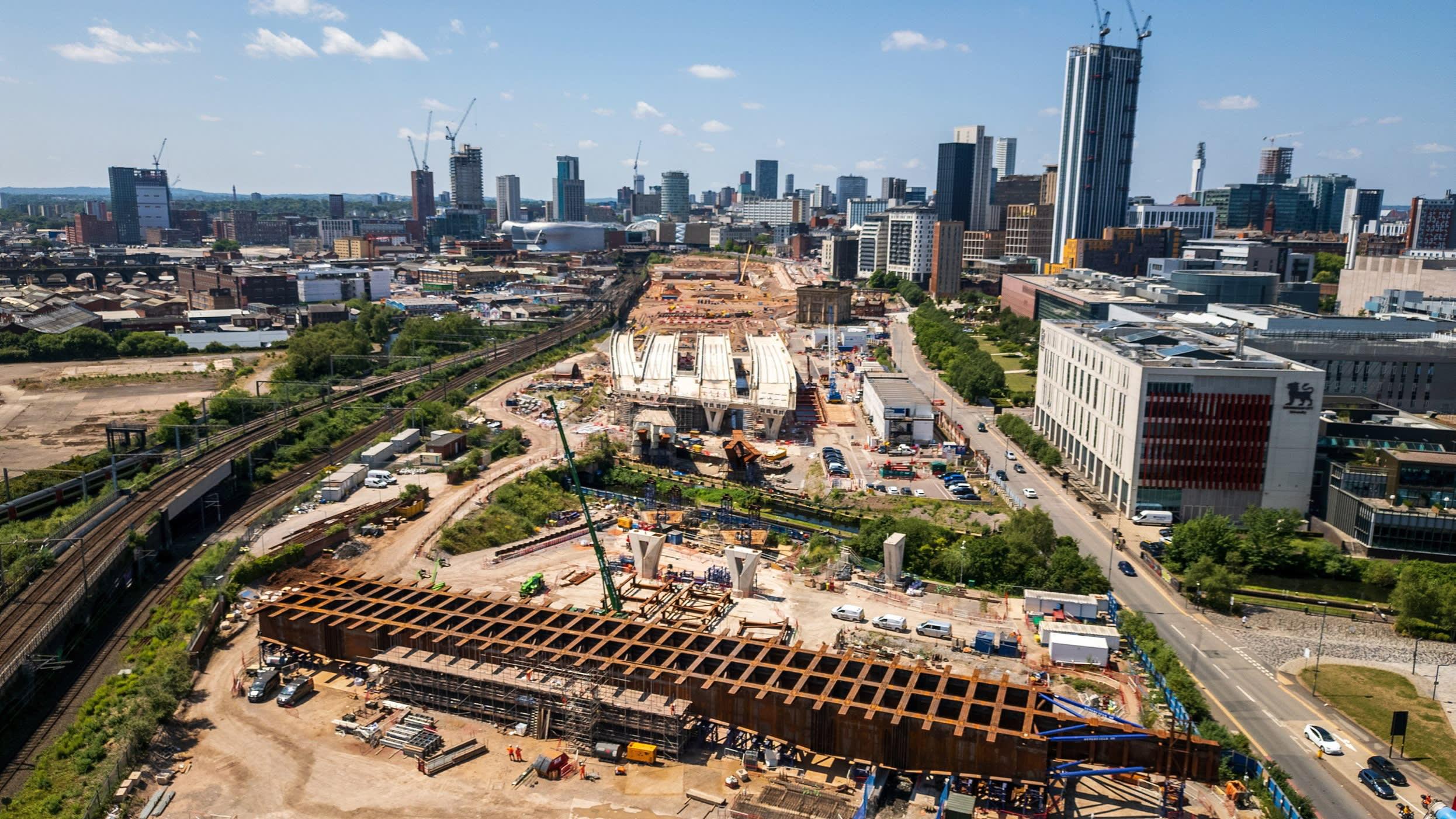
> Around the Curzon Street terminus under construction in the city centre, the viaducts that will carry HS2’s trains into the city from the south east are already appearing, as the potential of the new route starts to draw attention. At the investment summit, where chancellor Rachel Reeves was a keynote speaker, global real estate manager Hines announced £400 million of investment into the nearby Knowledge Quarter, a science cluster involving public, private and university partners. Tani Dulay, chief executive of developers Woodbourne Group, one of those partners, said HS2 was increasingly driving such investment. “It’s completely redefined how global investors look at Birmingham,” he said. “When you can reach London in under 50 minutes, Birmingham effectively becomes part of a dual-city economy. So from an investment perspective, you enter the commuter zone.”
> The line is also shaping how local leaders look at economic development, including pitches for government funding. Plans are under way for new tram lines linking communities in Birmingham to HS2’s station in Solihull, while Digbeth, a growing cultural quarter on the doorstep of the terminus, is looking to build on its existing fortunes. The neighbourhood is already home to Digbeth Loc Studios, founded by Peaky Blinders writer Stephen Knight, while the BBC is moving its regional headquarters nearby. Professor Andy Westwood, an expert in local economic development who hails from nearby Wolverhampton, said Birmingham’s pitch made economic sense, including the framing of its commuter times as equivalent to London’s Zone 5. “It’s basically a version of the Milton Keynes success,” he said of the agglomeration effects enjoyed by that city, which was built 50 miles away from London as a new town in the 1960s. “If you’re 30-50 minutes away from Euston, with regular rail links, there’s a model that works. And it’s not just Milton Keynes: the Home Counties have benefited from it for hundreds of years.”
> Nevertheless, he cautioned, Birmingham’s continued problems still need to be overcome. The city council has yet to emerge from bankruptcy declared two years ago, resulting in a sweeping programme of asset sales. Even beforehand, the authority had been through a turbulent decade, including vicious equal pay disputes and sustained political infighting. Local infrastructure also remains “pretty poor”, said Westwood, notwithstanding recent successes in attracting government investment for tram extensions. “There also isn’t tons of the right housing in the city centre — at least not on the scale of Manchester or Leeds.”Speaking to the FT earlier this year, Birmingham council leader John Cotton admitted the authority had been going through a “challenging time”. “The progress we’ve actually made over the last couple of years has been considerable,” he said, noting that the council had managed to agree a settlement in its long-standing equal pay dispute and balance the books. “It’s been also noted by government that we’re making progress, but there’s still much more to do,” added the Labour politician.
> HS2 is also still to emerge from serious troubles. The line’s northern leg to Manchester was abruptly cancelled two years ago by the Conservative government, which cited overspends on the southern leg. Meantime, in a letter to the leader of Staffordshire county council, HS2 chief executive Mark Wild said work to connect HS2 to the West Coast Main Line beyond Birmingham would be delayed by at least four years while the project concentrated on the London-Birmingham route. There is also no firm opening date for leg between Birmingham and London itself, as the project undergoes a “reset”.
> Still, none of those hurdles has stopped the city’s political and private sector ambassadors from leaning into their pitch. On stage with Reeves at Tuesday’s investment summit, Tom Wagner, co-owner of Knighthead Capital Management, said HS2 had “turned our head” when deciding to buy Birmingham City football club in 2023. A major cheerleader for the city, the US billionaire has since committed £3bn in further investment around the club’s stadium, while helping leaders lobby for further transport infrastructure funding from the Treasury. Reeves, who has consistently said that boosting economic growth is her top priority, told the FT afterwards that discussion of HS2’s journey times to London appeared to have opened eyes. “You could see people in the audience going ‘Gosh, that is pretty fast’,” she said. For delegates who usually commute to the capital from Essex and Kent, she added, “it turns out Birmingham is nearer”.

1 Comment
> When businesses and ministers gathered in Birmingham this week for the government’s regional investment summit, Britain’s second-largest city had a ready-made pitch. “Thanks to HS2, this region will be just 38 minutes from central London — about Zone 5 on the Tube map,” West Midlands mayor Richard Parker told assembled guests of the flagship high-speed rail line, already emerging from the ground in the city centre. “We stand again at a turning point,” he added of the region’s fortunes.
> Birmingham has been through a difficult period. Already battling the bankruptcy of its local authority and high-profile bin strikes, the wider West Midlands has struggled with the impact of US President Donald Trump’s tariffs on its automotive industry. More recently, a fierce row erupted over whether fans of the Israeli team Maccabi Tel Aviv should be allowed to attend a football match in the city next month. HS2’s brand has also foundered. While visible progress is being made, the project, first announced in 2009, has become a symbol of Britain’s inability to build infrastructure on time or on budget. The Financial Times this week reported further delays to its timetable.
> Yet in Birmingham, where the line to London has been expected to open in the 2030s, civic leaders and investors believe the rail link is already key to the city’s renaissance. “HS2 may not be universally popular across political divides, but is a fantastic gift and opportunity for Birmingham attracting investment in people and money to the second city,” said Harris Beider, former pro-vice chancellor of Birmingham City University and founder of The Forward Institute, a think-tank focused on the city’s future. “In effect, Birmingham gets the benefit of being closer to London and the south east,” he added, “but can also forge its own distinct offer as a modern, progressive and diverse city”.
> Around the Curzon Street terminus under construction in the city centre, the viaducts that will carry HS2’s trains into the city from the south east are already appearing, as the potential of the new route starts to draw attention. At the investment summit, where chancellor Rachel Reeves was a keynote speaker, global real estate manager Hines announced £400 million of investment into the nearby Knowledge Quarter, a science cluster involving public, private and university partners. Tani Dulay, chief executive of developers Woodbourne Group, one of those partners, said HS2 was increasingly driving such investment. “It’s completely redefined how global investors look at Birmingham,” he said. “When you can reach London in under 50 minutes, Birmingham effectively becomes part of a dual-city economy. So from an investment perspective, you enter the commuter zone.”
> The line is also shaping how local leaders look at economic development, including pitches for government funding. Plans are under way for new tram lines linking communities in Birmingham to HS2’s station in Solihull, while Digbeth, a growing cultural quarter on the doorstep of the terminus, is looking to build on its existing fortunes. The neighbourhood is already home to Digbeth Loc Studios, founded by Peaky Blinders writer Stephen Knight, while the BBC is moving its regional headquarters nearby. Professor Andy Westwood, an expert in local economic development who hails from nearby Wolverhampton, said Birmingham’s pitch made economic sense, including the framing of its commuter times as equivalent to London’s Zone 5. “It’s basically a version of the Milton Keynes success,” he said of the agglomeration effects enjoyed by that city, which was built 50 miles away from London as a new town in the 1960s. “If you’re 30-50 minutes away from Euston, with regular rail links, there’s a model that works. And it’s not just Milton Keynes: the Home Counties have benefited from it for hundreds of years.”
> Nevertheless, he cautioned, Birmingham’s continued problems still need to be overcome. The city council has yet to emerge from bankruptcy declared two years ago, resulting in a sweeping programme of asset sales. Even beforehand, the authority had been through a turbulent decade, including vicious equal pay disputes and sustained political infighting. Local infrastructure also remains “pretty poor”, said Westwood, notwithstanding recent successes in attracting government investment for tram extensions. “There also isn’t tons of the right housing in the city centre — at least not on the scale of Manchester or Leeds.”Speaking to the FT earlier this year, Birmingham council leader John Cotton admitted the authority had been going through a “challenging time”. “The progress we’ve actually made over the last couple of years has been considerable,” he said, noting that the council had managed to agree a settlement in its long-standing equal pay dispute and balance the books. “It’s been also noted by government that we’re making progress, but there’s still much more to do,” added the Labour politician.
> HS2 is also still to emerge from serious troubles. The line’s northern leg to Manchester was abruptly cancelled two years ago by the Conservative government, which cited overspends on the southern leg. Meantime, in a letter to the leader of Staffordshire county council, HS2 chief executive Mark Wild said work to connect HS2 to the West Coast Main Line beyond Birmingham would be delayed by at least four years while the project concentrated on the London-Birmingham route. There is also no firm opening date for leg between Birmingham and London itself, as the project undergoes a “reset”.
> Still, none of those hurdles has stopped the city’s political and private sector ambassadors from leaning into their pitch. On stage with Reeves at Tuesday’s investment summit, Tom Wagner, co-owner of Knighthead Capital Management, said HS2 had “turned our head” when deciding to buy Birmingham City football club in 2023. A major cheerleader for the city, the US billionaire has since committed £3bn in further investment around the club’s stadium, while helping leaders lobby for further transport infrastructure funding from the Treasury. Reeves, who has consistently said that boosting economic growth is her top priority, told the FT afterwards that discussion of HS2’s journey times to London appeared to have opened eyes. “You could see people in the audience going ‘Gosh, that is pretty fast’,” she said. For delegates who usually commute to the capital from Essex and Kent, she added, “it turns out Birmingham is nearer”.