The Malian government has ordered the closure of schools and universities nationwide until at least November 9 due to a fuel blockade enforced by jihadists that is threatening students’ mobility and power supply to educational institutions.
The Support Group to Islam and Muslims (known by its Arabic acronym JNIM) decreed a fuel blockade on major cities on September 3 as a reprisal to a military crackdown on illegal fuel sales and have since torched hundreds of tankers resupplying the landlocked country along the roads from Senegal, Ivory Coast and Guinea.
Mali has been embroiled in a civil war since 2012, when Tuareg separatists and Islamists struck an alliance to challenge Bamako’s central government for the control of the country. Their rapid advance was stopped, then reversed after a joint French-African intervention in 2013, but the subsequent counterinsurgency operations failed to prevent Mali from spiralling into unrest. The Malian Armed Forces (FAMa) seized power in two coups in 2020 and 2021, expelled the French Army, and pivoted to Russia as their main security partner, welcoming hundreds of paramilitary troops from Wagner and Afrika Corps on their territory, soon to be followed by Burkina Faso and Niger.
JNIM was founded in 2017 as a coalition of several jihadist organizations who swore allegiance to Al-Qaeda and the Taliban. It has since grown from a small rural insurgency to one of the most powerful non-state actors in the world, fielding thousands of fighters and operating as a proto-state on large parts of Mali and Burkina Faso, and smaller parts of Niger, Togo and Benin, levying taxes, enforcing a strict interpretation of sharia law, and taking over the lucrative illicit trade routes – human, mineral and drug trafficking – that cross the Sahara.
The war dramatically escalated following the coups d’etat as JNIM benefitted from a manpower surge caused by the exceptional brutality of the juntas and Russian paramilitaries. JNIM shifted strategy from an insurgency to a broader state-building project that sought to directly challenge Bamako’s effective control on the ground by flipping local elders to their side and directly targeting the revenue streams of the junta, notably by expanding operations to western and southern Mali, where 80% of Mali’s gold is produced, and most recently enforcing a fuel embargo against major cities.
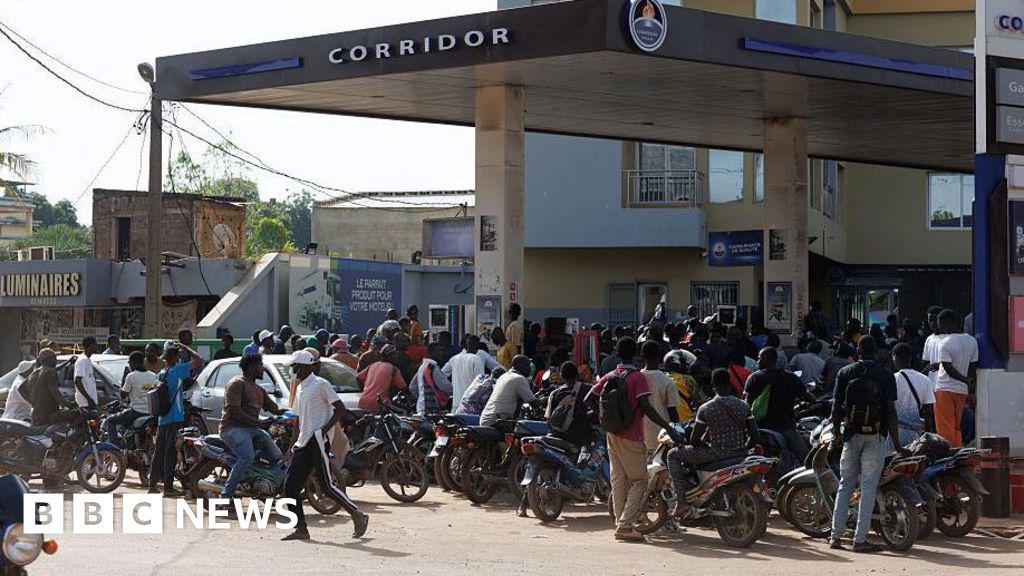
The effects of the blockade have been severely felt in recent weeks in Bamako, where hours-long queues have formed around gas stations, and where power availability fell from 19 to 6 hours a day in several areas as generators start running out of fuel. Two weeks ago, JNIM ordered bus companies nationwide to enforce gender segregation and strict Islamic dress code for passengers if they wanted to cross the checkpoints set up by jihadists between cities, another escalation in JNIM’s war against the Malian state.

1 Comment
!ping AFRICA
The Malian government has ordered the closure of schools and universities nationwide until at least November 9 due to a fuel blockade enforced by jihadists that is threatening students’ mobility and power supply to educational institutions.
The Support Group to Islam and Muslims (known by its Arabic acronym JNIM) decreed a fuel blockade on major cities on September 3 as a reprisal to a military crackdown on illegal fuel sales and have since torched hundreds of tankers resupplying the landlocked country along the roads from Senegal, Ivory Coast and Guinea.
Mali has been embroiled in a civil war since 2012, when Tuareg separatists and Islamists struck an alliance to challenge Bamako’s central government for the control of the country. Their rapid advance was stopped, then reversed after a joint French-African intervention in 2013, but the subsequent counterinsurgency operations failed to prevent Mali from spiralling into unrest. The Malian Armed Forces (FAMa) seized power in two coups in 2020 and 2021, expelled the French Army, and pivoted to Russia as their main security partner, welcoming hundreds of paramilitary troops from Wagner and Afrika Corps on their territory, soon to be followed by Burkina Faso and Niger.
JNIM was founded in 2017 as a coalition of several jihadist organizations who swore allegiance to Al-Qaeda and the Taliban. It has since grown from a small rural insurgency to one of the most powerful non-state actors in the world, fielding thousands of fighters and operating as a proto-state on large parts of Mali and Burkina Faso, and smaller parts of Niger, Togo and Benin, levying taxes, enforcing a strict interpretation of sharia law, and taking over the lucrative illicit trade routes – human, mineral and drug trafficking – that cross the Sahara.
The war dramatically escalated following the coups d’etat as JNIM benefitted from a manpower surge caused by the exceptional brutality of the juntas and Russian paramilitaries. JNIM shifted strategy from an insurgency to a broader state-building project that sought to directly challenge Bamako’s effective control on the ground by flipping local elders to their side and directly targeting the revenue streams of the junta, notably by expanding operations to western and southern Mali, where 80% of Mali’s gold is produced, and most recently enforcing a fuel embargo against major cities.
The effects of the blockade have been severely felt in recent weeks in Bamako, where hours-long queues have formed around gas stations, and where power availability fell from 19 to 6 hours a day in several areas as generators start running out of fuel. Two weeks ago, JNIM ordered bus companies nationwide to enforce gender segregation and strict Islamic dress code for passengers if they wanted to cross the checkpoints set up by jihadists between cities, another escalation in JNIM’s war against the Malian state.