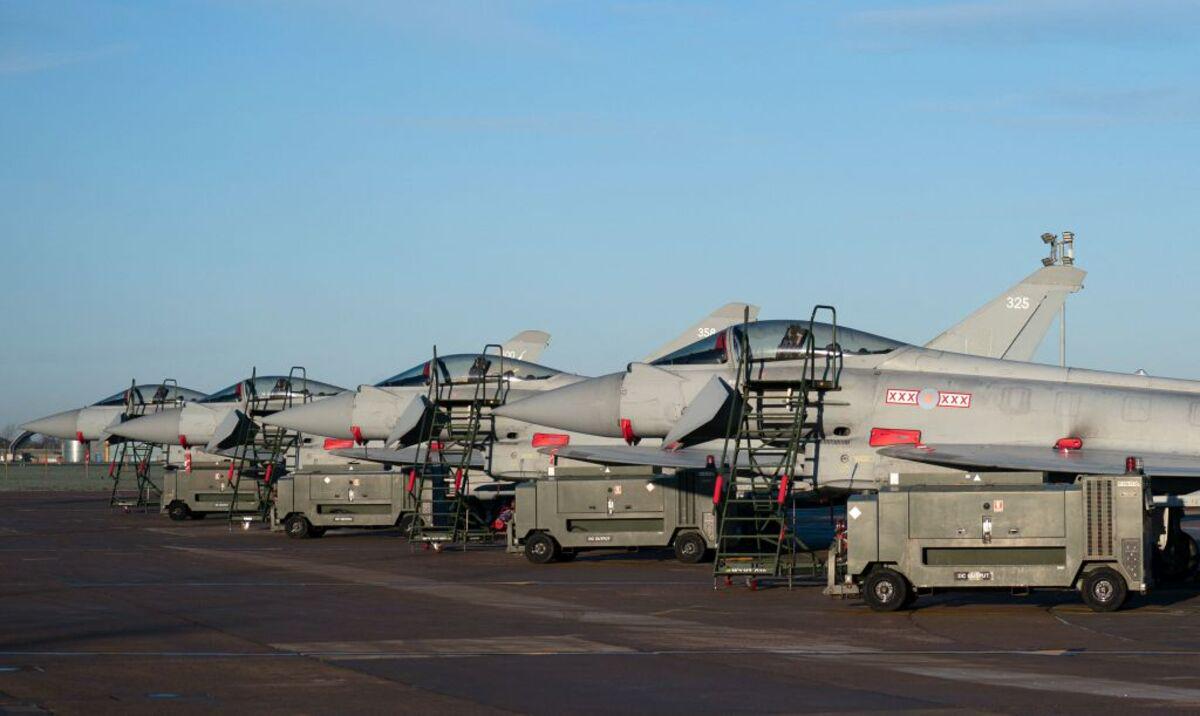
> The UK signed an £8 billion ($10.7 billion) deal to sell 20 Typhoon fighter jets to Turkey, an order which Prime Minister Keir Starmer portrayed as a message to Russian President Vladimir Putin about NATO’s long-term unity. The agreement reached by Starmer and Turkish President Recep Tayyip Erdogan in Ankara on Monday is the first new order for BAE Systems-made Typhoons since 2017. It is Britain’s biggest fighter-jet deal for almost two decades, and Turkey’s first purchase of combat aircraft from a country other than the US. “This is a really important signal of European and NATO strength,” Starmer told Bloomberg in an interview en route to the Turkish capital. “Turkey is vital for the southeastern flank of NATO and therefore for Putin it sends a strong message that NATO is stronger than ever.”
> Turkey and the UK are tightening their cooperation after the US under Donald Trump signaled a retreat from its traditional role as the guarantor of European security. For Turkey, the deal is a way of strengthening its air power and reducing reliance on the US, after it was excluded from Lockheed Martin Corp.’s F-35 stealth jet program on which it had formerly relied. Relations between the US and Turkey had been strained in recent years after the latter purchased a Russian air-defense system, leading to US congressional sanctions. The deal is the latest contract inked by Starmer’s administration that increases British defense exports, as it searches for ways to boost economic growth. In August, the UK secured a £10 billion agreement to supply the Norwegian navy with Type 26 frigates.
> The Typhoons package also forms an attempt by Britain to use its defense and security capabilities to its diplomatic advantage, in this case holding close a country that maintains ties with Russian President Vladimir Putin in spite of its NATO membership. “The signal for Putin is that this is Turkey reinforcing its commitment to NATO,” UK Defence Secretary John Healey told Bloomberg in a separate interview in Ankara. “This is more than a deal about planes. This is about partnership as well as planes and it signals a deepening and strengthening of the UK-Turkey relationship,” he said. Amid delays on deliveries of F-16 jets — and after its exclusion from the F-35 program — the deal allows Turkey to increase its air power as it develops its own indigenous Kaan fighter. Turkey is also expanding the domestic production of drones, a sector in which it has become a global exporter.
> In order to seal the deal with Turkey, the UK had to overcome opposition from Germany, one of four partners alongside Britain, Italy and Spain in the Eurofighter Typhoon program. Germany’s previous coalition government had blocked a Turkish order on human rights grounds, but dropped its veto this summer after lobbying by British ministers and officials. Healey said he had spoken to Turkish defense minister Yasar Guler more than 20 times in recent months as they sought to close the agreement.
The British government said the deal would help add 20,000 jobs in northwest England over the next decade. “You’re seeing a pattern here,” Starmer said of the UK’s recent batch of defense exports, which also included a July pact with Germany to collaborate on boosting production. “You’re seeing more and more countries wanting to work with the UK in terms of the provision of capability but also strategically to align.”

1 Comment
> The UK signed an £8 billion ($10.7 billion) deal to sell 20 Typhoon fighter jets to Turkey, an order which Prime Minister Keir Starmer portrayed as a message to Russian President Vladimir Putin about NATO’s long-term unity. The agreement reached by Starmer and Turkish President Recep Tayyip Erdogan in Ankara on Monday is the first new order for BAE Systems-made Typhoons since 2017. It is Britain’s biggest fighter-jet deal for almost two decades, and Turkey’s first purchase of combat aircraft from a country other than the US. “This is a really important signal of European and NATO strength,” Starmer told Bloomberg in an interview en route to the Turkish capital. “Turkey is vital for the southeastern flank of NATO and therefore for Putin it sends a strong message that NATO is stronger than ever.”
> Turkey and the UK are tightening their cooperation after the US under Donald Trump signaled a retreat from its traditional role as the guarantor of European security. For Turkey, the deal is a way of strengthening its air power and reducing reliance on the US, after it was excluded from Lockheed Martin Corp.’s F-35 stealth jet program on which it had formerly relied. Relations between the US and Turkey had been strained in recent years after the latter purchased a Russian air-defense system, leading to US congressional sanctions. The deal is the latest contract inked by Starmer’s administration that increases British defense exports, as it searches for ways to boost economic growth. In August, the UK secured a £10 billion agreement to supply the Norwegian navy with Type 26 frigates.
> The Typhoons package also forms an attempt by Britain to use its defense and security capabilities to its diplomatic advantage, in this case holding close a country that maintains ties with Russian President Vladimir Putin in spite of its NATO membership. “The signal for Putin is that this is Turkey reinforcing its commitment to NATO,” UK Defence Secretary John Healey told Bloomberg in a separate interview in Ankara. “This is more than a deal about planes. This is about partnership as well as planes and it signals a deepening and strengthening of the UK-Turkey relationship,” he said. Amid delays on deliveries of F-16 jets — and after its exclusion from the F-35 program — the deal allows Turkey to increase its air power as it develops its own indigenous Kaan fighter. Turkey is also expanding the domestic production of drones, a sector in which it has become a global exporter.
> In order to seal the deal with Turkey, the UK had to overcome opposition from Germany, one of four partners alongside Britain, Italy and Spain in the Eurofighter Typhoon program. Germany’s previous coalition government had blocked a Turkish order on human rights grounds, but dropped its veto this summer after lobbying by British ministers and officials. Healey said he had spoken to Turkish defense minister Yasar Guler more than 20 times in recent months as they sought to close the agreement.
The British government said the deal would help add 20,000 jobs in northwest England over the next decade. “You’re seeing a pattern here,” Starmer said of the UK’s recent batch of defense exports, which also included a July pact with Germany to collaborate on boosting production. “You’re seeing more and more countries wanting to work with the UK in terms of the provision of capability but also strategically to align.”