
So I have been waiting all week to post this (i had to study for a test ) I hope you find it interesting
Posted by ewatta200
So I have been waiting all week to post this (i had to study for a test ) I hope you find it interesting
Posted by ewatta200
1 Comment
On 6 April 2010, a company of India’s central paramilitary soldiers came under attack from Maoist guerrillas in the central-eastern state of Chhattisgarh. The Maoists, who had turned this region into their stronghold, had laid a trap. With little training and scant knowledge of the Amazon-like jungle, the Indian soldiers found themselves ambushed. They fought back, but they could not escape the ambush. Seventy-five soldiers and a state policeman accompanying them were killed.
Never before had the Indian forces suffered so many casualties in a single incident, not even in [Kashmir](https://aeon.co/essays/india-is-a-postcolonial-power-its-rule-in-kashmir-is-colonial), where, for more than 20 years, they had been fighting a protracted battle against Islamist extremists. As the body bags of the soldiers reached their native places in different parts of India, a deep sense of anger generated among people who till recently had only a vague idea about who these Maoists were, and even less about the hinterland that the Maoists had turned into a guerrilla zone.
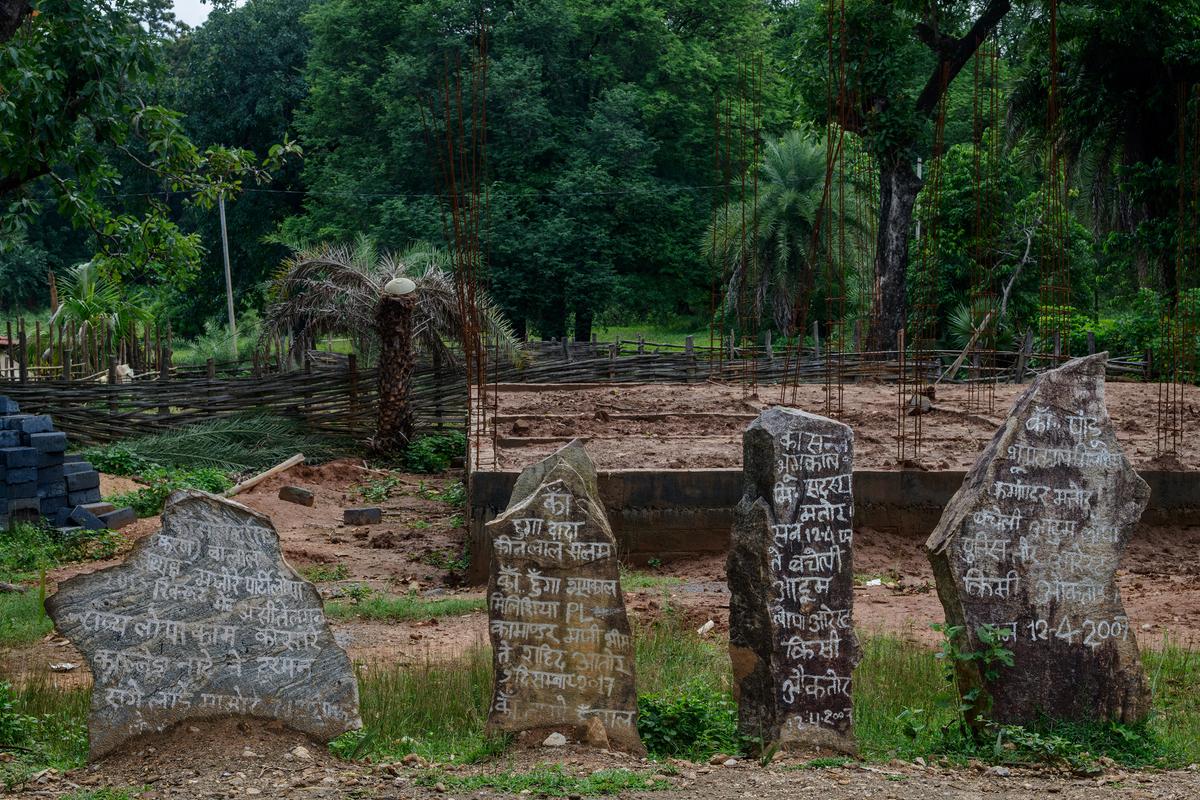
Since the mid-2000s, the Maoists had grown in strength, launching audacious attacks against government forces and looting police armouries and declaring certain areas as ‘liberated zones’. Their operations ran in a contiguous arc of land, from Nepal’s border in the east to the Deccan Plateau in the south – an area the Maoists called Dandakaranya or DK, using the name in its historical sense. This is a region where India’s indigenous people, the Adivasis, lived; it also [holds](https://www.tandfonline.com/doi/abs/10.1080/08941920.2014.941447) valuable minerals and other natural resources in abundance. The Indian state wanted control over the natural resource wealth, but the Maoists were proving to be an obstacle. Then, in 2009, the then prime minister Manmohan Singh called them India’s ‘greatest internal security threat’.
On the morning of the attack in 2010, I’d landed in a part of DK, in a city a three-hour car ride from the edge of a town beyond which was a forest ruled by Maoists. From there, if one started walking, one would, without getting on to a motorable road, reach the spot of the Maoist ambush. There would be only a sprinkling of tiny hamlets, inhabited by Adivasis, who thought of Maoists as the ‘government’. Beyond that, they had very little idea of life outside, least of all the blitzkrieg of ‘India Shining’, a political campaign by a previous government (the conservative BJP), which had in spirit continued to exist as a cursor to economic optimism.
The scrawny man – I’ll call him ‘A’ – who came to pick me up from the railway station on his battered motorcycle was a former Maoist. He was also a Dalit, the so-called ‘lower-caste’ people at the bottom of the Hindu [caste system](https://aeon.co/essays/how-india-deludes-itself-that-caste-discrimination-is-dead), who, like the Adivasis, have been [historically maltreated](https://psyche.co/ideas/they-keep-the-hindu-funeral-pyres-burning-but-at-what-cost) in India. He lived in a slum and had been recruited in the 1980s, along with several others in the city, by a woman Maoist. After a few years, ‘A’ had quit the party to raise a family. Life outside had been harder than inside the forest. For people like ‘A’, it was difficult to come out of the poverty and bitterness that came with their ascriptive status in the caste system. He struggled with odd jobs, and in the night drank heavily and sang resistance songs by the yard to temporarily rid himself of the bile.