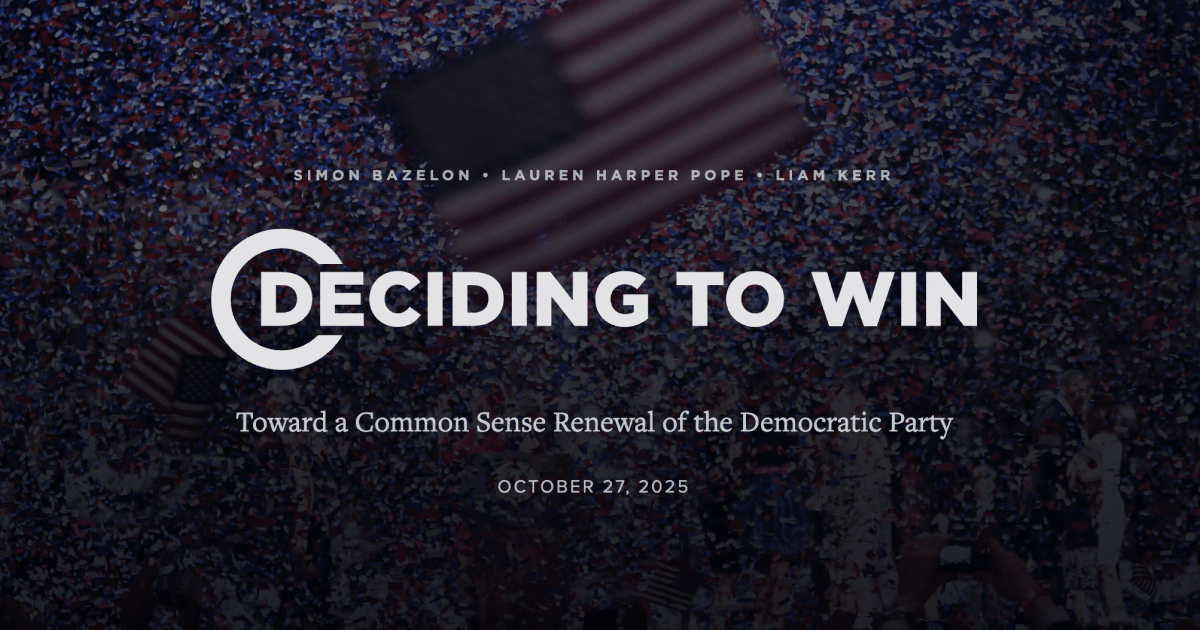
>**To give ourselves the best chance to win, we recommend the following changes to our approach. Democrats need to:**
>1. Focus our policy agenda and our messaging on an economic program centered on lowering costs, growing the economy, creating jobs, and expanding the social safety net.
>2. Advocate for popular economic policies (e.g., expanding prescription drug price negotiation, making the wealthy pay their fair share in taxes, raising the minimum wage to $15 an hour) rather than unpopular economic policies (e.g., student loan forgiveness, electric vehicle subsidies, Medicare for All).
>3. Convince voters that we share their priorities by focusing more on issues voters do not think our party prioritizes highly enough (the economy, the cost of living, health care, border security, public safety), and focusing less on issues voters think we place too much emphasis on (climate change, democracy, abortion, identity and cultural issues).
>4. Moderate our positions where our agenda is unpopular, including on issues like immigration, public safety, energy production, and some identity and cultural issues.
>5. Embrace a substantive and rhetorical critique of the outsized political and economic influence of lobbyists, corporations, and the ultra-wealthy, while keeping two considerations in mind: First, voters’ frustrations with the status quo are not the same as a desire for socialism. And second, criticizing the status quo is a complement to advocating for popular policies on the issues that matter most to the American people, not a substitute.
GhazelleBerner on
So the problem is that we already do this stuff, but everyone pretends we don’t and then gets mad about it.
Thuggin95 on
I think this doesn’t tell the full story. Sure, things like lowering prescription drug costs may be overwhelmingly favorable and uncontroversial, but would focusing more on that motivate people to get out to vote for Democrats? Is that something that would win over people who would otherwise vote Republican?
Meanwhile, things like abortion and LGBTQ issues may be a lot less favorable plus low in priority among the vast majority of voters; however, for a small but not insignificant percentage of voters, they are like THE number one issues to mobilize them to vote for, advocate for, volunteer for, and donate to Democrats.
Also, because abortion and LGBTQ issues are the things the right associates with Democrats and that Democratic politicians emphasize, I wonder if that’s part of what makes them less popular. Whereas if Democrats made lowering prescription drug costs their mission, the right would go to war against that and find ways to sour their base on it.
I’m not saying this data is useless btw. I’m just trying to add to the conversation.
Al_787 on
The moment I see the formatting of the graphs and data tables, I scrolled right back to the list of signatories to find Nate Silver lol.
First of all, this is obviously something made with a conclusion in mind, it is not an AJPS paper. Silver concluded a few hours after the election that we needed to shift right, so let’s not pretend that anyone is following the scientific method.
Second, a report that at times criticizes the Democratic consultant class reads exactly something written by a Democratic consultant. There is this arrogance among data science bros, of which I am one, that they can extrapolate everything from numbers. Data tells us a lot of things, survey data have fundamental flaws that everyone who took a political science research class in college should know about. Human psychology is complicated and at times feels irrational. That’s why we need political instincts, something that should definitely be re-embraced more.
Or you know, definitely go ahead and hire more terminally online data bros and political junkies who design ads in a freaking lab that’s just totally terrible (yes, I’m talking about the Kamala Harris ads lol)
unfaircrab2026 on
Harris and 82-year old Biden were not charismatic or effective communicators.
They were Bush/Kerry/Gore-tier and not able to craft a narrative that combatted Republican and Trump propaganda.
Jokerang on
This reminds me of the 2012 GOP autopsies that begged the party to genuinely moderate, make outreach efforts to Dem groups, and return to “compassionate conservatism” at a time their base was turning into full blown culture warriors because they couldn’t stand Obama. I suspect calls for the Dems to moderate on even *abortion rights* and *climate policy* at a time Trump has gone full Putin will be shot down even more furiously.
Also it’s telling that none of the authors of the 2012 autopsies are relevant in politics anymore
fishlord05 on
!ping FIVEY
SandersDelendaEst on
It’s been said a million times, but I’ll say it again. The succs have taken over this sub.
Anyway, if we really feel like our democracy is at risk then moderation on ANY issue should be on the table.
People also like to mention how the gop didn’t moderate after 2012 but won anyway. They won a narrow fluke-ish victory—you could easily argue that trumpism is almost entirely an accident of history. They would have annihilated Hillary if they just had a more moderate candidate.
But also Trump DID moderate on a number of positions. Do people honestly believe we are going to win power without retaking the center?

8 Comments
tl;dr:
>**To give ourselves the best chance to win, we recommend the following changes to our approach. Democrats need to:**
>1. Focus our policy agenda and our messaging on an economic program centered on lowering costs, growing the economy, creating jobs, and expanding the social safety net.
>2. Advocate for popular economic policies (e.g., expanding prescription drug price negotiation, making the wealthy pay their fair share in taxes, raising the minimum wage to $15 an hour) rather than unpopular economic policies (e.g., student loan forgiveness, electric vehicle subsidies, Medicare for All).
>3. Convince voters that we share their priorities by focusing more on issues voters do not think our party prioritizes highly enough (the economy, the cost of living, health care, border security, public safety), and focusing less on issues voters think we place too much emphasis on (climate change, democracy, abortion, identity and cultural issues).
>4. Moderate our positions where our agenda is unpopular, including on issues like immigration, public safety, energy production, and some identity and cultural issues.
>5. Embrace a substantive and rhetorical critique of the outsized political and economic influence of lobbyists, corporations, and the ultra-wealthy, while keeping two considerations in mind: First, voters’ frustrations with the status quo are not the same as a desire for socialism. And second, criticizing the status quo is a complement to advocating for popular policies on the issues that matter most to the American people, not a substitute.
So the problem is that we already do this stuff, but everyone pretends we don’t and then gets mad about it.
I think this doesn’t tell the full story. Sure, things like lowering prescription drug costs may be overwhelmingly favorable and uncontroversial, but would focusing more on that motivate people to get out to vote for Democrats? Is that something that would win over people who would otherwise vote Republican?
Meanwhile, things like abortion and LGBTQ issues may be a lot less favorable plus low in priority among the vast majority of voters; however, for a small but not insignificant percentage of voters, they are like THE number one issues to mobilize them to vote for, advocate for, volunteer for, and donate to Democrats.
Also, because abortion and LGBTQ issues are the things the right associates with Democrats and that Democratic politicians emphasize, I wonder if that’s part of what makes them less popular. Whereas if Democrats made lowering prescription drug costs their mission, the right would go to war against that and find ways to sour their base on it.
I’m not saying this data is useless btw. I’m just trying to add to the conversation.
The moment I see the formatting of the graphs and data tables, I scrolled right back to the list of signatories to find Nate Silver lol.
First of all, this is obviously something made with a conclusion in mind, it is not an AJPS paper. Silver concluded a few hours after the election that we needed to shift right, so let’s not pretend that anyone is following the scientific method.
Second, a report that at times criticizes the Democratic consultant class reads exactly something written by a Democratic consultant. There is this arrogance among data science bros, of which I am one, that they can extrapolate everything from numbers. Data tells us a lot of things, survey data have fundamental flaws that everyone who took a political science research class in college should know about. Human psychology is complicated and at times feels irrational. That’s why we need political instincts, something that should definitely be re-embraced more.
Or you know, definitely go ahead and hire more terminally online data bros and political junkies who design ads in a freaking lab that’s just totally terrible (yes, I’m talking about the Kamala Harris ads lol)
Harris and 82-year old Biden were not charismatic or effective communicators.
They were Bush/Kerry/Gore-tier and not able to craft a narrative that combatted Republican and Trump propaganda.
This reminds me of the 2012 GOP autopsies that begged the party to genuinely moderate, make outreach efforts to Dem groups, and return to “compassionate conservatism” at a time their base was turning into full blown culture warriors because they couldn’t stand Obama. I suspect calls for the Dems to moderate on even *abortion rights* and *climate policy* at a time Trump has gone full Putin will be shot down even more furiously.
Also it’s telling that none of the authors of the 2012 autopsies are relevant in politics anymore
!ping FIVEY
It’s been said a million times, but I’ll say it again. The succs have taken over this sub.
Anyway, if we really feel like our democracy is at risk then moderation on ANY issue should be on the table.
People also like to mention how the gop didn’t moderate after 2012 but won anyway. They won a narrow fluke-ish victory—you could easily argue that trumpism is almost entirely an accident of history. They would have annihilated Hillary if they just had a more moderate candidate.
But also Trump DID moderate on a number of positions. Do people honestly believe we are going to win power without retaking the center?