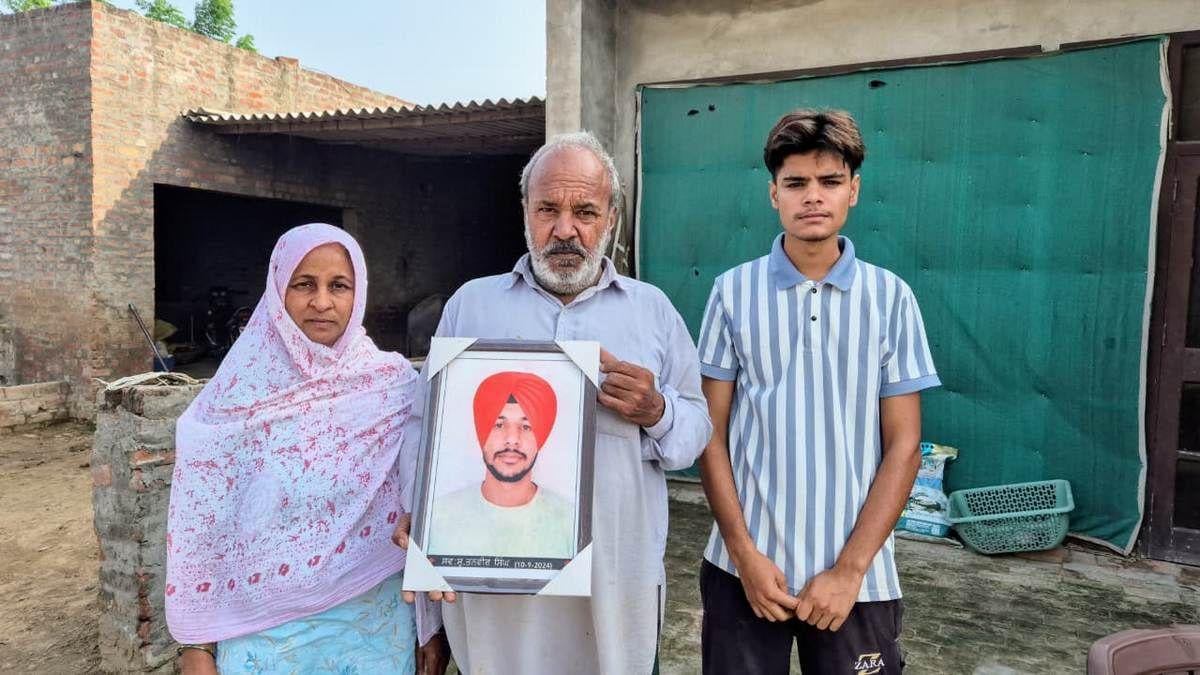
**Mansa:** The father stares into the distance, fighting back tears as the memory of his 25-year-old son Tanveer grips him. He says the image of his boy lying lifeless in the field, pesticide frothing at his mouth, replays in his mind every night. What haunts him more than that image is the Rs 5 lakh debt that drove his son to take his life.
The Green Revolution state of Punjab is ironically in the middle of an acute farm debt burden. The farmers holding the grain bowl of the country are drowning under loans today—a spectre that has come on top of the state suffering from alarmingly low groundwater tables, unsustainable MSP-dependent crops, lack of industries, and unemployment.
“At this age, I am back in the field. Bank agents visit my house almost every week. I have to look after my younger son’s welfare,” said Tanveer’s father Dilraj Singh, a marginal farmer and resident of Bhaini Bagha village of Mansa in the Malwa region.
Farmer union leaders say nearly every fourth household in Bhaini Bagha has lost a young man who found death easier than relentless pressure from loan sharks. While [NCRB data](https://timesofindia.indiatimes.com/city/chandigarh/punjab-farm-suicides-down-by-40-in-4-years-says-ncrb-report-farmers-question-data/articleshow/124243511.cms) shows farm suicides in Punjab declined from 302 in 2019 to 174 in 2023, unions say cases are severely underreported, with many deaths attributed to other causes. These men have left behind families now burdened by both grief and debt — young widows and ageing parents trapped in the same cycle their sons could no longer endure.
Punjab’s agricultural crisis is a vicious cycle. The wheat-paddy system keeps farmers barely afloat, even as it depletes soil health, groundwater, and long-term prospects. Input costs climb while earnings stay flat. Crop diversification is promoted as the fix, but without support or secure markets, farmers cling to the ‘safety’ of rice and wheat, deepening the crisis. There are not enough industries and jobs and the state’s once-strong entrepreneurial energy is sputtering. The result is slow implosionn

2 Comments
**Mansa:** The father stares into the distance, fighting back tears as the memory of his 25-year-old son Tanveer grips him. He says the image of his boy lying lifeless in the field, pesticide frothing at his mouth, replays in his mind every night. What haunts him more than that image is the Rs 5 lakh debt that drove his son to take his life.
The Green Revolution state of Punjab is ironically in the middle of an acute farm debt burden. The farmers holding the grain bowl of the country are drowning under loans today—a spectre that has come on top of the state suffering from alarmingly low groundwater tables, unsustainable MSP-dependent crops, lack of industries, and unemployment.
“At this age, I am back in the field. Bank agents visit my house almost every week. I have to look after my younger son’s welfare,” said Tanveer’s father Dilraj Singh, a marginal farmer and resident of Bhaini Bagha village of Mansa in the Malwa region.
Farmer union leaders say nearly every fourth household in Bhaini Bagha has lost a young man who found death easier than relentless pressure from loan sharks. While [NCRB data](https://timesofindia.indiatimes.com/city/chandigarh/punjab-farm-suicides-down-by-40-in-4-years-says-ncrb-report-farmers-question-data/articleshow/124243511.cms) shows farm suicides in Punjab declined from 302 in 2019 to 174 in 2023, unions say cases are severely underreported, with many deaths attributed to other causes. These men have left behind families now burdened by both grief and debt — young widows and ageing parents trapped in the same cycle their sons could no longer endure.
Punjab’s agricultural crisis is a vicious cycle. The wheat-paddy system keeps farmers barely afloat, even as it depletes soil health, groundwater, and long-term prospects. Input costs climb while earnings stay flat. Crop diversification is promoted as the fix, but without support or secure markets, farmers cling to the ‘safety’ of rice and wheat, deepening the crisis. There are not enough industries and jobs and the state’s once-strong entrepreneurial energy is sputtering. The result is slow implosionn
Drug abuse and dunki migration are two of the most visible fallouts. Another is debt, the burden of which is proving fatal for many. The average monthly income of farmers in Punjab is the second highest in India at about Rs 26,000 a month. Yet the average debt per agricultural household in Punjab stands at [Rs 2.03 lakh](https://sansad.in/getFile/loksabhaquestions/annex/184/AU1378_5aoD9j.pdf?source=pqals), the third highest in the country after Kerala and Andhra Pradesh. Over [54 per cent](https://sansad.in/getFile/loksabhaquestions/annex/183/AU1376_cmREAW.pdf?source=pqals#:~:text=Group%20of%20NE-,States/%20Group%20of%20UTs,50.2) of the state’s farming families are in debt. Total farmer loans exceed Rs 1.4 lakh crore.
>
I do wonder when India will reform it’s agriculture. Will it be before things spiral out of control or will it take som sort of collapse?