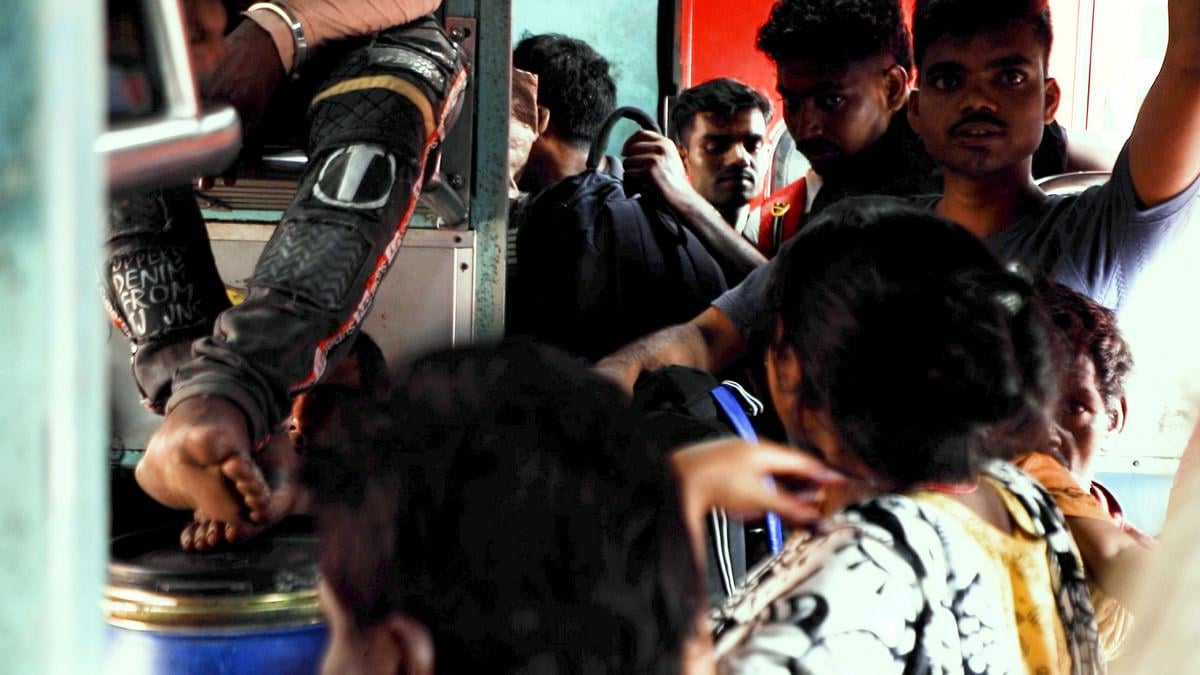
**Patna:** Manoj Chaudhary, 27, is a migrant Bihari worker on a mission. When he left his workplace in Pune, the mission wasn’t just to reach his village in Saharsa district for the Chhath festival and elections. It was also to survive the endurance test of the overcrowded special Chhath train. It means two days of standing without sleep or food, guarding his luggage like dear life. Going to the toilet is unthinkable on these trains.
The pandemonium of trains packed with migrant workers has become the quintessential Bihar story in contemporary Indian imagination. As the state goes to elections on 6 November, three terms of Chief Minister Nitish Kumar’s rule face tough questions. The toughest among them is this: Bihar’s workers are building big infrastructure projects everywhere in India but their own state remains trapped in despairing poverty and under-development. They suffer discrimination in big cities because of Bihar’s unchanging image.
Travelling home at this time of the year has become an annual Olympian ritual for Manoj Chaudhary. He changes three trains and takes one bus to reach his village to celebrate Chhath with his wife, children, and mother. He doesn’t have a suitcase or a duffel bag. He packs his clothes and blankets in a large blue water storage cylinder and carries it on his shoulder. There are no gifts or eatables in the cylinder.
The train pulls into Danapur railway station at 11:30 am, nine hours late. From there, Chaudhary rushes in a shared auto to Patna Junction for the next train to Saharsa.
“I have eaten only twice in the last four days. Barely slept, but got a seat so that was a relief. Many people didn’t even get that. I didn’t urinate for 30 hours because there was no space to reach the washroom. But every year we face this,” said Chaudhary, who works as a mason with a contractor for a daily wage of Rs 700.
Manoj Chaudhary waits to board the train to Patna at Danapur station. Getting from Pune to his village in Saharsa means changing three trains plus a bus journey | Photo: Nootan Sharma | ThePrint
While his friends leave to buy food, he guards their luggage. Just as they return bearing *dal-bhaat* in a black polythene carry bag, one of them shouts excitedly: “Rajgir Express has arrived!” Chaudhary picks up his drum-shaped luggage and hurries toward platform no. 4 with hundreds of other homebound migrant workers.
“I need to save a seat and find a place to put the luggage, or else I will have to stand for the next six hours,” he said, running toward the train breathlessly.
Chaos breaks out.
People storm the doors of the train, throwing their bags in from the windows and sliding in through them as well. Some even break the emergency window glass to get in. Such scenes play out every year, making their way to TV screens and viral social media videos
>
Albatross-Helpful on
Fascinating read. The political nihilism is sad to see.

2 Comments
**Patna:** Manoj Chaudhary, 27, is a migrant Bihari worker on a mission. When he left his workplace in Pune, the mission wasn’t just to reach his village in Saharsa district for the Chhath festival and elections. It was also to survive the endurance test of the overcrowded special Chhath train. It means two days of standing without sleep or food, guarding his luggage like dear life. Going to the toilet is unthinkable on these trains.
The pandemonium of trains packed with migrant workers has become the quintessential Bihar story in contemporary Indian imagination. As the state goes to elections on 6 November, three terms of Chief Minister Nitish Kumar’s rule face tough questions. The toughest among them is this: Bihar’s workers are building big infrastructure projects everywhere in India but their own state remains trapped in despairing poverty and under-development. They suffer discrimination in big cities because of Bihar’s unchanging image.
[](https://vdo.ai/contact?utm_medium=video&utm_term=theprint.in&utm_source=vdoai_logo)
Travelling home at this time of the year has become an annual Olympian ritual for Manoj Chaudhary. He changes three trains and takes one bus to reach his village to celebrate Chhath with his wife, children, and mother. He doesn’t have a suitcase or a duffel bag. He packs his clothes and blankets in a large blue water storage cylinder and carries it on his shoulder. There are no gifts or eatables in the cylinder.
The train pulls into Danapur railway station at 11:30 am, nine hours late. From there, Chaudhary rushes in a shared auto to Patna Junction for the next train to Saharsa.
“I have eaten only twice in the last four days. Barely slept, but got a seat so that was a relief. Many people didn’t even get that. I didn’t urinate for 30 hours because there was no space to reach the washroom. But every year we face this,” said Chaudhary, who works as a mason with a contractor for a daily wage of Rs 700.
Manoj Chaudhary waits to board the train to Patna at Danapur station. Getting from Pune to his village in Saharsa means changing three trains plus a bus journey | Photo: Nootan Sharma | ThePrint
While his friends leave to buy food, he guards their luggage. Just as they return bearing *dal-bhaat* in a black polythene carry bag, one of them shouts excitedly: “Rajgir Express has arrived!” Chaudhary picks up his drum-shaped luggage and hurries toward platform no. 4 with hundreds of other homebound migrant workers.
“I need to save a seat and find a place to put the luggage, or else I will have to stand for the next six hours,” he said, running toward the train breathlessly.
Chaos breaks out.
People storm the doors of the train, throwing their bags in from the windows and sliding in through them as well. Some even break the emergency window glass to get in. Such scenes play out every year, making their way to TV screens and viral social media videos
>
Fascinating read. The political nihilism is sad to see.