The Middle East is a place that most American presidents want to avoid. Yet inevitably, they find themselves mired in its quarrels. Despite periodic calls for a pivot toward other geostrategic challenges, the perception that its core interests are at stake in the region has kept the United States from leaving. The oil depositories of the Persian Gulf remain vital to the global economy. A menacing Iran sits near the nuclear threshold. The Arab world’s political dysfunction has produced generations of militants and terrorists, a collection of whom attacked the United States in 2001, resulting in the worst mass-casualty event it had suffered on its homeland since Pearl Harbor.
Since the turn of the twenty-first century, U.S. presidents have tried to solve the Middle East’s conundrums through armed invasions, diplomacy, and limited humanitarian interventions. All have failed. Some of these efforts spawned even more pernicious phenomena. The 2003 invasion of Iraq, for example, gave rise to a new legion of terrorists. The limited 2011 military foray into Libya resulted in chaos across a large swath of North Africa. And yet administration after administration has remained, in some way, enchanted with the idea of imposing a regional vision.
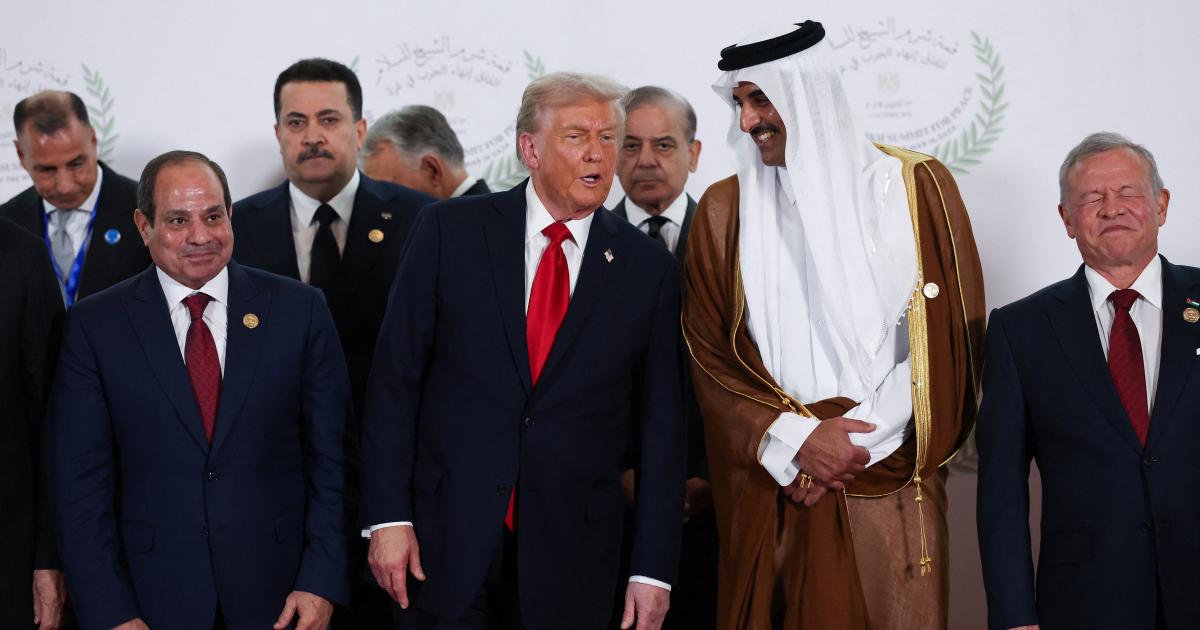
That is, until Donald Trump. This president, like his predecessors, has not extricated Washington from the Middle East. But unlike them, Trump has approached the area with little idealism. His stances have instead been entirely driven by pragmatism and a preference for power politics. Like the Middle East’s own strongmen, Trump divides the world into winners and losers and steadfastly aligns himself with the former. Israel is strong, so he lets it do as it wishes. The Arab Gulf sheikhdoms have oil and make deals, so he engages with them. But the Palestinians are the region’s losers, and thus not worth much concern.
This approach is doubtless crude. But the results are clearly positive. During his five years in office, Trump has normalized ties between Israel and multiple Arab states. In October, he put a stop to the fighting between Israel and Hamas, sparked by Hamas’s October 7, 2023, assault on Israel. He has ensured that American firms get preferential access to the Gulf’s oil and markets. And he has successfully attacked groups and governments that menace American interests, including the Islamic Republic of Iran.
Trump’s decisions have not made the Middle East more democratic. They certainly have not ameliorated the region’s historical grievances. But they have kept it comparatively stable while advancing Washington’s positions. They have, in other words, helped Trump accomplish far more than his sophisticated and well-intentioned predecessors ever did.
BOULEVARD OF BROKEN DREAMS
To understand why Trump has succeeded where other presidents have failed, consider the United States’ approach to the Arab countries, which make up most of the Middle East. For decades, American presidents have tried to solve these states’ inherent tensions by attacking or otherwise prodding them. President George W. Bush stands out as his country’s most ambitious and humbled politician in this regard. His initial response to the September 11 terrorist attack—invading Afghanistan to drive the Taliban from power and launching a “war on terror”—was reasonable. But then Bush and his seasoned advisers came to believe that the best way to stabilize the Middle East was to invade Iraq. Doing so, the theory went, would ultimately transform the region’s many authoritarian regimes into democratic, pro-Western ones. Instead, it sharpened the Middle East’s sectarian divide and empowered Iran. By the time Bush left office, the region was more unstable than when he arrived.
Bush’s Democratic successors, Barack Obama and Joe Biden, were both determined not to get entangled in the Arab world’s messy politics. They sensed Americans’ exhaustion with endless wars and rightfully declared that it was time to rely less on armies and more on diplomats. But each was, in his own way, hopelessly afflicted by idealism. During the Arab Spring, Obama sided with the street, nudging Egypt’s U.S.-friendly president, Hosni Mubarak, out of power and staging a humanitarian military intervention in Libya that deposed Muammar al-Qaddafi. Neither was successful. Mubarak was replaced by a democratically elected Islamist who, after trying to concentrate power, was deposed by a new military dictator. Libya fractured and now has two competing authoritarian governments. Biden never promoted regime change, but his hostility toward the region’s main monarchy—he called Saudi Arabia a “pariah” after Crown Prince Mohammed bin Salman ordered the killing of a dissident journalist—undercut his country’s regional interests. The royal families, for example, resisted Biden’s efforts to increase oil production and pressure Hamas into agreeing to a cease-fire.
Trump, by contrast, practices politics without judgment. He is happy, for example, to deal with the jihadi turned suited statesman Ahmed al-Shara, the new president of Syria, if Shara joins his fight against the Islamic State (also known as ISIS). He is also deeply transactional. Trump supports Saudi Arabia and other Gulf sheikhdoms because they are a source of capital, an export market for semiconductors and weapons, and an important aspect of the global energy markets. These are people he can do business with.
The Arabs’ princes and kings have reciprocated. At Trump’s behest, Bahrain and the United Arab Emirates signed the 2020 Abraham Accords, normalizing relations with Israel. Saudi Arabia remains outside the accords, but it has its own subtle partnership with Israel involving intelligence sharing and security cooperation. Qatar flirts with Islamist forces, but it continues to house a large U.S. military base and was instrumental in crafting the armistice in Gaza. All three countries are engaged in financial dealings with the Trump family. In that part of the world, personal fortunes are enmeshed with national ones, and the lines between commerce and diplomacy are frequently blurred. This is precisely how the Gulf elites like it.

1 Comment
The Middle East is a place that most American presidents want to avoid. Yet inevitably, they find themselves mired in its quarrels. Despite periodic calls for a pivot toward other geostrategic challenges, the perception that its core interests are at stake in the region has kept the United States from leaving. The oil depositories of the Persian Gulf remain vital to the global economy. A menacing Iran sits near the nuclear threshold. The Arab world’s political dysfunction has produced generations of militants and terrorists, a collection of whom attacked the United States in 2001, resulting in the worst mass-casualty event it had suffered on its homeland since Pearl Harbor.
Since the turn of the twenty-first century, U.S. presidents have tried to solve the Middle East’s conundrums through armed invasions, diplomacy, and limited humanitarian interventions. All have failed. Some of these efforts spawned even more pernicious phenomena. The 2003 invasion of Iraq, for example, gave rise to a new legion of terrorists. The limited 2011 military foray into Libya resulted in chaos across a large swath of North Africa. And yet administration after administration has remained, in some way, enchanted with the idea of imposing a regional vision.
That is, until Donald Trump. This president, like his predecessors, has not extricated Washington from the Middle East. But unlike them, Trump has approached the area with little idealism. His stances have instead been entirely driven by pragmatism and a preference for power politics. Like the Middle East’s own strongmen, Trump divides the world into winners and losers and steadfastly aligns himself with the former. Israel is strong, so he lets it do as it wishes. The Arab Gulf sheikhdoms have oil and make deals, so he engages with them. But the Palestinians are the region’s losers, and thus not worth much concern.
This approach is doubtless crude. But the results are clearly positive. During his five years in office, Trump has normalized ties between Israel and multiple Arab states. In October, he put a stop to the fighting between Israel and Hamas, sparked by Hamas’s October 7, 2023, assault on Israel. He has ensured that American firms get preferential access to the Gulf’s oil and markets. And he has successfully attacked groups and governments that menace American interests, including the Islamic Republic of Iran.
Trump’s decisions have not made the Middle East more democratic. They certainly have not ameliorated the region’s historical grievances. But they have kept it comparatively stable while advancing Washington’s positions. They have, in other words, helped Trump accomplish far more than his sophisticated and well-intentioned predecessors ever did.
BOULEVARD OF BROKEN DREAMS
To understand why Trump has succeeded where other presidents have failed, consider the United States’ approach to the Arab countries, which make up most of the Middle East. For decades, American presidents have tried to solve these states’ inherent tensions by attacking or otherwise prodding them. President George W. Bush stands out as his country’s most ambitious and humbled politician in this regard. His initial response to the September 11 terrorist attack—invading Afghanistan to drive the Taliban from power and launching a “war on terror”—was reasonable. But then Bush and his seasoned advisers came to believe that the best way to stabilize the Middle East was to invade Iraq. Doing so, the theory went, would ultimately transform the region’s many authoritarian regimes into democratic, pro-Western ones. Instead, it sharpened the Middle East’s sectarian divide and empowered Iran. By the time Bush left office, the region was more unstable than when he arrived.
Bush’s Democratic successors, Barack Obama and Joe Biden, were both determined not to get entangled in the Arab world’s messy politics. They sensed Americans’ exhaustion with endless wars and rightfully declared that it was time to rely less on armies and more on diplomats. But each was, in his own way, hopelessly afflicted by idealism. During the Arab Spring, Obama sided with the street, nudging Egypt’s U.S.-friendly president, Hosni Mubarak, out of power and staging a humanitarian military intervention in Libya that deposed Muammar al-Qaddafi. Neither was successful. Mubarak was replaced by a democratically elected Islamist who, after trying to concentrate power, was deposed by a new military dictator. Libya fractured and now has two competing authoritarian governments. Biden never promoted regime change, but his hostility toward the region’s main monarchy—he called Saudi Arabia a “pariah” after Crown Prince Mohammed bin Salman ordered the killing of a dissident journalist—undercut his country’s regional interests. The royal families, for example, resisted Biden’s efforts to increase oil production and pressure Hamas into agreeing to a cease-fire.
Trump, by contrast, practices politics without judgment. He is happy, for example, to deal with the jihadi turned suited statesman Ahmed al-Shara, the new president of Syria, if Shara joins his fight against the Islamic State (also known as ISIS). He is also deeply transactional. Trump supports Saudi Arabia and other Gulf sheikhdoms because they are a source of capital, an export market for semiconductors and weapons, and an important aspect of the global energy markets. These are people he can do business with.
The Arabs’ princes and kings have reciprocated. At Trump’s behest, Bahrain and the United Arab Emirates signed the 2020 Abraham Accords, normalizing relations with Israel. Saudi Arabia remains outside the accords, but it has its own subtle partnership with Israel involving intelligence sharing and security cooperation. Qatar flirts with Islamist forces, but it continues to house a large U.S. military base and was instrumental in crafting the armistice in Gaza. All three countries are engaged in financial dealings with the Trump family. In that part of the world, personal fortunes are enmeshed with national ones, and the lines between commerce and diplomacy are frequently blurred. This is precisely how the Gulf elites like it.