
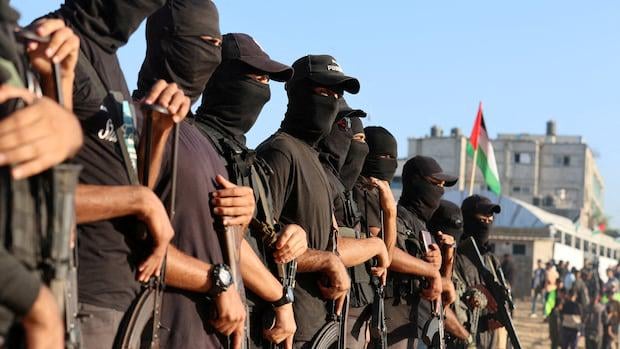
Gaza’s ceasefire has stalled as both sides drag their feet, leaving few countries willing to step up and help
Posted by Lux_Stella
Gaza’s ceasefire has stalled as both sides drag their feet, leaving few countries willing to step up and help
Posted by Lux_Stella
1 Comment
>Both sides of the miserable war in Gaza are dragging their feet on moving on to the next crucial phase of the ceasefire, leaving Palestinians in the territory to deal with the muck and sometimes deadly cold of winter with few reasons to hope that meaningful progress will come soon.
>The ceasefire’s most contentious issue, the one at the heart of Israeli-Palestinian negotiations for decades, is also the issue that gets the least emphasis in the Oct. 10 agreement — that’s the conditions for the creation of a Palestinian state at the end of the three-phase plan.
>“Prime Minister Bibi [Benjamin] Netanyahu doesn’t want to end the war for his own political considerations,” former top Israeli commander Major General Yitzhak Brik told a panel on Israel’s Channel 12 recently.
>“And disarming Hamas will not happen because there is no one who can enforce it.”
>That, in a nutshell, is why the 20-point plan agreed to by Israel and Hamas, brokered by U.S. President Donald Trump, backed by Qatar, Turkey and Egypt and endorsed by the UN Security Council, is now effectively on life support.
>Like the donkey carts trudging along Gaza’s windy, rain-soaked dirt roads, it will take an immense effort by someone — likely only Trump — to get things moving again.
of course, the ‘ceasefire’ has been marked by numerous violations and accusations of violations by all sides, although on-the-ground conditions seem to have significantly improved
>Nonetheless, the White House appears to be gearing up for a Christmas-New Year push to try to get the most difficult parts of the deal moving.
>U.S., Qatari, Egyptian and Turkish officials are set to meet in Miami — and a potential meeting in the United States between Trump and Netanyahu after Christmas will likely be crucial to breaking the impasse.
>Speaking on the Carnegie Panel, Marwan Muasher, a former Jordanian foreign minister, said Arab states are heavily invested in permanently ending the war and giving Palestinians in Gaza and the occupied West Bank a future.
>“The Trump plan is the only game in town,” said Muasher. “Their position is ‘We’d better support it … not because we think it’s a great plan, not because it might go beyond phase one, but because it has resulted in a ceasefire, and so it’s better to engage than not.’ ”
not super optimistic but 🤷
(be nice in this thread or i will ban you)