
Google translated with some editing.
—
New declaration aims to make it easier to deport criminal foreigners – but it is not legally binding, explains law professor
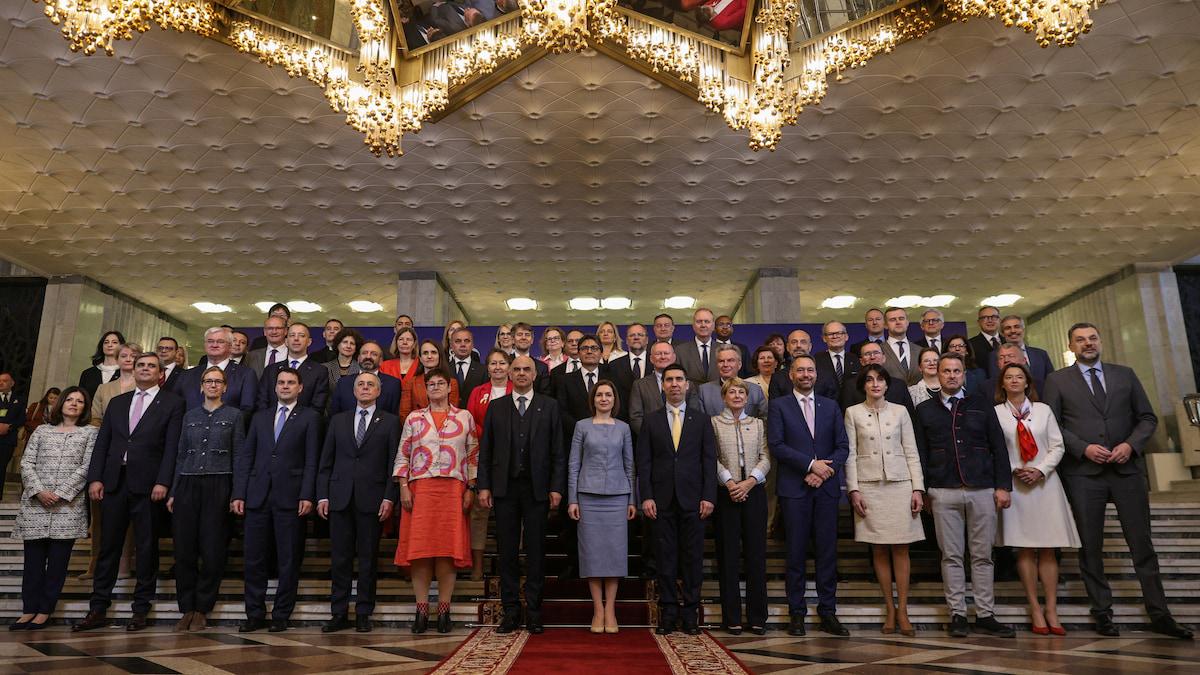
All 46 countries in the Council of Europe have signed a declaration that is intended to provide greater national freedom in cases of deportation of criminal foreigners.
The Council of Europe – not to be confused with the EU institutions – has just held its annual meeting of foreign ministers.
And at this year's meeting, which took place in the Moldovan capital, Chisinau, the foreign ministers of the Council of Europe's 46 member states signed a political declaration that is intended to provide greater national freedom in cases of deportation of criminal foreigners .
Specifically, the declaration states that "the right balance must be found between individual rights and interests and the overriding public interest in protecting freedom and security in the societies of the Member States".
And that pleases Acting Prime Minister Mette Frederiksen (S).
– I am really happy about the declaration that has been adopted today. That so many countries support better opportunities to deport criminal foreigners. And cooperate for more justice and security, she writes on Instagram, among other things .
But there are certain things that are worth keeping in mind, explains Thomas Gammeltoft-Hansen, professor of refugee and migration law at the Faculty of Law at the University of Copenhagen.
First of all, the declaration is a political signal and is not legally binding.
The Convention is still in force
– The Convention is still in force, and this declaration is only a political instrument. That is, it is not legally binding, neither for the court nor otherwise.
– It will depend on how the European Court of Human Rights will deal with the declaration, and how it is read by the national courts that deal with these cases in the first place before they reach Strasbourg and the European Court of Human Rights.
The Danish courts must comply with the European Convention on Human Rights and the limitations that it and the practice of the European Court of Human Rights impose in connection with, for example, deportation cases.
In a number of cases from Denmark, foreigners convicted of serious crimes have been spared deportation, as the court in Strasbourg has assessed that the rights in Article 8 and Article 3, which, among other things, deal with the prohibition of torture and inhuman treatment and the right to private and family life, have been more important.
– What you are trying to achieve politically is probably in reality to send a strong political signal to the European Court of Human Rights to take a step back or perhaps find a different balance point in relation to how you assess key rights in relation to foreigners in this type of deportation cases in particular, says Thomas Gammeltoft-Hansen.
When asked whether more criminal migrants than today can be deported, the law professor believes that it is still too early to say.
– But if you look at the development in recent years, there is actually a lot that indicates that the court is already taking a more restrictive line in relation to immigration cases.
– We see this in various areas, both when it comes to the risk of deportation to torture or degrading treatment, but also in the much-debated cases regarding family ties in connection with deportations, explains Thomas Gammeltoft-Hansen.
But according to the professor, there is basically no way around the basic convention obligations. Not even if you establish departure centers in third countries, which the declaration makes possible, and move people away from, for example, Danish territory.
Several years of work
Denmark has been trying to gain support for such a declaration for several years and has also had to change the legal wording slightly compared to the last time a similar proposal was made back in 2018.
But nevertheless, acting Foreign Minister Lars Løkke Rasmussen (M), who from the Danish side has helped to get the declaration ready in Moldova, believes that it is "the strongest text from the Council of Europe on challenges with migration".
And the acting Foreign Minister has no doubt that it will lead to the European Court of Human Rights adjusting their precedent.
– I know that a picture is being painted here that we have huge problems with the European Court of Human Rights, but the truth is that we have had 42 cases since the Copenhagen Declaration in 2017, and we have lost seven, so it is not that we will never be successful.
– And now we are sending a clear signal that we want the balances to be different. I think people will listen to that.
Posted by MrStrange15
1 Comment
Submission statement: We’ve had one, but what about a second thread on European migration policy?
Anyway, I hope its alright that I post this Danish article, its the best on the subject that I have found, and which is not paywalled. [Euractiv](https://www.euractiv.com/news/european-countries-urge-rethink-of-human-rights-on-migration/) has an English one, but its a bit short. The translation is done through Google translate.
In essence, Denmark and Italy has worked for several years to change the Council of Europe (i.e., not the EU) and the European Court of Human Rights approach to how it interprets certain parts of the European Convention on Human Rights that relates to the deportation of migrants, especially ones convicted of crimes. This relates to Art. 3 and 8, which talk about torture and abuse and the right to a family.
The Chisinau Declaration signed by all 46 members, which this article discusses, aims to basically send a non-binding political signal to the ECHR to change its interpretations of the these articles. It also opens up for return hubs for migrants in 3rd countries. What effect that will have is to be seen. As the expert in the article says, the ECHR was already changing its interpretations.
The relevance is that the ECHR and the Convention are one of the most important pieces of liberal international legislation and institutions.
The press release on and the declaration itself: https://www.coe.int/en/web/portal/-/council-of-europe-foreign-ministers-adopt-political-declaration-on-the-echr-and-migration
The European Commission reaction for those interested: https://ec.europa.eu/commission/presscorner/detail/de/ip_26_1085
!PING EU