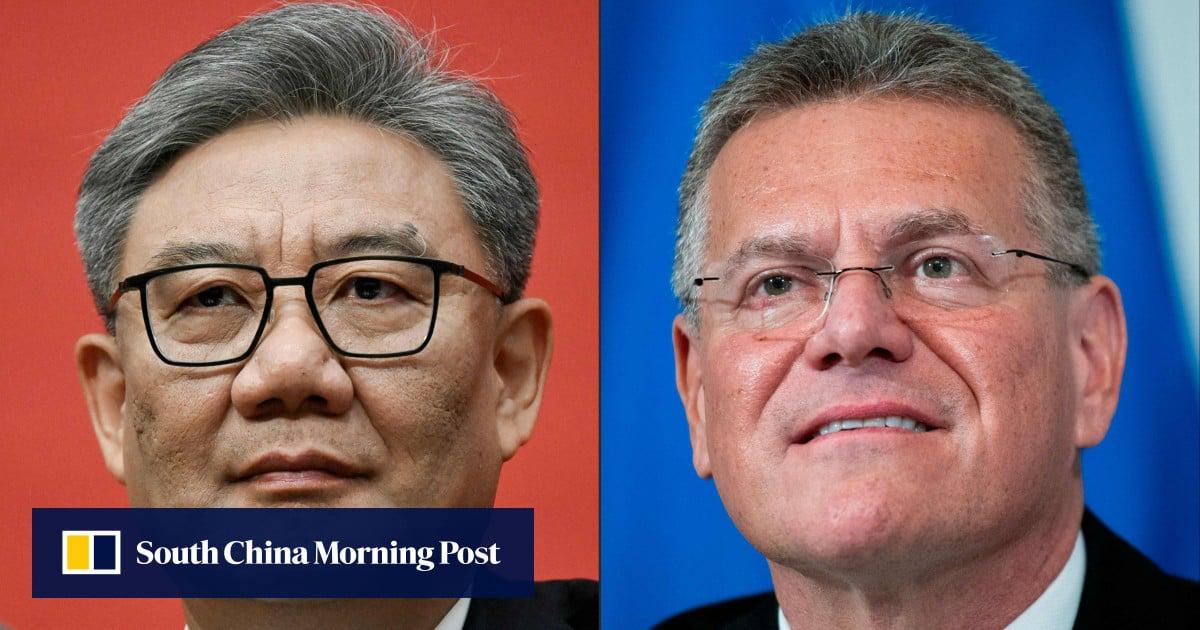
China has signaled willingness to slow down its export surge into Europe as stated by Commerce Minister Wang Wentao. He stated this with the backdrop of the EU increasingly preparing new tools and safeguards to protect against what they perceive as unfair trade measures from China. Wang has specifically stated that China is willing to increase imports from Europe to offset their trade surplus:
>Related to that, Beijing is also, and perhaps surprisingly, open to slowing its massive surge in exports to the 27-member union, which has led to fears of European manufacturers being wiped out by cut-price and increasingly high-quality Chinese goods. But Wang expressed more enthusiasm for *increasing imports from Europe*, some of the people said.
However, there are some problems with this proposal:
One, China promised Trump the same thing in term 1 and this didn’t result in a meaningful reduction in the trade surplus with the US. China either didn’t buy as much as anticipated or outright refused to fulfill any of their commitments.
Two, it highly depends on what China wants to import. If it’s going to be high-tech goods like EUV machines, then nothing will happen. The EU wants to not export products made with critical technologies while at the same time wanting China to reduce its trade surplus with the EU.
Three, I’m firmly of the belief the EU’s problem with China is not the headline trade deficit, but the composition of the trade deficit. The EU is perfectly fine with running a deficit caused by natural resources of commodities, but not by industrial goods.
Thus, if China, for example, promises to import more French wine to offset the deficit, that will solve none of the complaints the EU has, which is the erosion of their industrial base. Furthermore, even if China commits to reducing its trade surplus with the EU, as indicated by the article the EU will continue apace with its efforts to rerisk from Chinese supply chains. Why would China help the EU with this goal? Therefore, I view these recent overtures as delaying measures rather than genuine negotiations over EU-China trade.

1 Comment
China has signaled willingness to slow down its export surge into Europe as stated by Commerce Minister Wang Wentao. He stated this with the backdrop of the EU increasingly preparing new tools and safeguards to protect against what they perceive as unfair trade measures from China. Wang has specifically stated that China is willing to increase imports from Europe to offset their trade surplus:
>Related to that, Beijing is also, and perhaps surprisingly, open to slowing its massive surge in exports to the 27-member union, which has led to fears of European manufacturers being wiped out by cut-price and increasingly high-quality Chinese goods. But Wang expressed more enthusiasm for *increasing imports from Europe*, some of the people said.
However, there are some problems with this proposal:
One, China promised Trump the same thing in term 1 and this didn’t result in a meaningful reduction in the trade surplus with the US. China either didn’t buy as much as anticipated or outright refused to fulfill any of their commitments.
Two, it highly depends on what China wants to import. If it’s going to be high-tech goods like EUV machines, then nothing will happen. The EU wants to not export products made with critical technologies while at the same time wanting China to reduce its trade surplus with the EU.
Three, I’m firmly of the belief the EU’s problem with China is not the headline trade deficit, but the composition of the trade deficit. The EU is perfectly fine with running a deficit caused by natural resources of commodities, but not by industrial goods.
Thus, if China, for example, promises to import more French wine to offset the deficit, that will solve none of the complaints the EU has, which is the erosion of their industrial base. Furthermore, even if China commits to reducing its trade surplus with the EU, as indicated by the article the EU will continue apace with its efforts to rerisk from Chinese supply chains. Why would China help the EU with this goal? Therefore, I view these recent overtures as delaying measures rather than genuine negotiations over EU-China trade.