
“Of course. We are companies that make their living from war. Long live Trump.”
This was an actual exchange between employees in the pricing department chatroom of one of South Korea’s four major oil refiners on March 4.
They also said, “We’re raising today’s price by another 100 won. Looks like we’ll make 2 trillion won this year.”
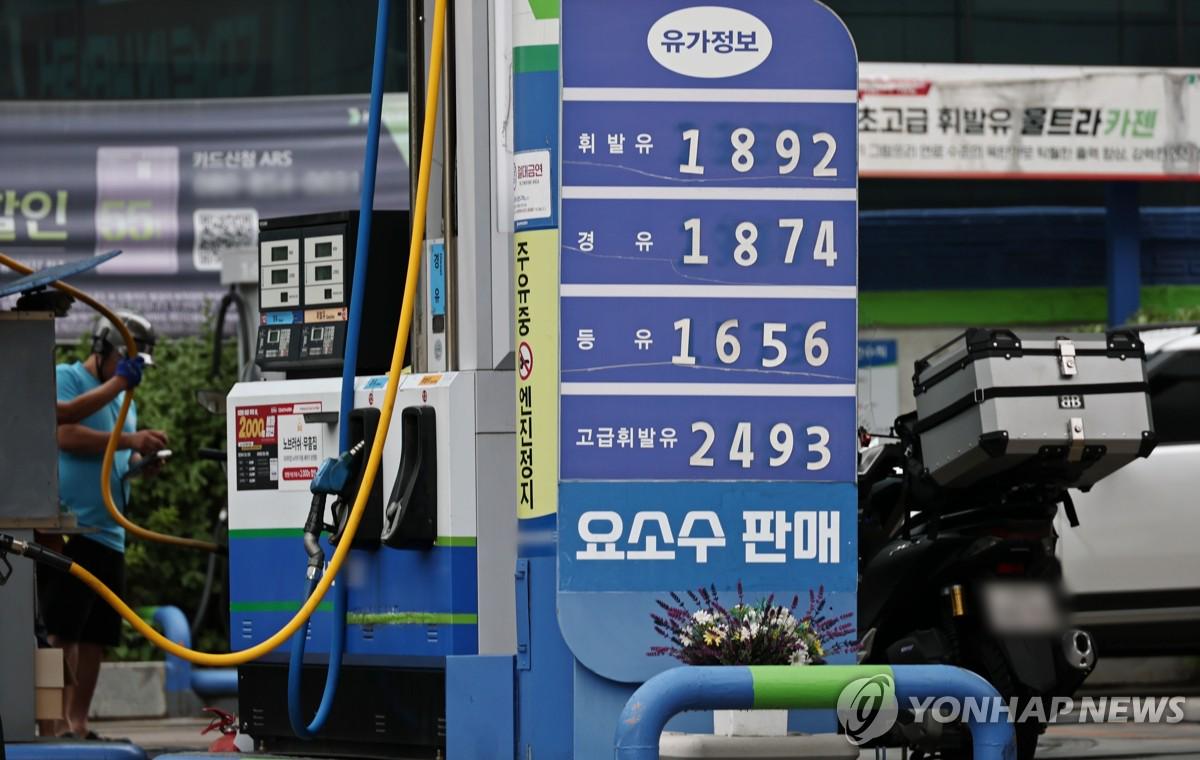
That same day, the average gasoline price in Seoul exceeded 1,800 won per liter in the aftermath of the U.S.-Iran war. Long lines formed at gas stations as drivers rushed to fill up before prices rose further.
According to prosecutors’ investigation, behind the sharp rise in fuel prices were organized collusion among refiners and an unfair distribution structure.
In a normal market, the four refiners would compete on prices in supplying gas stations in order to increase sales volume, which could in turn lower retail prices for consumers.
Instead, the refiners signed “exclusive-purchase” supply contracts with independent gas stations run by small business owners.
Under these contracts, the gas stations were required to purchase all of their products at a deposit price unilaterally set by the refiner. At the end of the month, final settlement was then made according to a confirmed price again decided unilaterally by the refiner.
From the gas stations’ perspective, this structure deprived them of the opportunity to buy cheaper products elsewhere and made it impossible to calculate profits and losses in advance.
The Fair Trade Commission issued a corrective order against the exclusive-purchase contract structure in 2009, and in 2013 the Supreme Court also ruled that exclusive-purchase contracts imposed against the other party’s will were illegal.
Yet even today, the share of exclusive-purchase contracts among the four major refiners reportedly averages 98 percent.
According to a survey by the Korea Gas Station Association, 83.3 percent of independent gas stations responded that, in effect, they had no real choice over the contract. One respondent described it as “a structure where the refiner is king.”
Refiners also stripped gas stations of existing benefits, such as suspending bonus card programs, when they violated exclusive-purchase obligations. In some cases, they filed penalty lawsuits demanding large sums amounting to 10 to 30 percent of sales.
Refinery officials also mentioned exclusive-purchase contracts in internal emails and messenger chats, saying things such as, “For malicious business partners we judge we cannot let go quietly, we should probably make them suffer through litigation,” and, “Since it’s an exclusive contract, the moment they go somewhere else, they get smashed with damages.”
While gas stations had no choice at all, the refiners enjoyed a structure in which they could supply petroleum products stably at the prices they wanted, without competition from rival companies.
Prosecutors emphasized that there was effectively no qualitative difference between the petroleum products of the four refiners.
The refiners engage in so-called swap transactions, in which they exchange petroleum products stored in each other’s tanks. Prosecutors explained that the very fact that they exchange products shows they recognize there is no difference in quality.
In the end, the only means of competition among refiners was price. Prosecutors believe, however, that no price competition took place because of collusion and unfair contracts.
When war broke out, the refiners raised fuel prices all at once under this unfair contract structure.
Investigators found that after HD Hyundai Oilbank and SK Energy exchanged pricing information and sharply raised fuel prices, GS Caltex and S-Oil reflected those increases as well and raised their own prices.
Prosecutors concluded that, at the time the war broke out, the four refiners had substantial crude oil reserves and therefore had no reason to sharply raise prices. Nevertheless, all four companies simultaneously caused deposit prices to surge on an unprecedented scale.
The refiners’ collusion was found to have begun in July 2024, before the war.
The direct collusion identified by prosecutors between HD Hyundai Oilbank and SK Energy alone amounted to 14.2 trillion won.
Taking into account the ripple effect of price increases by all four refiners, prosecutors believe the practical effect of the collusion reached 26 trillion won.
Because of the refiners’ price increases, independent gas stations had no choice but to raise retail prices for consumers as well, and the burden ultimately fell on consumers.
Posted by Freewhale98
5 Comments
1. Summary
Korean big oil refiners are caught colluding to raise price during Iran war. Their private messages were filled with praise of Trump for delivering profit and the conspiracy to collude to raise gas price.
2. How is this related to the sub
(1) anti-monopoly actions: Big Oil Refiners conspired to disturb market function.
3. My opinion
I guess price cap policy was right as these refiners were already colluding ? Not sure.
Succs vindicated yet again.

Well thats pretty fucking bad
> company chatroom…. “of course. We are companies who make a living from war. Long live Trump.”
In fairness this sounds exactly like some shit I’d stupidly send to a work friend over slack