
For years, the number of nuclear weapons in Europe moved in only one direction. Now, there are clear signs that this trend is likely coming to an end—at least for the time being. Is a new arms race beginning?
Brussels (dpa) – In light of threats posed by Russia, NATO is working on plans to expand nuclear deterrence in Europe. According to reporting by the German Press Agency (dpa), the deployment of additional US nuclear weapons is one option being considered. Experts from the group behind "The Bulletin" even consider it possible that the US has already transferred B61-12 bombs to the Lakenheath airbase in the UK. Should the security situation deteriorate further, countries such as Poland, Finland, and Lithuania could also come into focus as potential deployment sites.
The planning focuses primarily on so-called non-strategic nuclear weapons. These are intended for use against targets such as enemy troops, airfields, ports, command centers, and other military infrastructure. Compared to strategic nuclear weapons, they often have a lower explosive yield and are typically delivered via fighter aircraft, short-range missiles, or cruise missiles.
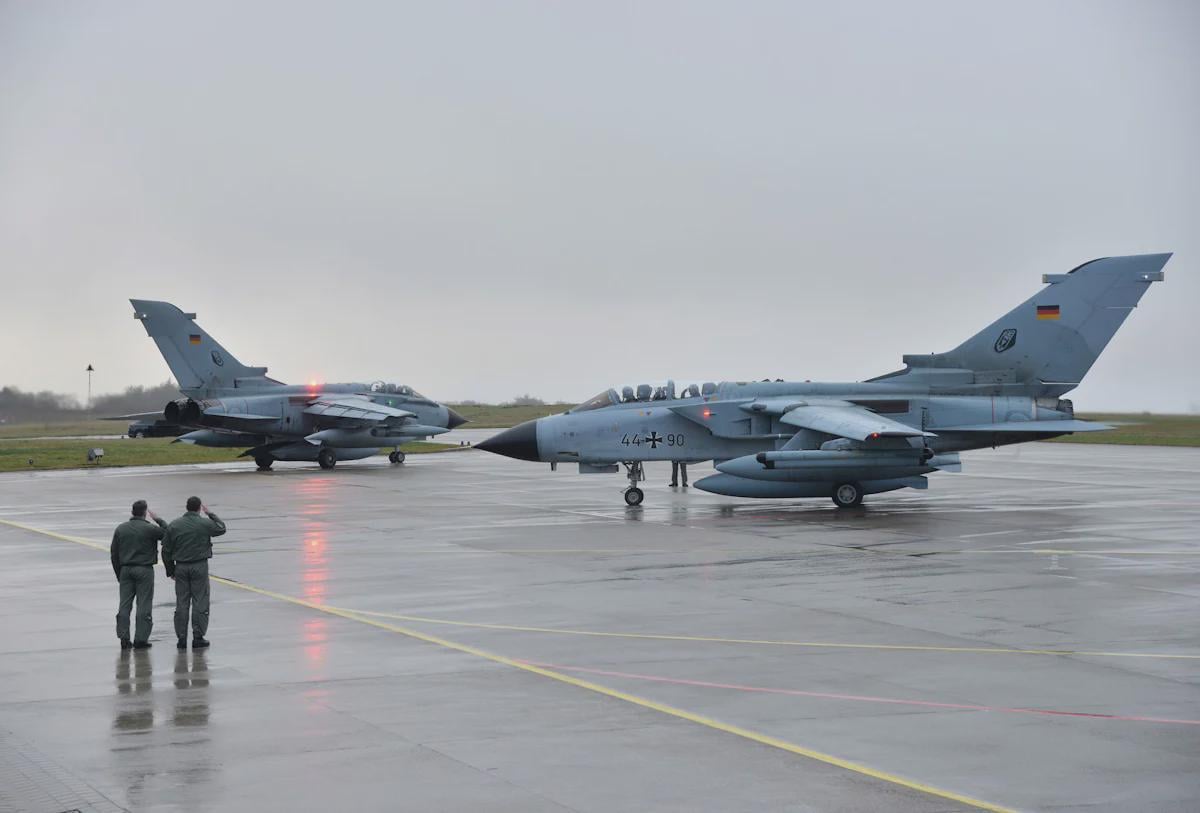
Following the massive nuclear disarmament that took place after the Cold War, nuclear experts estimate that only about 100 US B61-12 bombs remained stationed at six airbases across Germany, Belgium, Italy, the Netherlands, and Turkey. In Germany, they are reportedly stationed at the Büchel airbase in Rhineland-Palatinate. Under NATO’s "nuclear sharing" arrangement, these bombs could be dropped by German fighter jets in the event of a conflict. Currently, the German Air Force maintains Tornado jets for such missions; in the future, F-35 stealth jets are slated to take on this role.
NATO wants to be able to respond to a nuclear attack.
In an interview with the German press agency dpa, NATO Secretary General Mark Rutte did not rule out the future deployment of more US nuclear weapons in Europe. However, citing confidentiality, he declined to comment on details of ongoing deliberations. The alliance is continuously assessing which capabilities are required and what the nuclear deterrence mix should look like, he explained in an interview conducted in mid-July. "Wherever we need to make adjustments, we will do so," Rutte said. "We must ensure that no one can attack us with nuclear weapons without us being in a position to respond."
He had already hinted back in April, at the NATO Nuclear Policy Symposium in Istanbul, that the work might go beyond the mere replacement and modernization of existing systems. At the time, he stated that crucial decisions would need to be made regarding how to further adapt NATO’s nuclear posture to the deteriorating security environment.
Following the alliance's most recent Nuclear Planning Group meeting, a statement was issued in June—the first of its kind in nearly two decades. In it, the allies commit to further modernizing NATO’s nuclear capabilities, strengthening their nuclear planning capacity, and adapting deterrence.
Are more than a hundred additional warheads needed?
Experts such as US nuclear weapons specialist Robert Peters explain the direction things might take. He told the dpa that he was optimistic the United States would strengthen nuclear deterrence in Europe within the next 24 months. He argues that US President Donald Trump could thereby reduce the likelihood of an open conflict with Russia. According to this view, a US nuclear buildup would not conflict with Trump's plans to make a significantly smaller contribution to Europe's conventional defense in the future.
In Peters' view, it would make sense to station an additional 100 to 150 non-strategic US nuclear weapons in Europe—possibly in Poland and Finland as well. New storage facilities would need to be built there, though this would not be particularly difficult and could be accomplished within a few months. "We clearly lack a sufficient number of weapons," said Peters, who works for the Heritage Foundation, a conservative think tank close to the Republican Party. Russia likely holds an advantage of more than ten to one in non-strategic nuclear weapons.
Why Putin Should Drink Coffee
Jim Stokes, a former U.S. government official and former NATO Director for Nuclear Policy, also considers "new types of nuclear capabilities" to be sensible. However, he emphasized that this does not mean NATO needs to match the number of warheads. New capabilities could, among other things, signal that the U.S. remains firmly committed to its extended nuclear deterrence—and thus to the nuclear security guarantee for its allies.
In this context, Stokes pointed to the wider range of nuclear systems that the United States had deployed in Europe during the Cold War, in addition to the B61 bombs intended for combat aircraft. In 1979, for instance, the alliance partners had decided to modernize and expand their nuclear systems. These included Pershing II medium-range ballistic missiles and BGM-109G Gryphon ground-launched cruise missiles. This deployment, carried out under the so-called NATO Double-Track Decision, was long a subject of intense controversy among the German public.
However, the defense expert does not consider it militarily necessary to relocate American nuclear bombs closer to Russia; such missions could also be carried out from Western Europe. Nevertheless, broader participation by other allies—for instance, through nuclear-certified combat aircraft, aerial refueling, reconnaissance, escort support, exercises, or command capabilities—could be beneficial. This could offer advantages without the countries themselves having to host US nuclear weapons.
"We want President Putin to wake up every morning, have a cup of coffee, and say: 'Today is not the day for an attack,'" Stokes told dpa. This approach has worked since NATO was founded 77 years ago; no state has attacked the alliance.
France's warheads as a supplement
Efforts to establish a European nuclear umbrella—driven primarily by France—are viewed by both Rutte and experts merely as a supplement, not a potential replacement. Rutte told dpa that the US nuclear umbrella remains the ultimate guarantee of the allies' freedom and security, though the French initiative creates an additional layer. Stokes described French capabilities as a valuable complement, noting, however, that France could not replace American capabilities regarding warheads, delivery systems, and platforms. The same applies to British capabilities.
What remains secret
According to sources within the alliance, it remains unclear whether or how potential decisions to expand NATO deterrence would be communicated. One option, reportedly, would be to keep Russia in the dark regarding specific measures. This would also align with established practice; while NATO and the US government confirm that American nuclear weapons are stationed in Europe, their exact numbers and the full list of locations remain classified.
Translated by Google Translate, mistakes are my own.
Posted by IHateTrains123
1 Comment
Nice to see the US still doing USsy things