
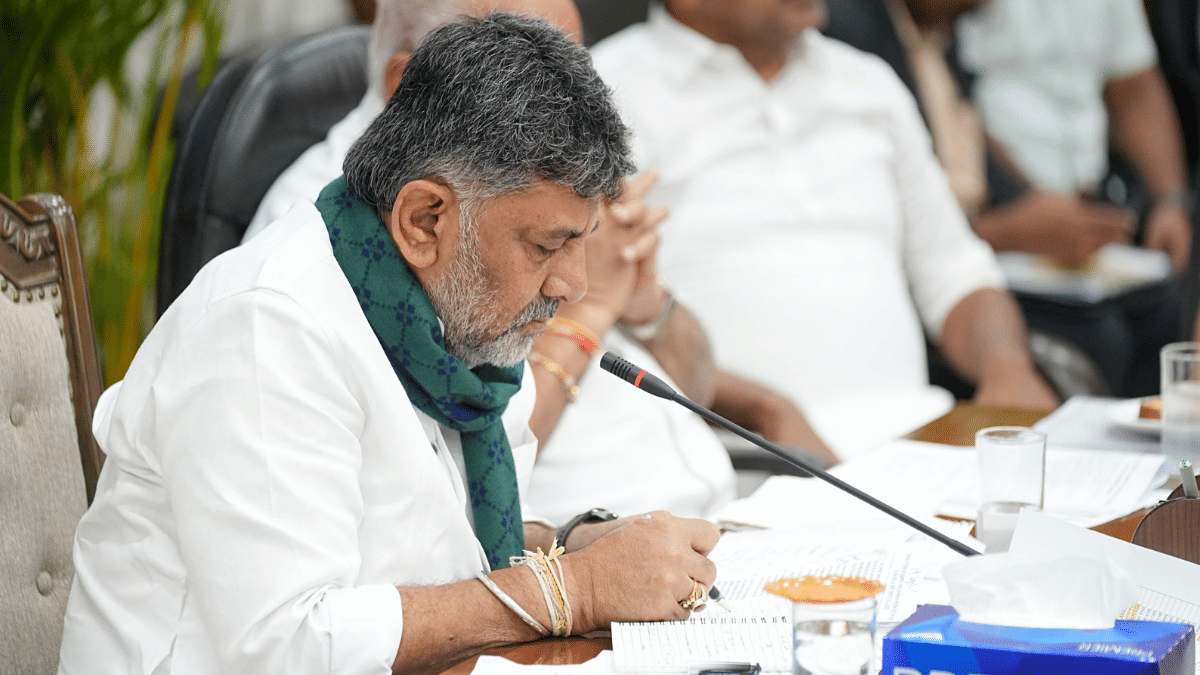
What goes into a cabinet in one of India's most poltically important states? well a whole lot. Regional balence, important leaders, caste arithmetic and a whole host of other factors. The result is messy. As one of Congress's few major success stories electorally since 2014, Karnataka is a must win. After a brutal factional war its new CM has assembled a team.
the result has created even more conflict as this article goes into making a cabinet is always a complex process, especially in Karnataka.
Posted by ewatta200
1 Comment
**Bengaluru:** After two months of hectic lobbying, multiple trips to Delhi and endless factionalism, the Congress high command Monday managed to muster an uneasy consensus among warring factions and cleared 20 new names for the state cabinet.
[](https://vdo.ai/contact?utm_medium=video&utm_term=theprint.in&utm_source=vdoai_logo)%5B%5D(https://theprint.in/world/qatar-says-mediators-make-progress-in-efforts-to-end-us-iran-war/3005603/?utm_campaign=theprint&utm_medium=ticker&utm_source=vdoai_ticker)
However, only 19 took oath as Gayatri Shanthegowda, the lone woman in the list was asked not to take oath.
Shanthegowda’s inclusion came as a shock to most people because she had not even taken oath as an MLA, triggering protests by other MLAs, especially supporters of former minister Lakshmi Hebbalkar. Shivakumar’s cabinet currently has 33 ministers with not even a single woman in the council of ministers.
People aware of the developments say the list of new ministers, who took oath Monday evening, was chosen based on representation of caste and region, and to accommodate loyalists of at least three main factions within the Congress in Karnataka, including those of Chief Minister D. K. Shivakumar, Siddaramaiah and AICC president Mallikarjun Kharge.
“While we have many capable legislators who are eligible for ministerial positions, the party must make specific decisions under certain circumstances. In 2004, I was not appointed as a minister, nor was I initially included in the cabinet during the Siddaramaiah government (2013-18). It was my patience during those times that brought me to the position I hold today. I request everyone to remain patient, as opportunities will be provided to all in due course,” Shivakumar told reporters Monday.
The new cabinet has loyalists of the three main factions while at least a dozen ministers who served in the previous Siddaramaiah government, were replaced.
In the 33-member cabinet, seven are from the dominant Lingayat community and six are Vokkaligas, including Shivakumar and Ramalinga Reddy (Reddys are classified under the same category).
There are six people from the backward classes, including three members from Siddaramaiah’s community, the Kurubas.
There are seven members from communities classified as Scheduled Caste and three from Scheduled Tribes. There are three Muslims, including Zameer Ahmed Khan, and one Christian (K. J. George) in the cabinet. One post remains vacant in the 34-member cabinet.
“Overall, 23 out of 38 key positions, over 60 percent, are held by leaders from SC, ST, OBC and minority communities,” according to the CMO.
This 23 includes Lingayats and Vokkaligas, who enjoy dominant positions but are listed in the state OBC list.
Under Rahul Gandhi, the Congress has been advocating for social justice with a higher share for marginalised and oppressed groups.
However, in caste-heavy Karnataka, the Congress has fallen back on a tried-and-tested strategy of accommodating dominant communities despite relying on marginalised groups for electoral support.
The completion of the cabinet expansion exercise, however, added more confusion than clarity to Shivakumar’s two-month-old government, compounding the challenges for the chief minister.
# Caste, region, winnability
The intense lobbying to accommodate loyalists led to a two-month delay in completing the cabinet expansion exercise.
The Congress high command dropped over a dozen ministers from Siddaramaiah’s cabinet, including seniors like H. K. Patil, K. Venkatesh, H. C. Mahadevappa, Dinesh Gundu Rao and Lakshmi Hebbalkar among others.
This included two last-minute changes in the official list shared by the CMO—replacement of Mankal Vaidya with S. S. Mallikarjun, terming it a “typing error”—and Shanthegowda’s omission from the swearing-in.
The Congress has also overlooked several alleged transgressions by leaders who were under scrutiny for working against the party’s interests. Notably, that of B. Z. Zameer Ahmed Khan, the former minister from Bengaluru, who was under scrutiny for allegedly working against the Congress candidate in Davangere South in May.
Khan is a prominent Muslim leader and his inclusion was a matter of intense debate, with the party choosing to help retain its core support base over alleged anti-party activities.
There are seven ministers from the SC category, including three from SC (Right) which the AICC president belongs to, two from SC (Left), and one each from Lambani (Banjara) and Bhovi communities. There are three ministers from ST groups.
The CMO said there are six ministers from Backward Classes, with deputies in both the legislative assembly and council belonging to these groups, irrespective of any allegations against some of these legislators.
B. Nagendra, a close aide of Siddaramaiah and main accused in the Karnataka Maharshi Valmiki Scheduled Tribes Development Corporation Limited scandal, was inducted into the cabinet as he is from the dominant Valmiki community which enjoys significant sway in the Kalyana-Karnataka region.
Nagendra was forced to step down from the Siddaramaiah-led cabinet in June 2024 and even spent time in jail over allegations of financial misappropriation, giving the opposition more ammunition to corner the ruling party.
“The disgraced former minister B. Nagendra, who stole Rs 187 crore of the poor Scheduled Tribes’ money from the Valmiki Development Corporation and gave ‘black money’ to the Congress high command for the Telangana and Lok Sabha elections, has been welcomed back into the cabinet with a red carpet,” R. Ashoka, the leader of the Opposition, said in a post.