
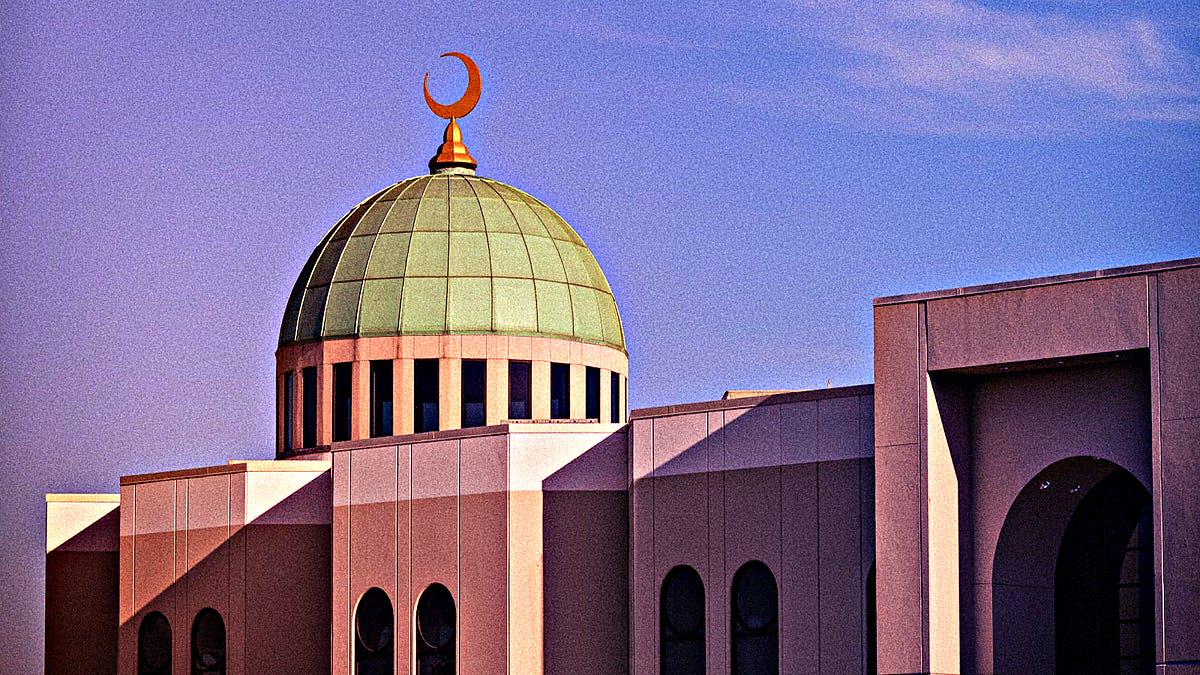
A New York Times investigation a few weeks ago found that Muslim institutions across Texas are facing an escalating campaign from officials and political figures who question whether Islamic practice deserves the label “religious” at all. The easy way to read this is as a story about prejudice against one religious minority: ugly, worth condemning, but ultimately a narrative about how one group is being treated. That reading, though true, misses the bigger issue at stake.
The Texas campaign is not simply discrimination against Muslims; more fundamentally, it is a demonstration of a mechanism that, once normalized, threatens the religious liberty of every American. Put simply: Once Texan officials or any other anti-Muslim agitator hands government a power liberal constitutionalism was built to deny—the power to decide which religion counts as “religion”—that power can be used against Christianity, Judaism, or any other religion.
The Texas Playbook
The specifics matter. Last year, Texas designated the Council on American-Islamic Relations and the Muslim Brotherhood as terrorist organizations, a label with no basis in federal law but real consequences for how the state treats Muslim civic and religious institutions. This summer, the Dallas-Fort Worth Airport dropped a modest plan to add foot-washing stations used for purification by Muslim travelers after Gov. Greg Abbott threatened to withhold funding, framing a routine accommodation of religious practice as itself a form of discrimination. At the state Republican convention in June, nearly every speech touched some version of anti-Muslim rhetoric. Combating the alleged threat of Sharia law was adopted as a top legislative priority. Lawmakers are now drafting bills for next year’s session to regulate or prohibit specific Islamic practice. These proposals include restricting hijabs and other Islamic dress, closing Islamic charter schools, withholding professional licenses from Muslims, and criminalizing advocacy or implementation of sharia law. The Republican Party of Texas has also called for legislation or constitutional amendments to declare Sharia law seditious and a “competing enemy” of the state and federal constitutions.
Even more startlingly, some Texan officials are pursuing something more direct: a legal definition of Islam as a political movement rather than a religion. That last move has a history. I traced its lineage in my 2019 book, When Islam Is Not a Religion, through decades of American law and politics finding ways to discuss Muslim belief without calling it belief: a security threat, a foreign ideology, a geopolitical system, anything but a faith entitled to constitutional protection. The clearest early instance came in 2010, when opponents of a new mosque in Murfreesboro, Tennessee, sued to block construction on the theory that Islam was not a bona fide religion but a scheme to install Sharia law, and asked a sitting judge to rule on the question.
Texas in 2026 is updating that argument for a new audience, in the same year the country marks the 25th anniversary of Sept. 11, the event that gave this style of reasoning its modern American shape.
What the Law Actually Asks
Consider the process of adjudicating a religious claim: Ascertaining whether a practice is in fact “religious” is just the beginning of the analysis. Typically, the claim reaches a court because a person or religious organization has challenged a law, regulation, or government action as burdening religious exercise. The court must first determine whether the asserted practice is religious, though in most cases the government concedes that point. It then asks whether the government has adequately justified the burden.
The government can still restrict a religious practice, but it must clear a high bar: a genuinely serious reason, not just an official’s discomfort or a neighbor’s complaint, and proof that there was no gentler way to achieve that same goal without burdening someone’s faith. (This legal standard is known as “strict scrutiny.”) Cases spanning across diverse facts, from a Muslim prisoner denied a religious diet, to a Christian baker asked to violate his conscience, to a Sikh soldier ordered to shave—they all go through roughly the same analysis. In each case, the question goes well beyond whether the religious practice inconveniences somebody. It is whether the government’s reason for restricting it is strong enough, and whether there was a less burdensome way to get there.
The legal burden on the government is heavy, but even then, not every practice invoking a religious imperative wins. Courts have upheld restrictions when the government’s interest was serious enough, denying parents the right to withhold life-saving blood transfusions from their children on religious grounds, for instance, or requiring a driver’s license photo despite a religious objection to being photographed without a veil. Religious organizations remain bound by generally applicable law like everyone else.
What the Texas campaign does, and what the Murfreesboro lawsuit did before it, is avoid this analysis rather than lose it. If a practice is not religious to begin with, the government never has to justify restricting it, never has to show a serious interest or a lack of alternatives. It only has to win an argument about labels.
Courts can reject this move, but the tactic can still impose years of litigation and practical burdens before that happens. In Murfreesboro, a Tennessee court ultimately found the claim that Islam was not a religion groundless, yet the dispute continued over the mosque’s approval and occupancy before federal intervention helped clear the way.
Importantly, Texas’ current effort remains a political and legislative campaign rather than an accomplished legal redefinition, which means there is still time to defeat it through litigation, public advocacy, and political organizing before it becomes entrenched in law.
One Case Becomes the Next
Religious liberty cases do not stay in their own lane. A Texas legislature can rebrand Islam a political ideology, but that does not make it so as a matter of constitutional law. Courts have their own standards for determining what counts as religion, and there is good reason to think that, at least in the near term, they would reject an attempt simply to strip Islam wholesale of its status as a religion. The opponents of the Murfreesboro mosque tried precisely that argument more than 15 years ago and failed.
But failure in court does not make the gambit harmless. We saw a version of this during the anti-Sharia movement that swept state legislatures beginning around 2010. Oklahoma voters approved a constitutional amendment expressly forbidding state courts from considering Sharia law; federal courts blocked it. Other states adopted facially neutral restrictions on the use of “foreign law.” In Kansas, one such law soon surfaced in the divorce of an Iranian Muslim couple, where a wife sought enforcement of the mahr in her Islamic marriage contract. The court refused to enforce the agreement on several grounds, invoking the new foreign law statute as part of its reasoning and suggesting that a Kansas court could not enforce an agreement arising from a legal system it regarded as inconsistent with gender equality.
The larger point is that a campaign does not have to succeed in persuading courts that Islam is literally “not a religion” to alter Muslims’ legal position. Its premises can work their way into legislation, administrative decisions, licensing rules, land-use disputes, and ordinary litigation, requiring Muslims to defend practices and institutions that would otherwise enter the legal system as recognizably religious. In other words, instead of proceeding directly to the question whether the government may lawfully burden a protected religious practice, Muslims must first meet the threshold burden of establishing that their practice is religious—and therefore entitled to religious-liberty protection at all.
And while the immediate targets of these ominous measures are Muslims, it is important for all Americans to pay attention to what happens in these cases because religious-liberty law does not develop separately for each faith. The rules courts develop in cases involving one religious community become the rules available to—or imposed upon—the next.
Take, for example, Burwell v. Hobby Lobby, the 2014 case in which the Supreme Court sided with a Christian family business that objected to paying for certain contraceptives on religious grounds. The appeals court ruling that got them there relied heavily on the 2010 Abdulhaseeb v. Calbone case in which a Muslim prisoner had been denied a halal diet. The court reasoned that just as the government had wrongly forced that prisoner to choose between his faith and eating, it was wrongly forcing the Hobby Lobby owners to choose between their faith and millions of dollars in fines. A Muslim prisoner’s win became a Christian company’s precedent.
The chain runs the other way too. In Employment Division v. Smith, the Supreme Court ruled in 1990 that Oregon could deny unemployment benefits to two Native American men fired for using peyote in a religious ceremony. Decades later, that loss became a central precedent in Stormans v. Wiesman, when Christian pharmacists in Washington State argued they should not be forced to dispense a drug that violated their beliefs. The pharmacists lost, in part because of what had already been decided against a different faith practiced by a different, and far less politically powerful, minority.
A win for a Muslim prisoner or a Native American congregant tends to become ammunition the next litigant can use, whatever their faith. A loss becomes a weapon used against someone else entirely. Groups like the Becket Fund, generally associated with conservative Christian clients, have also represented Muslim prisoners, Jewish congregations, and Sikh soldiers for exactly this reason: the law that protects one faith protects all of them, and the law that fails one eventually fails everyone.
What Liberalism Actually Protects
The First Amendment’s religion clauses do not protect Christianity specifically, or the religions practiced in America in 1791, or the religions a given legislature happens to find familiar. They protect religion as a category, applied without regard to whether the state or an electoral majority finds a particular faith popular or convenient. That was the point of taking religious liberty off the ballot: to guarantee that no believer’s rights could be revoked by a vote they lost.
But attempts to strip a faith of protection by relabeling it as ideology, culture, or security risk, rather than by showing that a specific practice fails the standard courts apply, turns religious liberty on its head. The right stops functioning as a right and starts functioning as a grant, extended to whichever faiths the current majority recognizes and withdrawn from whichever faith next falls out of favor.
Liberals of every faith, and none, have reason to take the Texas campaign seriously on these terms. A constitutional order distinguishes itself from a majoritarian one by protecting rights the majority might prefer not to honor. The test of any right is not how easily it is granted to a group everyone already likes, but whether it holds when the claimant is unpopular, unfamiliar, or politically inconvenient. That is precisely the position American Muslims occupy in Texas today.
Religious liberty that bends the moment a faith becomes disliked enough is not religious liberty. It is a license, revocable by whoever currently holds the pen. Every religious minority in this country, not only Muslims, is one relabeling away from finding out what that license was worth, and given how tightly these cases are bound together, so is every faith that has ever borrowed another’s precedent to win its own case.
Posted by TheUnPopulist
1 Comment
**Submission Statement**
Other than being how political power motivated by hate specifically targeted towards Muslim Americans, the Texas legislation against Muslim institutions could very easily have negative effects for all religious groups. For example, believers could face a new threshold burden: proving that their beliefs are actually “religious” and religions could be stripped of constitutional protection through relabeling.
Also, even if one is highly skeptical or even outright hostile to the need for civil protections for Muslim Americans, such legislation is beneficial even for Christian groups as protections won by minorities can protect Christians and other majority faiths. For example, Muslim-prisoner case of Abdulhaseeb v. Calbone, involving access to halal food, which helped provide legal reasoning later used in the Christian-owned Hobby Lobby case in which the Supreme Court sided with a Christian family business that objected to paying for certain contraceptives on religious grounds.