
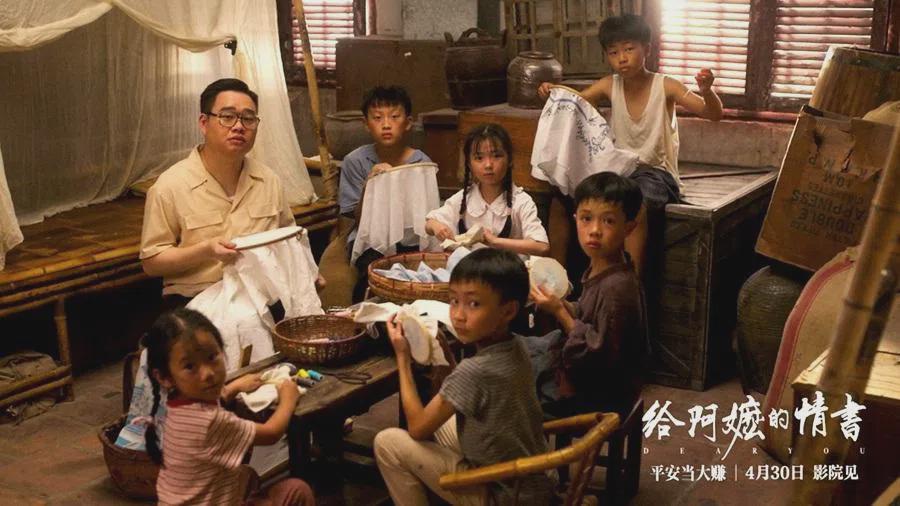
Submission Statement: A heartfelt film about a Teochew grandmother unexpectedly triggered heated debate about culture and politics. Many have yet to see the film, so I will avoid spoilers — I would rather leave everyone to experience this simple, heartfelt story rooted in Chaoshan culture for themselves.
What I want to discuss instead is why so much noise emerged afterwards, distracting attention from the film itself. A spike in misinformation that was so sharp that it produced a statistically abnormal pattern, unlike how genuine grassroots discussions typically spread. Much of the content attacking LHZB and Singapore sidesteps the article’s central arguments altogether and goes into broad-brush condemnation, inflating the issue into accusations that “the Singapore establishment is systematically erasing traditional Chinese culture”.
Claims that Singapore was suppressing Chinese culture became intertwined with another narrative — one that had recently subsided after being heavily promoted: race. The argument shifted towards claims that Singapore was becoming increasingly “Indian”. To fuel this narrative, many of these inflammatory videos used footage filmed between 2022 and 2024, focusing heavily on large crowds gathered for Indian festivals and cultural celebrations.
Its narrative design is exceptionally sophisticated. It distorts Singapore’s multiracial governance, framing it instead as a “cultural anxiety born from the de-sinicisation of Chinese elites”. By doing so, it shifts the target of criticism from external hostility to an alleged betrayal from within the community, ultimately amplifying divisions by weaponising and recontextualising ethnic imagery.
In the post-truth era, there is no need to persuade everyone. It is enough to generate sufficiently strong emotions within targeted circles, fostering anxiety within Singapore’s Chinese community over cultural identity and demographic shifts, and translating that anxiety into dissatisfaction with the government and a perceived dependence on external forces. Once this psychological shift is achieved, the manipulation has succeeded.
In a multiracial, multiethnic society like Singapore, shaped over centuries by successive waves of immigration, issues involving history and culture often touch on sensitive nerves. Cultural sentiment, shaped by personal experience, family history and values, sits alongside more politically calculated readings that weigh identity, social cohesion and security.
The article was first published in Singapore's Lianhe Zaobao as “后真相时代看《给阿嬷的情书》” by the Deputy Editor-in-Chief of Singapore Press Holding's China Media Group.
Posted by DifficultBarber6969