Every time poverty figures are released in Mexico, the discussion revolves around the political moment. If poverty falls, the government presents it as proof of its success; if it rises, it is cited as an indicator of its failure. The problem is not the debate itself, of course, but its short-term focus: the discussion remains confined to the immediate future, and the opportunity is lost to understand how poverty has evolved over time, what factors led to its reduction, or what caused it to increase.
Discussing poverty from a historical perspective changes the conversation. It allows us to see that Mexico has undergone profound changes in terms of well-being, and to distinguish between public policies that have been successful and those that failed to reduce poverty or actually made it worse.
The historical fact is undeniable: in 1950, 88.4% of Mexicans lived in poverty. In 2024, that figure was only 35.4%. This reduction is one of the most profound and least recognized structural changes in our history.
The problem is that if we consider not only poverty but also social mobility, this major change is insufficient. More than one-third of the population continues to live in poverty, yet their prospects for social mobility are low. According to the Espinosa Yglesias Center for Studies (CEEY), 70% of Mexicans born into low-income families—seven out of ten—will not be able to substantially improve their income over the course of their lives.
The data clearly show that poverty in Mexico has declined since the mid-20th century, but also that this decline has not been linear. There have been periods of progress, stagnation, and regression, with the latter associated with concurrent economic crises. Poverty does not decline by itself; it declines when economic conditions and public policies align. It increases, however, when crises destroy jobs, reduce incomes, and worsen households’ living conditions.
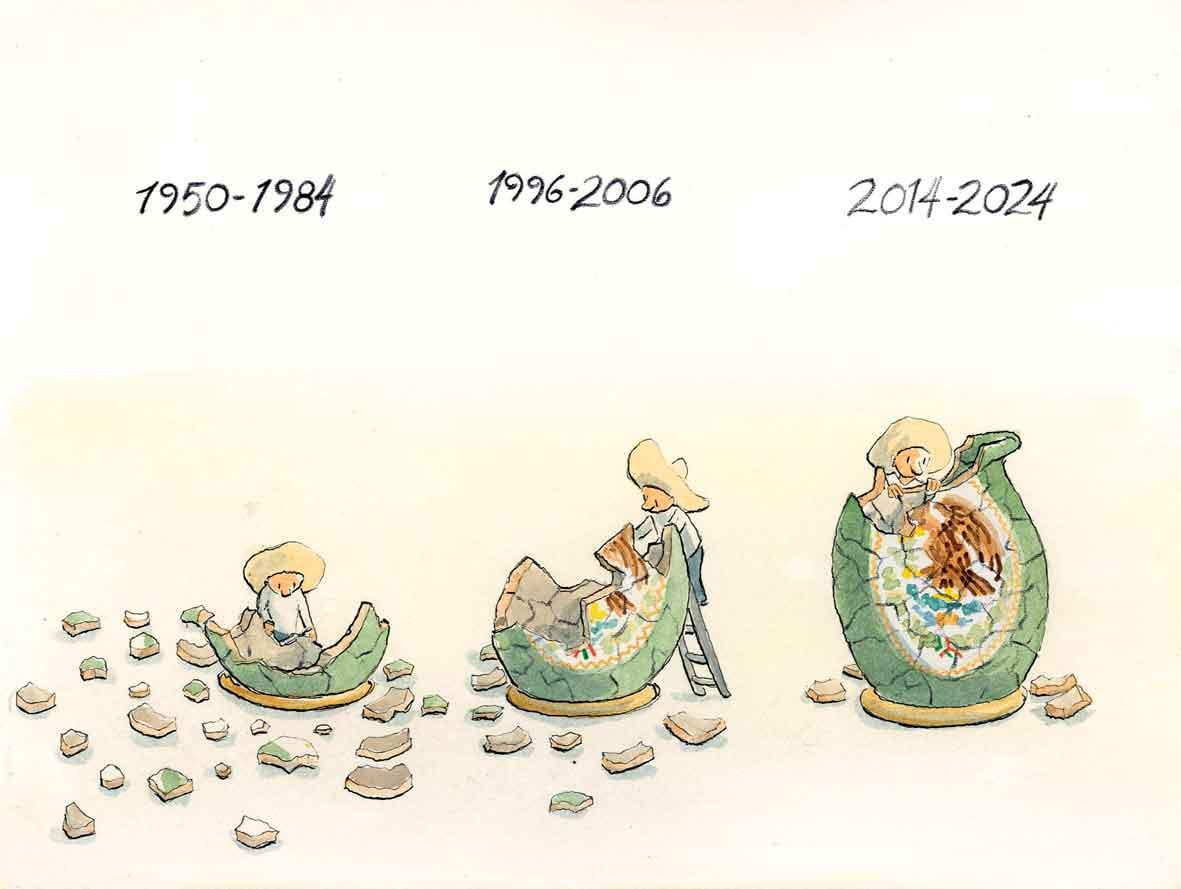
There have been three major periods of poverty reduction. The first was from 1950 to 1984. The second was from 1996 to 2006. The third is from 2014 to 2024. Each of these periods was characterized by different contexts, different governments, and different policies. In all of them, with the nuances inherent to each case, there was macroeconomic stability, economic growth, job creation, rising labor incomes, public investment, and social policy.
In 1950, Mexico was a predominantly rural country with low educational enrollment, limited access to health care, and restricted economic opportunities for large segments of the population. Poverty was not a marginal phenomenon; it was the prevailing condition. Two-thirds of the population lived in extreme poverty—that is, without sufficient income to cover the cost of a basic food basket.
Between 1956 and 1968, Mexico experienced a period of high economic growth, averaging about 3.6 % annually, accompanied by macroeconomic stability. Inflation remained low, the exchange rate was stable, and fiscal discipline prevailed. The government substantially expanded infrastructure, education, and health care. School enrollment rose rapidly, and the number of people covered by health care programs nearly tripled. At the same time, access to basic services was expanded in various regions of the country.
All of this led to something crucial: growth that was relatively inclusive. Formal employment increased, real wages improved, and well-being rose across the board. During part of this period, inequality even declined.
Starting in 1968, the trend changed. During the 1970s, overall poverty continued to decline, but extreme poverty remained unchanged. This is important: economic growth no longer benefited lower-income households to the same extent.
The second historical period of poverty reduction took place between 1996 and 2006, following the economic crisis of 1994–1995. The starting point was macroeconomic stability. Inflation was reduced from levels above 50% to less than 4%, fiscal discipline was maintained, and the financial system was strengthened. External debt was replaced with domestic debt, banking regulations were overhauled, and conditions of greater certainty for investment were created.
In addition to this, significant structural reforms were implemented. Trade liberalization, driven by NAFTA, allowed for greater integration with the United States and created an export-oriented economy that had not existed before. There were also changes to the pension system and judicial reforms that strengthened the rule of law, including the reconstitution of the Supreme Court of Justice and the autonomy of the Bank of Mexico.
A defining feature of this period was the shift in social policy. The federal government moved away from general subsidies—which were costly and poorly targeted—toward designing programs aimed at the poorest households. “Progresa” (later “Oportunidades”) established targeted cash transfers to the country’s poorest families, making payment contingent on the children of those families attending school and the families visiting public health centers.
The third historical period of poverty reduction occurred between 2014 and 2024, against a backdrop of very low economic growth: an average of 0.6% per year. Even so, poverty declined significantly
Between 2014 and 2018, the reduction was linked to the economic recovery following the 2008 global crisis and the expansion of formal employment, which grew at rates close to 4% annually.
Between 2018 and 2024, the context was more complex. The economy experienced low growth and a sharp decline associated with the COVID-19 pandemic. Despite this, in the years following the pandemic, poverty declined once again. A key factor was the sustained increase in the minimum wage, which rose significantly in real terms.
Another institutional factor was the reform that regulated the abuse of outsourcing by companies seeking to avoid directly hiring workers needed for various unskilled tasks. To a lesser extent, the expansion of general, unconditional cash transfers—such as non-contributory pensions for older adults, support for unemployed youth, and educational scholarships—also played a role. The combination of these factors allowed the incomes of the poorest households to rise, even in a low-growth environment.
The 2014–2024 decade reveals something not seen in previous years: poverty reduction can be achieved not only through growth, but also through increases in labor income and expanded public transfers. However, the past 75 years show that growth is a missing piece and that, without it, the progress made during the 2014–2024 decade cannot be sustained in the long term.
Poverty fell significantly between 1950 and 2024, but it could have fallen even further. We must acknowledge the reduction, but also the periods of setbacks, which offer their own historical lessons.

1 Comment
[Key points Translated]
Every time poverty figures are released in Mexico, the discussion revolves around the political moment. If poverty falls, the government presents it as proof of its success; if it rises, it is cited as an indicator of its failure. The problem is not the debate itself, of course, but its short-term focus: the discussion remains confined to the immediate future, and the opportunity is lost to understand how poverty has evolved over time, what factors led to its reduction, or what caused it to increase.
Discussing poverty from a historical perspective changes the conversation. It allows us to see that Mexico has undergone profound changes in terms of well-being, and to distinguish between public policies that have been successful and those that failed to reduce poverty or actually made it worse.
The historical fact is undeniable: in 1950, 88.4% of Mexicans lived in poverty. In 2024, that figure was only 35.4%. This reduction is one of the most profound and least recognized structural changes in our history.
The problem is that if we consider not only poverty but also social mobility, this major change is insufficient. More than one-third of the population continues to live in poverty, yet their prospects for social mobility are low. According to the Espinosa Yglesias Center for Studies (CEEY), 70% of Mexicans born into low-income families—seven out of ten—will not be able to substantially improve their income over the course of their lives.
The data clearly show that poverty in Mexico has declined since the mid-20th century, but also that this decline has not been linear. There have been periods of progress, stagnation, and regression, with the latter associated with concurrent economic crises. Poverty does not decline by itself; it declines when economic conditions and public policies align. It increases, however, when crises destroy jobs, reduce incomes, and worsen households’ living conditions.
There have been three major periods of poverty reduction. The first was from 1950 to 1984. The second was from 1996 to 2006. The third is from 2014 to 2024. Each of these periods was characterized by different contexts, different governments, and different policies. In all of them, with the nuances inherent to each case, there was macroeconomic stability, economic growth, job creation, rising labor incomes, public investment, and social policy.
In 1950, Mexico was a predominantly rural country with low educational enrollment, limited access to health care, and restricted economic opportunities for large segments of the population. Poverty was not a marginal phenomenon; it was the prevailing condition. Two-thirds of the population lived in extreme poverty—that is, without sufficient income to cover the cost of a basic food basket.
Between 1956 and 1968, Mexico experienced a period of high economic growth, averaging about 3.6 % annually, accompanied by macroeconomic stability. Inflation remained low, the exchange rate was stable, and fiscal discipline prevailed. The government substantially expanded infrastructure, education, and health care. School enrollment rose rapidly, and the number of people covered by health care programs nearly tripled. At the same time, access to basic services was expanded in various regions of the country.
All of this led to something crucial: growth that was relatively inclusive. Formal employment increased, real wages improved, and well-being rose across the board. During part of this period, inequality even declined.
Starting in 1968, the trend changed. During the 1970s, overall poverty continued to decline, but extreme poverty remained unchanged. This is important: economic growth no longer benefited lower-income households to the same extent.
The second historical period of poverty reduction took place between 1996 and 2006, following the economic crisis of 1994–1995. The starting point was macroeconomic stability. Inflation was reduced from levels above 50% to less than 4%, fiscal discipline was maintained, and the financial system was strengthened. External debt was replaced with domestic debt, banking regulations were overhauled, and conditions of greater certainty for investment were created.
In addition to this, significant structural reforms were implemented. Trade liberalization, driven by NAFTA, allowed for greater integration with the United States and created an export-oriented economy that had not existed before. There were also changes to the pension system and judicial reforms that strengthened the rule of law, including the reconstitution of the Supreme Court of Justice and the autonomy of the Bank of Mexico.
A defining feature of this period was the shift in social policy. The federal government moved away from general subsidies—which were costly and poorly targeted—toward designing programs aimed at the poorest households. “Progresa” (later “Oportunidades”) established targeted cash transfers to the country’s poorest families, making payment contingent on the children of those families attending school and the families visiting public health centers.
The third historical period of poverty reduction occurred between 2014 and 2024, against a backdrop of very low economic growth: an average of 0.6% per year. Even so, poverty declined significantly
Between 2014 and 2018, the reduction was linked to the economic recovery following the 2008 global crisis and the expansion of formal employment, which grew at rates close to 4% annually.
Between 2018 and 2024, the context was more complex. The economy experienced low growth and a sharp decline associated with the COVID-19 pandemic. Despite this, in the years following the pandemic, poverty declined once again. A key factor was the sustained increase in the minimum wage, which rose significantly in real terms.
Another institutional factor was the reform that regulated the abuse of outsourcing by companies seeking to avoid directly hiring workers needed for various unskilled tasks. To a lesser extent, the expansion of general, unconditional cash transfers—such as non-contributory pensions for older adults, support for unemployed youth, and educational scholarships—also played a role. The combination of these factors allowed the incomes of the poorest households to rise, even in a low-growth environment.
The 2014–2024 decade reveals something not seen in previous years: poverty reduction can be achieved not only through growth, but also through increases in labor income and expanded public transfers. However, the past 75 years show that growth is a missing piece and that, without it, the progress made during the 2014–2024 decade cannot be sustained in the long term.
Poverty fell significantly between 1950 and 2024, but it could have fallen even further. We must acknowledge the reduction, but also the periods of setbacks, which offer their own historical lessons.