
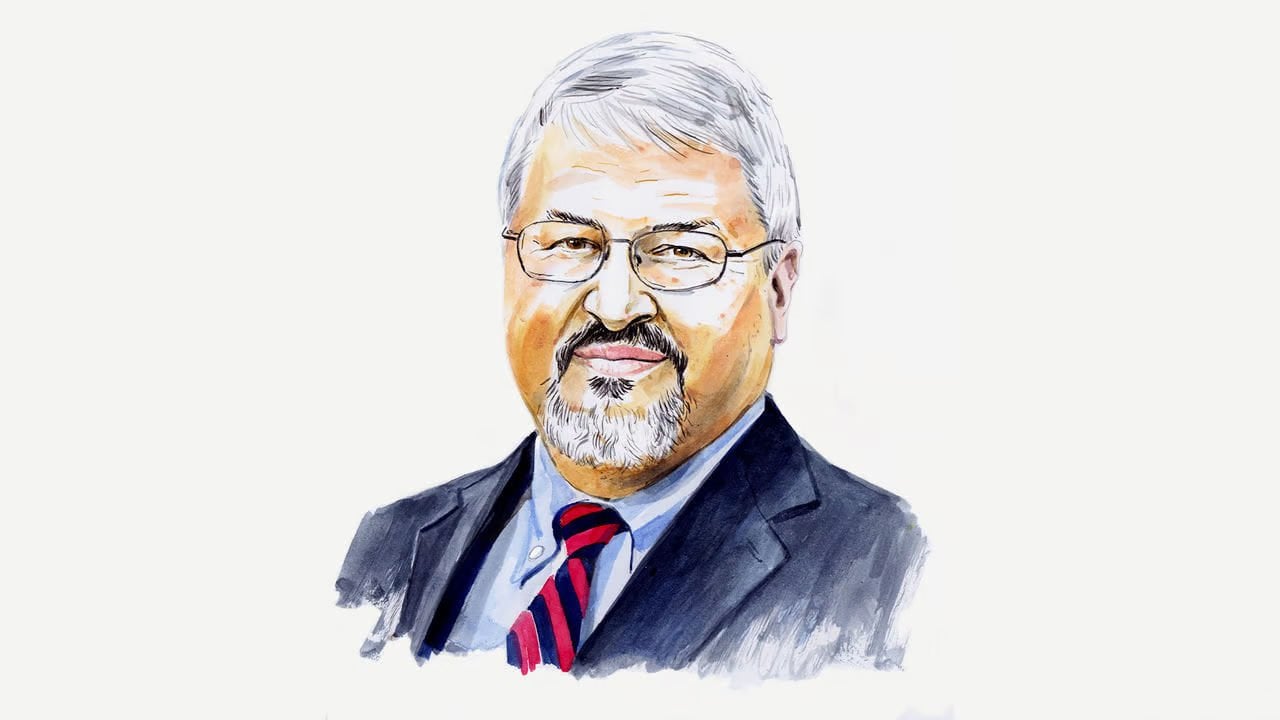
Donald Trump is taking presidential power to alarming places, writes Jack Goldsmith | Congress won’t check his Napoleonic instincts. Will a solidly conservative Supreme Court?
Posted by ONETRILLIONAMERICANS
Donald Trump is taking presidential power to alarming places, writes Jack Goldsmith | Congress won’t check his Napoleonic instincts. Will a solidly conservative Supreme Court?
Posted by ONETRILLIONAMERICANS
1 Comment
# A history of unitary executive theory
> The unitary executive is an American conservative response to the abhorred New Deal administrative state. For decades beginning in the 1930s, conservatives thought the proper remedy was a legally constrained presidency. By the 1970s they had come to realise that the president and the bureaucracy were distinct, and that the latter could be tamed only “through the action of a powerful president who is willing virtually to go to war within his own executive branch in order to carry out his mandate”, as Jeffrey Hart put it in an influential essay in the National Review in 1974.
> Richard Nixon started this battle by claiming an executive power to impound (that is, not spend) funds appropriated by Congress and with a relatively tepid plan to replace career civil servants with political appointees. But Watergate intervened.
> The administration of Ronald Reagan implemented unitary executive theory more robustly. The idea is based on the constitution’s vesting of “the executive Power”, all of it, in the “President of the United States”. The most important implications are that the president has the “power to remove subordinates in the executive branch or to direct their actions”, as Steven Calabresi and Christopher Yoo, two law professors, wrote in their definitive treatment of the Reagan-era conception of the theory.
> The Reagan administration deployed this theory to corral the bureaucracy in ways that were controversial at the time but that now seem relatively benign: imposing cost-benefit analysis on executive-branch agencies, expanding the power of the Office of Management and Budget over agency regulations, and weakening regulations through traditional means in areas ranging from the environment to consumer protection.
> Unitary theory also held that the president could terminate at will members of so-called independent agencies—such as the Federal Trade Commission and the National Labour Relations Board—which Congress had sought to protect with for-cause removal restrictions. But Reagan never exercised this power.
> The unitary-executive vision outlived the Reagan administration through the intellectual entrepreneurship of the Federalist Society, which was formed with help from Antonin Scalia, who would later become a Supreme Court justice.
> And it seeped into Supreme Court jurisprudence through Scalia’s prominent opinions and the influence of two young Reagan lawyers now on the court: John Roberts, the current Chief Justice, and Samuel Alito. Mr Roberts has penned opinions that expanded the president’s constitutional power to remove subordinate officials, as unitary theory contemplates. And he wrote last summer’s Trump v United States, the presidential-immunity decision that contained some of the most robust statements on the unitary executive in the court’s history.
# The second Trump administration and unitary executive theory
> The Trump administration is building on this tradition but extending it in novel ways. White House control over the Justice Department is a prime example. From the post-Watergate presidency of Gerald Ford through to Joe Biden’s administration, including the first Trump presidency, the executive branch was governed by robust norms that restrained the White House from influencing Justice Department investigations and prosecutions. And the Justice Department would often interpret the constitution and federal laws to constrain presidential action.
> In his second term, Mr Trump has repudiated this arrangement and is shaping the Justice Department to mirror his will. Every senior nominee to the Department, including Attorney-General Pam Bondi, is a Trump devotee and former personal lawyer of his. It is unclear whether the president’s executive orders are even being vetted by the Justice Department, as they traditionally have been. Several of them defy past Justice Department legal constraints.
> The formal policy on law enforcement today is that the president, not the Justice Department, is in charge, and that he and senior White House staff can contact the Department about enforcement decisions. In the past month the Department has dropped prosecutions against several Trump loyalists, including Eric Adams, the mayor of New York City. It has also fired or is investigating those within its ranks who have worked on cases against Mr Trump.
> The administration also cleaved to unitary-executive theory in a new executive order this week asserting dominion over independent agencies, and when it disregarded congressional restrictions to fire a member of the National Labour Relations Board and the head of the US Office of Special Counsel. These are the least controversial of Mr Trump’s terminations since they are arguably justified under the Supreme Court’s recent case law. Mr Trump seems to have gone beyond those precedents, however, in canning career bureaucrats. His demands of extreme loyalty, and his efforts to make the lives of many career bureaucrats so miserable that they are cowed into submission or quit, are also in accord with unitary-executive theory but without precedent.