> The “good ship Transitory,” despite an ominous record, appears ready to sail again for the Federal Reserve.
> Economic projections the central bank released Wednesday indicate that while officials see inflation moving up this year more rapidly than previously expected, they also expect the trend to be short-lived. The outlook spurred talk again about “transitory” inflation that caused a major policy headache for the Fed.
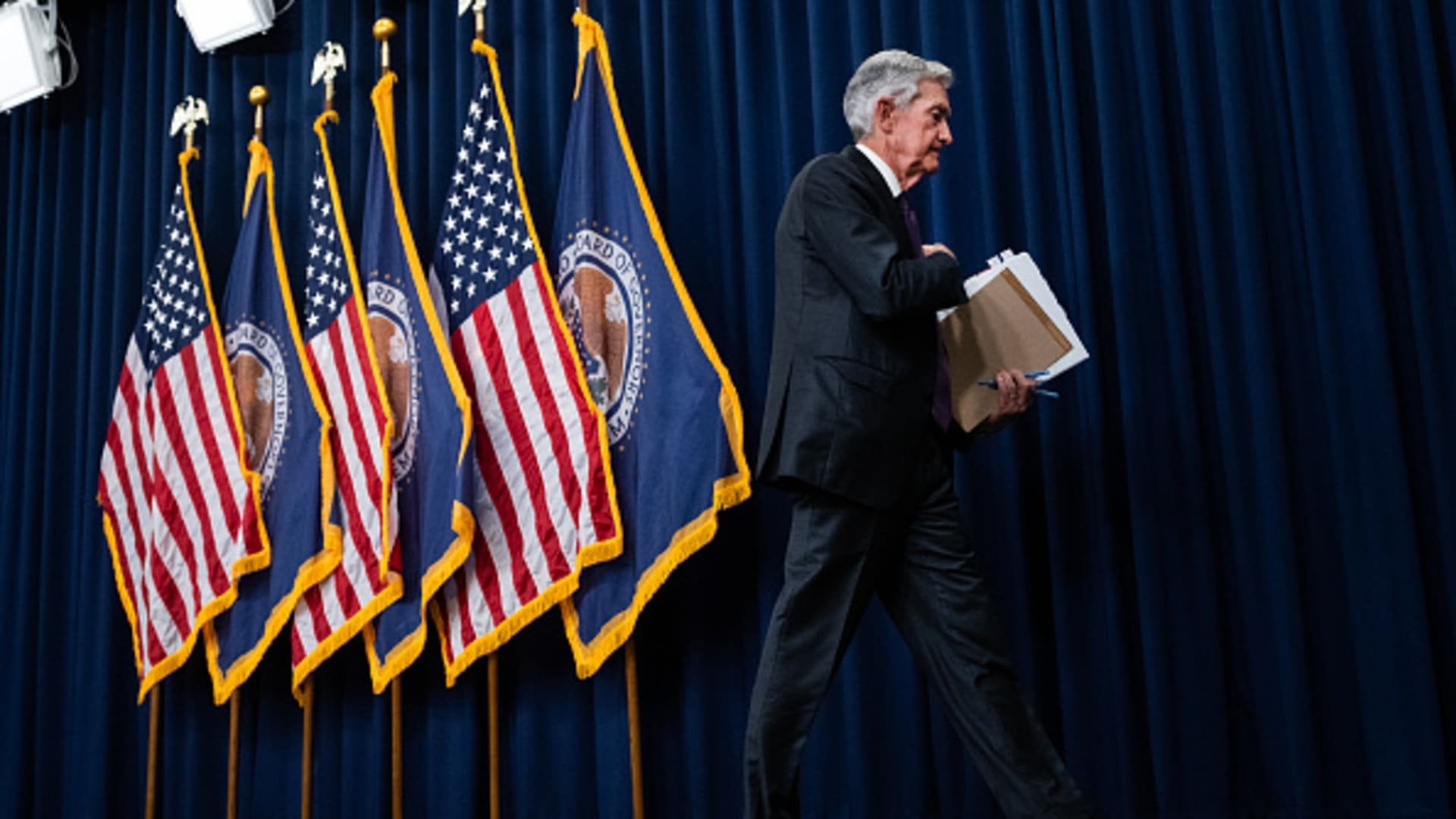
> At his post-meeting news conference, Chair Jerome Powell said the current outlook is that any price jumps from tariffs likely will be short-lived.
> Asked if the Fed is “back at transitory again,” the central bank leader responded: “So I think that’s kind of the base case. But as I said, we really can’t know that. We’re going to have to see how things actually work out.”
> However, the Federal Open Market Committee outlook, with inflation hitting 2.8% in 2025 but quickly receding back to 2.2% then 2% in the succeeding years, indicates that officials do not expect a lasting burden from the tariffs.
> “It can be the case that it’s appropriate sometimes to look through inflation, if it’s going to go away quickly, without action by us, if it’s transitory,” Powell said. “That can be the case in the case of tariff inflation. I think that would depend on the tariff inflation moving through fairly quickly and, critically, as well on inflation expectations being well anchored.”
> Powell added that while sentiment surveys show some short-term inflation indicators have risen, market-based measures for longer-run expectations are well anchored.
> **Worries over tariffs**
> The position is significant with markets concerned that President Donald Trump’s tariffs could spark a broader global trade war that again would make inflation a problem for the U.S. economy. Inflation had appeared to be on the run heading into this year, but the outlook is less certain now.
> Back in 2021, when inflation first rose past the Fed’s 2% target, Powell and his colleagues repeatedly said they expected the move to be transitory, brought on by Covid-specific factors impacting supply and demand that ultimately would fade. However, inflation kept rising, eventually hitting 9% as measured by the consumer price index, and the Fed was forced to respond with a series of aggressive interest rate hikes not seen since the early 1980s.
> In a speech last August at the Fed’s annual Jackson Hole, Wyoming, summit, Powell even joked that “the good ship Transitory was a crowded one,” and he told attendees that “I think I see some former shipmates out there today.”
> The room chuckled at Powell’s remarks, and the market Wednesday didn’t seem to mind the transitory talk. Stocks jumped as Powell spoke, and the Dow Jones Industrial Average
> closed up 383 points to 41,964, a reversal of fortune for a market in decline lately.
> ″‘Transitory’ is back, or at least that was the insinuation,” said Elyse Ausenbaugh, head of investment strategy at J.P. Morgan Wealth Management. “The market reaction, to me, says that investors are willing to believe that tariffs and other policies won’t create lasting inflationary pressures and that the Fed can stay in control.”
> The Fed voted to keep its benchmark interest rate on hold as it weighs the impact of tariffs and fiscal policy from Trump. In addition, Federal Open Market Committee officials indicated that two more quarter percentage point rate cuts could be on the way this year, though Powell cautioned again that policy is not locked in, nor is the transitory inflation view on tariffs.
> “We will be watching all of it very, very carefully. We do not take anything for granted,” he said.
!ping MARKETS
jiucaihezi on
I meam yeah, pretty sure the Yale paper said that we generally expect stronger impacts in the short term while the market adjusts to the tariffs in the long term
But like it’s still annoying for people
And hopefully the short term keeps getting dragged out so people are still pissed in 2026/2028 lol
BicyclingBro on
It’s okay, it’s been established that American consumers really don’t mind prices going up so long as they’re told that the rate at which they’re continuing to go up is getting back to normal.
dgtyhtre on
If this is the case, Trumps loud gambit will pay off and he’ll be able to take credit for soft landing. Parts of the media will mock those who said tariffs are bad.
However, because of Trump’s flip flopping on actually keeping tariffs in place, I wonder how much the optimism is based on his short attention span lol.
SerratedBeak on
I would expect a policy-imposed price spike to cool consumption, so yeah.
Regardless, two things to consider:
1. If Trump doubles down and keeps ramping up tariffs, we’ll have more “transitory” inflation.
2. Perceptible inflation has a jarring impact on voters, and as we’ve already seen, their expectation after a period of higher-than-expected inflation is that the president will slam the “price go down” button, not cool inflation to 2%. That being the case, it’s probably politically irrelevant that it won’t sustain a higher *rate* of inflation after the initial hit, especially if it’s coupled with higher unemployment and slower wage growth.
Consistent-Study-287 on
Wouldn’t inflation caused by tariffs not always be transitory? I thought the way inflation is tracked looks at a one year time period, so assuming 25% tariffs are put in, inflation would be super high for a year, but then once that year passes inflation numbers year over year would look normal again?
Like prices would still be much higher but the inflation number itself could go back to the 2-3% target after the year is up.
grig109 on
Yea, I don’t think the inflation argument in terms of tariffs really ever made much sense. It’s confusing a colloquial with a technical understanding of the term.
I expect the main impact of tariffs to be reduced economic growth, not inflation.

7 Comments
> Jeff Cox
> The “good ship Transitory,” despite an ominous record, appears ready to sail again for the Federal Reserve.
> Economic projections the central bank released Wednesday indicate that while officials see inflation moving up this year more rapidly than previously expected, they also expect the trend to be short-lived. The outlook spurred talk again about “transitory” inflation that caused a major policy headache for the Fed.
> At his post-meeting news conference, Chair Jerome Powell said the current outlook is that any price jumps from tariffs likely will be short-lived.
> Asked if the Fed is “back at transitory again,” the central bank leader responded: “So I think that’s kind of the base case. But as I said, we really can’t know that. We’re going to have to see how things actually work out.”
> However, the Federal Open Market Committee outlook, with inflation hitting 2.8% in 2025 but quickly receding back to 2.2% then 2% in the succeeding years, indicates that officials do not expect a lasting burden from the tariffs.
> “It can be the case that it’s appropriate sometimes to look through inflation, if it’s going to go away quickly, without action by us, if it’s transitory,” Powell said. “That can be the case in the case of tariff inflation. I think that would depend on the tariff inflation moving through fairly quickly and, critically, as well on inflation expectations being well anchored.”
> Powell added that while sentiment surveys show some short-term inflation indicators have risen, market-based measures for longer-run expectations are well anchored.
> **Worries over tariffs**
> The position is significant with markets concerned that President Donald Trump’s tariffs could spark a broader global trade war that again would make inflation a problem for the U.S. economy. Inflation had appeared to be on the run heading into this year, but the outlook is less certain now.
> Back in 2021, when inflation first rose past the Fed’s 2% target, Powell and his colleagues repeatedly said they expected the move to be transitory, brought on by Covid-specific factors impacting supply and demand that ultimately would fade. However, inflation kept rising, eventually hitting 9% as measured by the consumer price index, and the Fed was forced to respond with a series of aggressive interest rate hikes not seen since the early 1980s.
> In a speech last August at the Fed’s annual Jackson Hole, Wyoming, summit, Powell even joked that “the good ship Transitory was a crowded one,” and he told attendees that “I think I see some former shipmates out there today.”
> The room chuckled at Powell’s remarks, and the market Wednesday didn’t seem to mind the transitory talk. Stocks jumped as Powell spoke, and the Dow Jones Industrial Average
> closed up 383 points to 41,964, a reversal of fortune for a market in decline lately.
> ″‘Transitory’ is back, or at least that was the insinuation,” said Elyse Ausenbaugh, head of investment strategy at J.P. Morgan Wealth Management. “The market reaction, to me, says that investors are willing to believe that tariffs and other policies won’t create lasting inflationary pressures and that the Fed can stay in control.”
> The Fed voted to keep its benchmark interest rate on hold as it weighs the impact of tariffs and fiscal policy from Trump. In addition, Federal Open Market Committee officials indicated that two more quarter percentage point rate cuts could be on the way this year, though Powell cautioned again that policy is not locked in, nor is the transitory inflation view on tariffs.
> “We will be watching all of it very, very carefully. We do not take anything for granted,” he said.
!ping MARKETS
I meam yeah, pretty sure the Yale paper said that we generally expect stronger impacts in the short term while the market adjusts to the tariffs in the long term
But like it’s still annoying for people
And hopefully the short term keeps getting dragged out so people are still pissed in 2026/2028 lol
It’s okay, it’s been established that American consumers really don’t mind prices going up so long as they’re told that the rate at which they’re continuing to go up is getting back to normal.
If this is the case, Trumps loud gambit will pay off and he’ll be able to take credit for soft landing. Parts of the media will mock those who said tariffs are bad.
However, because of Trump’s flip flopping on actually keeping tariffs in place, I wonder how much the optimism is based on his short attention span lol.
I would expect a policy-imposed price spike to cool consumption, so yeah.
Regardless, two things to consider:
1. If Trump doubles down and keeps ramping up tariffs, we’ll have more “transitory” inflation.
2. Perceptible inflation has a jarring impact on voters, and as we’ve already seen, their expectation after a period of higher-than-expected inflation is that the president will slam the “price go down” button, not cool inflation to 2%. That being the case, it’s probably politically irrelevant that it won’t sustain a higher *rate* of inflation after the initial hit, especially if it’s coupled with higher unemployment and slower wage growth.
Wouldn’t inflation caused by tariffs not always be transitory? I thought the way inflation is tracked looks at a one year time period, so assuming 25% tariffs are put in, inflation would be super high for a year, but then once that year passes inflation numbers year over year would look normal again?
Like prices would still be much higher but the inflation number itself could go back to the 2-3% target after the year is up.
Yea, I don’t think the inflation argument in terms of tariffs really ever made much sense. It’s confusing a colloquial with a technical understanding of the term.
I expect the main impact of tariffs to be reduced economic growth, not inflation.