>Dave Dech, executive director of the South Florida Regional Transportation Authority (SFRTA), and Jim Derwinski, CEO of Metra in Chicago, are leading the charge to find long-term solutions to the U.S. passenger rail funding challenges. They recently shared several best practices for marshalling support and avoiding the cliff.
>Here’s how commuter railroads are keeping this vital service, which moves millions of riders each year, on the tracks.
>[…]
# How transit leaders are marshalling support to save their services
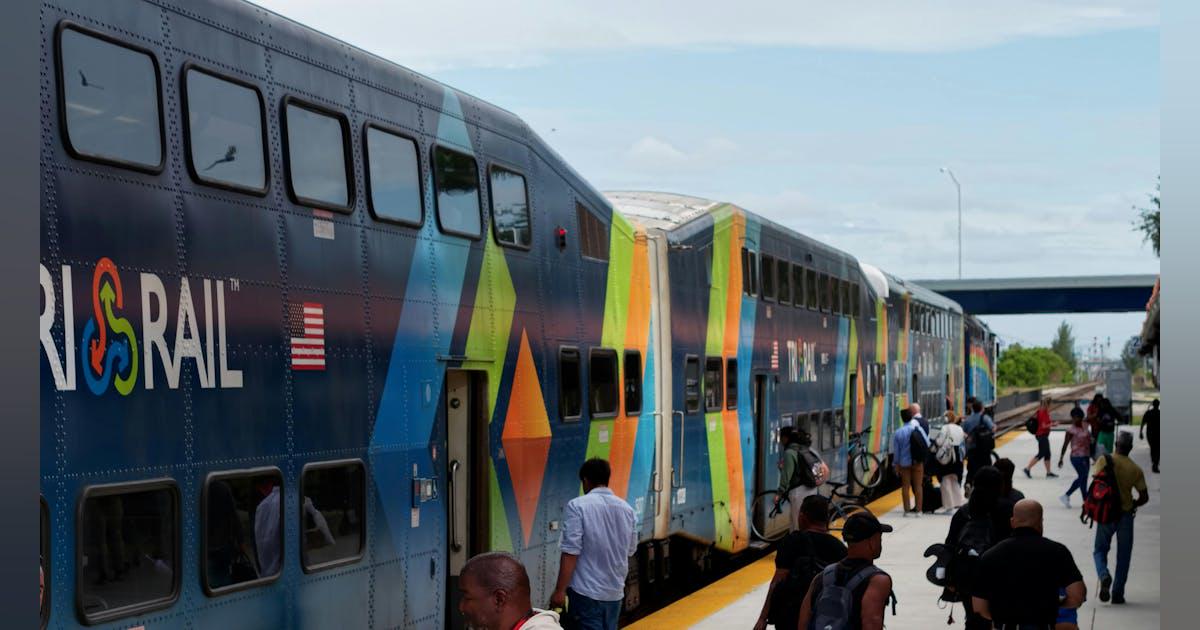
>As Dech sets out to convince local officials to fund his railroad, it helps that SFRTA has a great story to tell. The commuter rail service is leading the U.S. in ridership recovery since the pandemic and expects to break its record by serving over 4.5 million passengers in 2025. In Miami-Dade County, a developer is building a $3 billion mixed-use district with thousands of affordable housing units around a new SFRTA station. Dech is leveraging that goodwill to keep his funding.
>Dech is quick to point out that SFRTA’s ridership represents an entire lane of traffic in either direction on I-95—the region simply can’t afford to put those riders back into highway traffic. The agency’s strong ridership recovery is helping make his case.
>In Chicago, Derwinski emphasizes that rail is a necessity for the region to meet its climate goals, but in addition to cleaning up the environment with every train Metra runs, he also points to how the railroad decongests the roadways, delivers better economic returns for residents and businesses near stations, increases housing values along its route and ferries people to and from universities and hospitals. The return on investment (ROI) is clear.
# Finding structural solutions, not short-term stopgaps
>In the absence of federal support, fixing the funding woes will require a concerted effort from the agencies and local and state lawmakers. Metra and SFRTA are presenting a variety of solutions to their backers, including special tax districts around the railroad, wholesale property taxes, cell phone taxes, rental car taxes or sales taxes dedicated to transit. Rail leaders want to be able to make long-term plans around maintenance and new equipment rather than continue to live hand-to-mouth.
>Both Dech and Derwinski remind people that commuter rail is not intended to make a profit, it’s a public service that should be viewed as a utility. Is that service important enough to their communities to properly fund it?
>Metra needs state legislators to budget for a solution before federal relief money is exhausted. Derwinski is tasked with convincing politicians—some of whom represent districts outside Metra’s service area—of commuter rail’s value and the importance of a structural fix. The railroads mean too much to riders and the region’s economy to let them rust away.
>If solving these funding challenges was easy, commuter railroads and their legislative backers would have fixed it a long time ago. Implementing long-term, structural solutions will require a collaborative effort from riders, regional authorities and state governments that understand the ROI that railroads deliver, especially now that the federal government is stepping back.
>Commuter rail is a public utility we cannot allow to drive over the fiscal cliff. Our political leaders must act to sustainably fund this service now and for years to come.

1 Comment
>Dave Dech, executive director of the South Florida Regional Transportation Authority (SFRTA), and Jim Derwinski, CEO of Metra in Chicago, are leading the charge to find long-term solutions to the U.S. passenger rail funding challenges. They recently shared several best practices for marshalling support and avoiding the cliff.
>Here’s how commuter railroads are keeping this vital service, which moves millions of riders each year, on the tracks.
>[…]
# How transit leaders are marshalling support to save their services
>As Dech sets out to convince local officials to fund his railroad, it helps that SFRTA has a great story to tell. The commuter rail service is leading the U.S. in ridership recovery since the pandemic and expects to break its record by serving over 4.5 million passengers in 2025. In Miami-Dade County, a developer is building a $3 billion mixed-use district with thousands of affordable housing units around a new SFRTA station. Dech is leveraging that goodwill to keep his funding.
>Dech is quick to point out that SFRTA’s ridership represents an entire lane of traffic in either direction on I-95—the region simply can’t afford to put those riders back into highway traffic. The agency’s strong ridership recovery is helping make his case.
>In Chicago, Derwinski emphasizes that rail is a necessity for the region to meet its climate goals, but in addition to cleaning up the environment with every train Metra runs, he also points to how the railroad decongests the roadways, delivers better economic returns for residents and businesses near stations, increases housing values along its route and ferries people to and from universities and hospitals. The return on investment (ROI) is clear.
# Finding structural solutions, not short-term stopgaps
>In the absence of federal support, fixing the funding woes will require a concerted effort from the agencies and local and state lawmakers. Metra and SFRTA are presenting a variety of solutions to their backers, including special tax districts around the railroad, wholesale property taxes, cell phone taxes, rental car taxes or sales taxes dedicated to transit. Rail leaders want to be able to make long-term plans around maintenance and new equipment rather than continue to live hand-to-mouth.
>Both Dech and Derwinski remind people that commuter rail is not intended to make a profit, it’s a public service that should be viewed as a utility. Is that service important enough to their communities to properly fund it?
>Metra needs state legislators to budget for a solution before federal relief money is exhausted. Derwinski is tasked with convincing politicians—some of whom represent districts outside Metra’s service area—of commuter rail’s value and the importance of a structural fix. The railroads mean too much to riders and the region’s economy to let them rust away.
>If solving these funding challenges was easy, commuter railroads and their legislative backers would have fixed it a long time ago. Implementing long-term, structural solutions will require a collaborative effort from riders, regional authorities and state governments that understand the ROI that railroads deliver, especially now that the federal government is stepping back.
>Commuter rail is a public utility we cannot allow to drive over the fiscal cliff. Our political leaders must act to sustainably fund this service now and for years to come.
!ping Trainbrains