>After hours of presentations on the nascent Syrian government’s economic plans, a visiting German businessman on Monday declared himself “very” impressed. “I thought they’d be pitching us on rubble-clearing projects. Instead, we’re hearing about the Damascus metro and 20-year housing plans,” he said at a dinner with foreign businesses, government officials and local business elites at the Four Seasons in Damascus. But, in a sign of the challenges facing President Ahmed al-Sharaa’s ambitious administration, the businessman is not yet ready to invest. “It is still too early”, he said, to take the risk as Syria struggles with lingering sanctions, chronic instability, and patchy rule of law. Since toppling the Assad regime last December, Sharaa has zoned in on economic recovery as the key to stabilising the country. But reversing the ruinous effects of 14 years of civil war is easier said than done. Sharaa has nimbly courted international legitimacy, leading the EU and US to lift most sanctions. He has pivoted towards the free market, beginning the complex dismantling of decades of Assad-era socialism. And his government has signed memoranda of understanding worth billions with foreign partners. People in Sharaa’s close orbit say he often goes late into the night debating microscopic details of economic initiatives with ministers — and encouraging them to “go bigger”.
>But progress has been halting, not least due to bouts of sectarian fighting that have undermined the international community’s faith in Sharaa, who has struggled to assert control over the entire country. The US Congress is yet to fully repeal sanctions, stifling foreign investment. Much of Assad’s kleptocratic bureaucracy and labyrinthine laws remain in place. And the vast majority of Sharaa’s MOUs (memorandum of understanding) are yet to materialise into actual deals. The World Bank sees the economy growing just 1 per cent this year — although government officials privately suggest it will be higher — with GDP currently at half of 2010 levels and two-thirds of Syrians still below the poverty line.
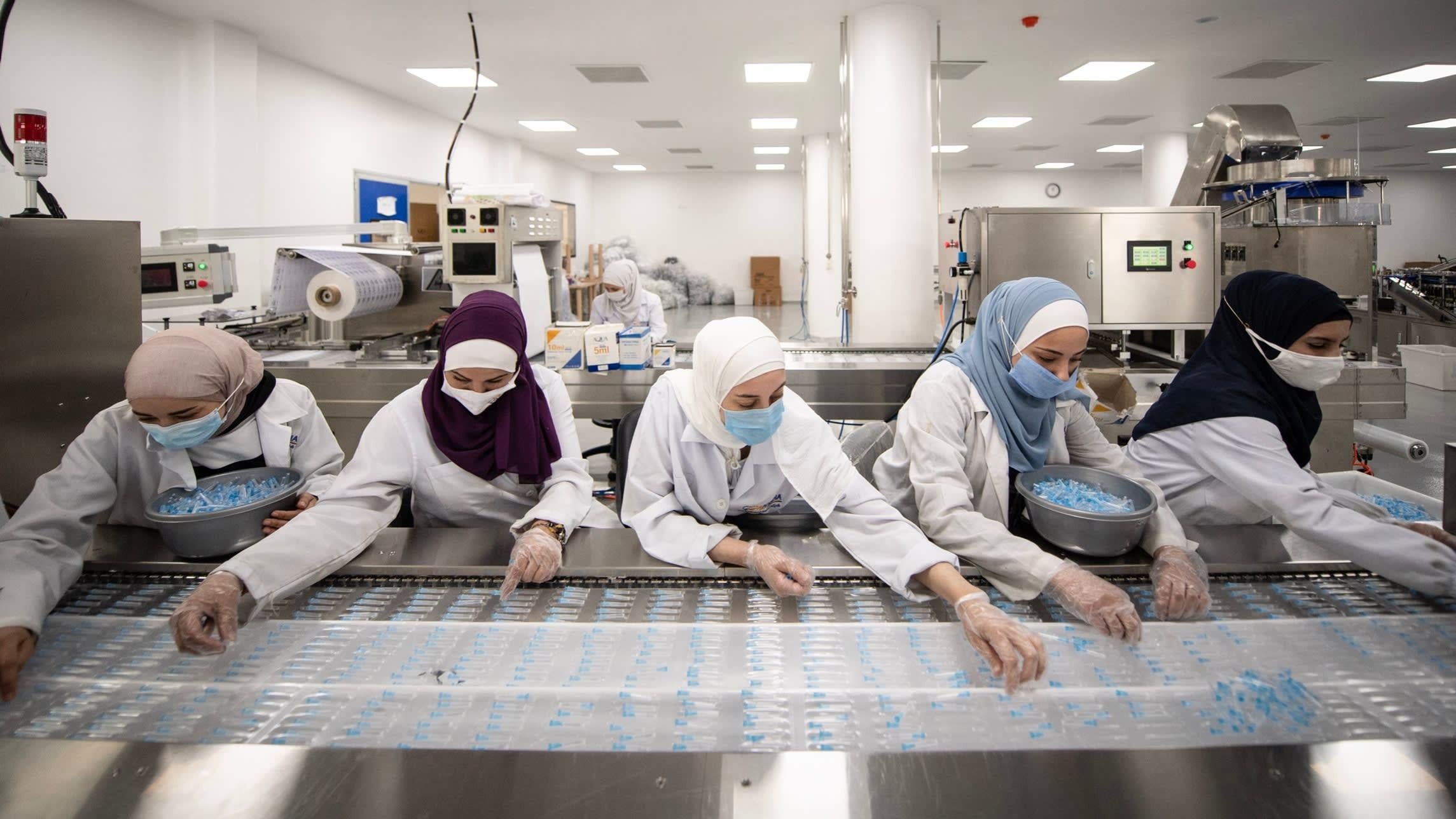
>The business community largely celebrated Assad’s fall, liberated from state-sponsored shakedowns and cronies who cannibalised industries. But sentiments are now more varied. Excited by the prospect of free markets and foreign investment, some businesses that moved operations abroad under Assad are now returning home. Mazen Derawan, chair of processed meat and canning company Amana Foods, said he has brought some facilities back from Jordan and Turkey, doubling the company’s number of Syrian employees to 400. Though he has some reservations about the new authorities, Derawan said “the environment is a million times better”. “We feel safer now to invest and expand,” he added. But his zest for free markets isn’t shared by many others in Syria’s manufacturing industry. Once protected against foreign goods by Assad’s trade barriers, companies now struggle to compete with cheaper, less regulated Turkish and Chinese imports. In some cases, the government has acquiesced to manufacturers’ pleas to resume statist protections. But it has been loath to make sweeping moves against goods from key regional allies such as Turkey, some industrialists said.
>Some are downsizing investments in the sector, which was once a key pillar of Syria’s economy. “As things stand, manufacturing is not a long-term, sustainable industry,” said Mounzer Nazha, chair of the family-run Nazha Investment Group (NIG), which includes 18 companies across multiple Syrian industries. NIG, which owns two of Damascus’ handful of luxury hotels, plans to focus on tourism and reconstruction instead. The hotel “business is up and down, depending on the security situation,” Nazha said, “but we anticipate a huge influx of tourism in the next few years.”
>The country’s banking system is also on the brink, squeezed by war, sanctions and the collapse of neighbouring Lebanon’s financial sector — all of which has eroded its lending capacity. Companies find it near-impossible to obtain loans, one banker said. “Businessmen are complaining this has been freezing trade, making them dependent on [informal] money exchangers,” he said. Companies are finding it equally difficult to raise funds or buy equipment abroad because of over-compliance tied to enduring US sanctions. “European banks and businesses still won’t touch us because we are in Syria, even in industries exempt from sanctions like food and medicine,” said Derawan.
>Businessmen also complain about the government’s opacity and about corruption — their bête noire under Assad — creeping back in. One prominent industrialist said that under Assad, officials would shake down his factories once a month. “Now, it’s once a week and there’s more of them.”
Key decisions on economic files, public assets and investment contracts are taken by an opaque council run by Sharaa’s brother Hazem and an old Lebanese-Australian associate from the president’s time leading the Hayat Tahrir al-Sham (HTS) rebel group. Companies blame either a lack of expertise or intentional opacity for a pattern of companies and individuals linked to HTS winning public tenders and investment contracts. And the council has made financial settlements with some of Assad’s former cronies, government officials and people familiar with the matter said. Some officials and people in Sharaa’s orbit defend such practices as necessary during an exceptional transition period, where laws have yet to be rewritten since a parliament is not yet in place. The Ministry of Information told the Financial Times it rejected the allegations of opacity, saying there were “clear legal procedures for contracts, tenders and licensing”, with investment opportunities open to all. It said a committee responsible for reclaiming state assets had not yet finalised financial settlements with a select few “corrupt tycoons” linked to Assad. Back at the Four Seasons, businesspeople who thrived under Assad sat next to officials from the new government linked to HTS — a once unimaginable tableau that reflects the pragmatism of the moment. “In this room are industry heads who represent at least $12bn,” said another banker.

1 Comment
>After hours of presentations on the nascent Syrian government’s economic plans, a visiting German businessman on Monday declared himself “very” impressed. “I thought they’d be pitching us on rubble-clearing projects. Instead, we’re hearing about the Damascus metro and 20-year housing plans,” he said at a dinner with foreign businesses, government officials and local business elites at the Four Seasons in Damascus. But, in a sign of the challenges facing President Ahmed al-Sharaa’s ambitious administration, the businessman is not yet ready to invest. “It is still too early”, he said, to take the risk as Syria struggles with lingering sanctions, chronic instability, and patchy rule of law. Since toppling the Assad regime last December, Sharaa has zoned in on economic recovery as the key to stabilising the country. But reversing the ruinous effects of 14 years of civil war is easier said than done. Sharaa has nimbly courted international legitimacy, leading the EU and US to lift most sanctions. He has pivoted towards the free market, beginning the complex dismantling of decades of Assad-era socialism. And his government has signed memoranda of understanding worth billions with foreign partners. People in Sharaa’s close orbit say he often goes late into the night debating microscopic details of economic initiatives with ministers — and encouraging them to “go bigger”.
>But progress has been halting, not least due to bouts of sectarian fighting that have undermined the international community’s faith in Sharaa, who has struggled to assert control over the entire country. The US Congress is yet to fully repeal sanctions, stifling foreign investment. Much of Assad’s kleptocratic bureaucracy and labyrinthine laws remain in place. And the vast majority of Sharaa’s MOUs (memorandum of understanding) are yet to materialise into actual deals. The World Bank sees the economy growing just 1 per cent this year — although government officials privately suggest it will be higher — with GDP currently at half of 2010 levels and two-thirds of Syrians still below the poverty line.
>The business community largely celebrated Assad’s fall, liberated from state-sponsored shakedowns and cronies who cannibalised industries. But sentiments are now more varied. Excited by the prospect of free markets and foreign investment, some businesses that moved operations abroad under Assad are now returning home. Mazen Derawan, chair of processed meat and canning company Amana Foods, said he has brought some facilities back from Jordan and Turkey, doubling the company’s number of Syrian employees to 400. Though he has some reservations about the new authorities, Derawan said “the environment is a million times better”. “We feel safer now to invest and expand,” he added. But his zest for free markets isn’t shared by many others in Syria’s manufacturing industry. Once protected against foreign goods by Assad’s trade barriers, companies now struggle to compete with cheaper, less regulated Turkish and Chinese imports. In some cases, the government has acquiesced to manufacturers’ pleas to resume statist protections. But it has been loath to make sweeping moves against goods from key regional allies such as Turkey, some industrialists said.
>Some are downsizing investments in the sector, which was once a key pillar of Syria’s economy. “As things stand, manufacturing is not a long-term, sustainable industry,” said Mounzer Nazha, chair of the family-run Nazha Investment Group (NIG), which includes 18 companies across multiple Syrian industries. NIG, which owns two of Damascus’ handful of luxury hotels, plans to focus on tourism and reconstruction instead. The hotel “business is up and down, depending on the security situation,” Nazha said, “but we anticipate a huge influx of tourism in the next few years.”
>The country’s banking system is also on the brink, squeezed by war, sanctions and the collapse of neighbouring Lebanon’s financial sector — all of which has eroded its lending capacity. Companies find it near-impossible to obtain loans, one banker said. “Businessmen are complaining this has been freezing trade, making them dependent on [informal] money exchangers,” he said. Companies are finding it equally difficult to raise funds or buy equipment abroad because of over-compliance tied to enduring US sanctions. “European banks and businesses still won’t touch us because we are in Syria, even in industries exempt from sanctions like food and medicine,” said Derawan.
>Businessmen also complain about the government’s opacity and about corruption — their bête noire under Assad — creeping back in. One prominent industrialist said that under Assad, officials would shake down his factories once a month. “Now, it’s once a week and there’s more of them.”
Key decisions on economic files, public assets and investment contracts are taken by an opaque council run by Sharaa’s brother Hazem and an old Lebanese-Australian associate from the president’s time leading the Hayat Tahrir al-Sham (HTS) rebel group. Companies blame either a lack of expertise or intentional opacity for a pattern of companies and individuals linked to HTS winning public tenders and investment contracts. And the council has made financial settlements with some of Assad’s former cronies, government officials and people familiar with the matter said. Some officials and people in Sharaa’s orbit defend such practices as necessary during an exceptional transition period, where laws have yet to be rewritten since a parliament is not yet in place. The Ministry of Information told the Financial Times it rejected the allegations of opacity, saying there were “clear legal procedures for contracts, tenders and licensing”, with investment opportunities open to all. It said a committee responsible for reclaiming state assets had not yet finalised financial settlements with a select few “corrupt tycoons” linked to Assad. Back at the Four Seasons, businesspeople who thrived under Assad sat next to officials from the new government linked to HTS — a once unimaginable tableau that reflects the pragmatism of the moment. “In this room are industry heads who represent at least $12bn,” said another banker.