
“Show me the incentive, and I’ll show you the outcome.”
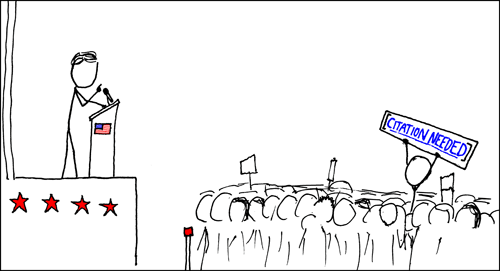
According to mainstream economic theory, supply and demand dictate prices [Citation Needed]. It is recognized that in a perfectly competitive and efficient economy, prices would rapidly stabilize at the equilibrium price point.
So what happens with ticket prices? Why do economists argue they are undervalued? Why are tickets so often immediately sold and then put on market for resale? It’s a confluence of items.
Tickets can be and often are underpriced by the artist. The incentives for this are to be more egalitarian in accessibility to their fanbase, and to drive interest in their shows. No artist wants to antagonize their fanbase, and no artist wants to play before an empty arena. What does this underpricing do? It incentivizes those who seek to exploit arbitrage, aka scalpers, to buy tickets at low (undervalued) prices and resell them at a higher (market-clearing) price. Most of these tickets often do sell before the shows start.
In a limited supply situation, it is economically efficient to let the market determine the willingness to pay a price for a ticket, but this creates backlash as the initial advertised price is no longer available since the end-customer must pay a scalper’s markup. This goes without mentioning that enabling such arbitrage creates further incentives for scalpers to create bots to scoop up limited availability, further enraging fans.
Now, one might ask, if there’s so much demand even with arbitrage, why doesn’t the market respond to this price signal by increasing show availability? Wouldn’t artists want to play more, and make more money? Ideally, yes. But artists aren’t the ones to dictate forum availability. Enter Live Nation and Ticketmaster.
Everyone always casts Ticketmaster as the ultimate villain in this story, but ignores how the dominance of Live Nation, who own the majority of concert venues and the artist performance contracts, creates a vertically integrated system ripe for exploitation. In its vertically integrated form, Live Nation / Ticketmaster can use monopoly power to justify rent-seeking behavior; Live Nation (rightly, in my opinion) recognizes the limited availability of artists increases their desirability through FOMO and scarcity.
In short, Live Nation artificially restricts supply intentionally. Live Nation also exclusively sells tickets at its venues through Ticketmaster and most crucially, Live Nation owns the production, distribution, and exhibition of live music concerts.
If you’re from the 1940s, this might sound familiar. In response to the vertical integration of film production, studio distribution, and theatre exhibition, anti-trust law broke up the studio monopolies and curbed anti-competitive behavior from the resultant Paramount Decree, allowing theatres to book films from independent creators, increasing competition for production companies and creative talent compared to the artificially depressed wages of studio production.
So, can this be fixed? Scalpers can benefit artists by taking the heat for economically inefficient allocation, but they are symptomatic of the lack of competition and lack of responsiveness to market pressure for more live music acts by Live Nation and Ticketmaster. Breaking simultaneous ownership of production, distribution, and exhibition would alleviate this. Live Nation Artist Management needs to be divested from Live Nation Concert Venues, and both need to be removed from exclusively dealing with Ticketmaster sales. This is all without mentioning that Ticketmaster has no incentive to shut down the scalping issue since it also benefits from every resale through transaction fees.
Some artists have responded to the situation by locking resale at the original transaction price, a process Ticketmaster calls Face Value Exchange. Billie Eilish uses this to help her fans, who are less likely to be able to afford market rate (teenagers and college students are not known for high disposable income). Yet still, this is a band aid solution for lack of competition.
The Paramount Decree enabled independent artists to showcase their work outside the monopolistic, vertically integrated studios, revitalizing the industry just as television was coming to disrupt it. Enabling artists today to reap the same benefits during a time of huge industry upheaval would do the same.
Correcting market failures should always be the goal of creating a competitive and efficient market. Even if some artists will always be in high demand, Live Nation will not book artists for fear of exhausting the local fanbase supply, rather relying on scarcity to sell and ensuring such scarcity through broad radius clauses. Divestiture will not fix scalping caused by inadequate pricing, however it can increase artist availability thus increasing a severely limited supply.
Posted by Adminisnotadmin
1 Comment
Someone call Elizabeth Warren, we have something that is totally a priority!