
So to those familar with indian history are proably aware of the Kashmiri insurgency and the flight of the pandits in the 90s. This article goes into an under-discussed part of it.
how people suspected of working for the government were brutally murdered. it goes into not only how the memory of the Kashmir conflict often ignores these muslim victims of the insurgency but also how the government is finally doing something for them.
its a haunting read
Posted by ewatta200
1 Comment
**Kulgam:** Two hurried and secret midnight burials in 1994 in this village hold an unspoken, unacknowledged and ungrieved story of Kashmir violence.
[](https://vdo.ai/contact?utm_medium=video&utm_term=theprint.in&utm_source=vdoai_logo)
Grass has grown over the burial pits in the front yard of two homes in this south Kashmir village in Kulgam district. And with that, a shroud of silence has been placed. The two young men—Ali Mohammad Bhat and Mohammad Maqbool Bhat, killed for being ‘mukhbir’, or informers—were not allowed their place in the common village graveyard.
In the thirty-two years that followed, their unmarked graves have seen no rituals of remembrance or collective grieving. No martyrdom marches and oral histories either. They were seen as the enemies of the Kashmiri freedom cause and the enemies of Hizbul Mujahideen. Their stories are not an official part of Kashmir’s grief.
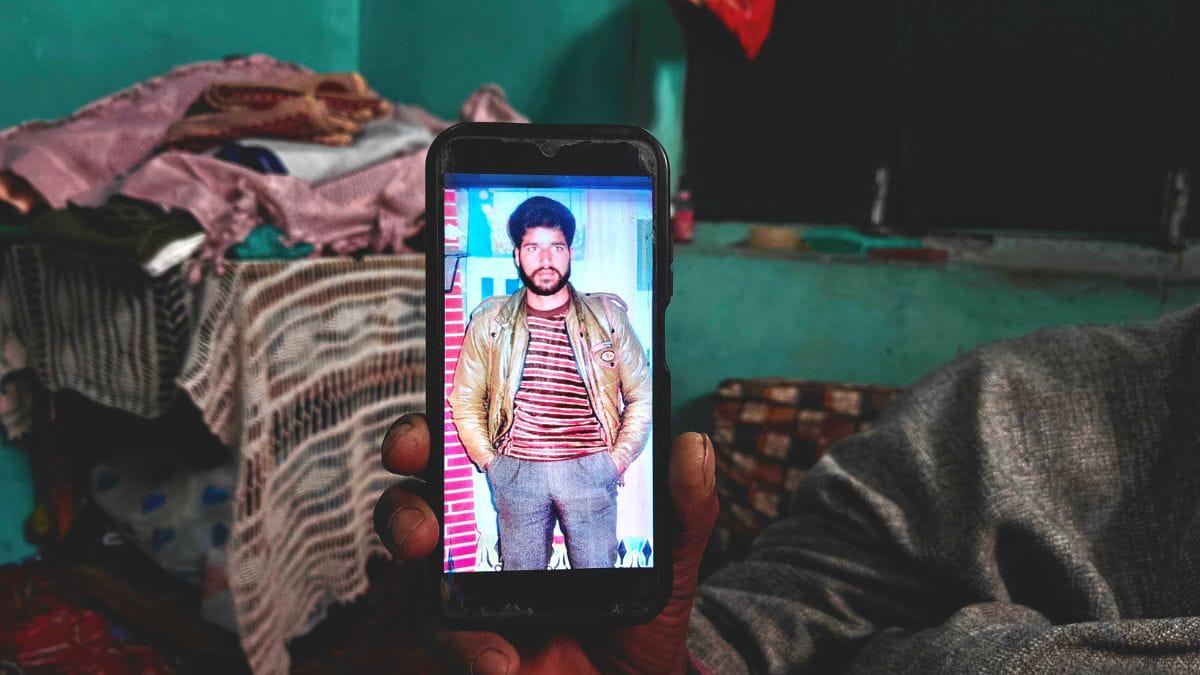
On 19 June 1994, a regular bus ride to work turned fatal for the 26-year-old Ali, who was a police constable, when four armed Hizbul Mujahideen terrorists stopped the vehicle, pulled him out and abducted him. A week later, two bodies with bullet wounds were dumped in the middle of the street—Ali and his friend Maqbool, who was a local shopkeeper.
While Ali was killed on suspicion of being a *mukhbir*, Maqbool was accused of supplying carpets to the army from his shop. Later, it was revealed that the allegation was untrue.
“The Hizbul Mujahideen militant himself told us that my brother was not a mukhbir, but they had orders,” said his youngest brother, who studied in Class 6 in 1994. “These orders were mostly from the Jamaat-e-Islami leaders in our village.”
Three decades later, the stigma continues. Ali’s family faces discrimination in the neighbourhood and claims indifference by the Jammu and Kashmir administration. Ali’s wife had earlier approached the then district administration for some kind of compensation. However, she never received a response.
“Back then, state schemes could never be fully implemented because of systemic corruption and incompetence,” a political analyst in Srinagar told *ThePrint* on the condition of anonymity. “Sometimes, under such schemes, terrorists’ families were preferred over victims. It was a bizarre irony.”
Back then, being a Kashmiri Muslim came before everything else, even the uniform, a senior police officer told *ThePrint*, adding, “Even Jamaat members were government employees. Some were teachers, others worked in PWD and similar departments. Suspicion was never raised at them because they considered themselves to be Kashmiri Muslims first.”
The past is buried, just like the bodies, to keep the normalcy alive. However, it lingers in family silences and in the long, blank stares at the courtyard.
# A hushed burial
It was a neighbour who had guided the Hizbul Mujahideen terrorists about Ali’s whereabouts that fateful day. After almost a week in captivity, the terrorists had set the duo free. As Ali and Maqbool walked a few metres, they were shot from behind in the head.
Then the spectacle of burial began.
The bodies of Ali and Maqbool were not allowed to be buried in the village graveyard. Jamaat leaders used loudspeakers to warn villagers not to provide them with a kafan (burial shroud). The family begged the leaders for a proper burial in the local graveyard, but all their requests were in vain.
The loudspeakers from the mosque blared, “Nobody will talk, drink tea or associate with the family. No one will provide them with a burial shroud, and the graveyard gates are closed for the family.”
Ali’s family didn’t dare to step out. They stayed inside their homes, silent—a silence of hope, hiding a harsh, heavy sorrow.
“For days, I could not make sense of what had befallen our family. We were ostracised, treated as if we didn’t belong here. We would tiptoe inside our house and talk in hushed tones to avoid any further trouble,” Ali’s mother said.
Ali Mohammad Bhat’s mother is now 80 years old. Three decades after the killing of his son, she still refuses to show her face to the media out of fear | Mahira Khan, ThePrint
Their grief-stricken families kept pleading with the villagers, but eventually gave up. They dug graves in their courtyard, arranged a *kafan* secretly and buried them without a *janaza* (Islamic prayer). No neighbours or relatives came.
South Kashmir, at that time, was a hotbed of militancy and the influence of Jamaat-e-Islami, now banned, ran deep in the society. They were the final word, and their writ on Ali and Maqbool ran large.
As soon as Hizbul Mujahideen was born, Jamaat took over control. One was the militant group, the other acted as the front facing the socio-religious group, often taking part in government-related areas.
“Hizbul Mujahideen was the military wing of Jamaat. So the takeover was natural. Most of Hizbul cadres and the commanders were from Jamat-e-Islami background like Ahsan Dar, Syed Salahudin, Shams ul Haq, Riyaz Rasool, etc,” the police officer said, adding that every chief commander of the militant organisation carried a Jamat background.
On 27 June 1994, a pall of grief had dawned upon the courtyard of Ali’s house. The land was dug in the dead of night for the burial process. Family members and relatives suppressed their shrieks, preventing their wails from traversing the neighbourhood. Tears silently streamed down their cheeks.
The burial shroud, arranged in secret by a relative, was wrapped around the body as the mother and wife kissed the pale, yellowed forehead one last time. The body was then hurriedly lowered into the pit. Prayers for the *aakhirat* were whispered, and the grave was filled with soil.
“The next morning, the dead bodies had disappeared in the courtyard with no signs or a tombstone.
***Also read:*** [*A year after Pahalgam, Lt Vinay Narwal’s death haunts family. Guilt, grief, lonely evenings*](https://theprint.in/ground-reports/pahalgam-attack-lt-vinay-narwal-death-family/2905431/)
# ‘17,000 Muslims killed by terrorists’
In the early years of the insurgency, it was not only Kashmiri Pandits who were forced to flee. But a section of Kashmiri Muslims seen as aligned with the state were also targeted. A few of them fled overnight, and those who stayed back lived through violence, suspicion and social ostracism.
Today, the stories of several such families—counted among the victims of militancy—rarely find any place in the larger political narrative, films, books or online archives of tragedy. No human rights groups take up their cause, no political party gives voice to their families. They were seen as the face of the Indian state in Kashmir, at a time when Pakistan was actively supporting the terror attacks.