
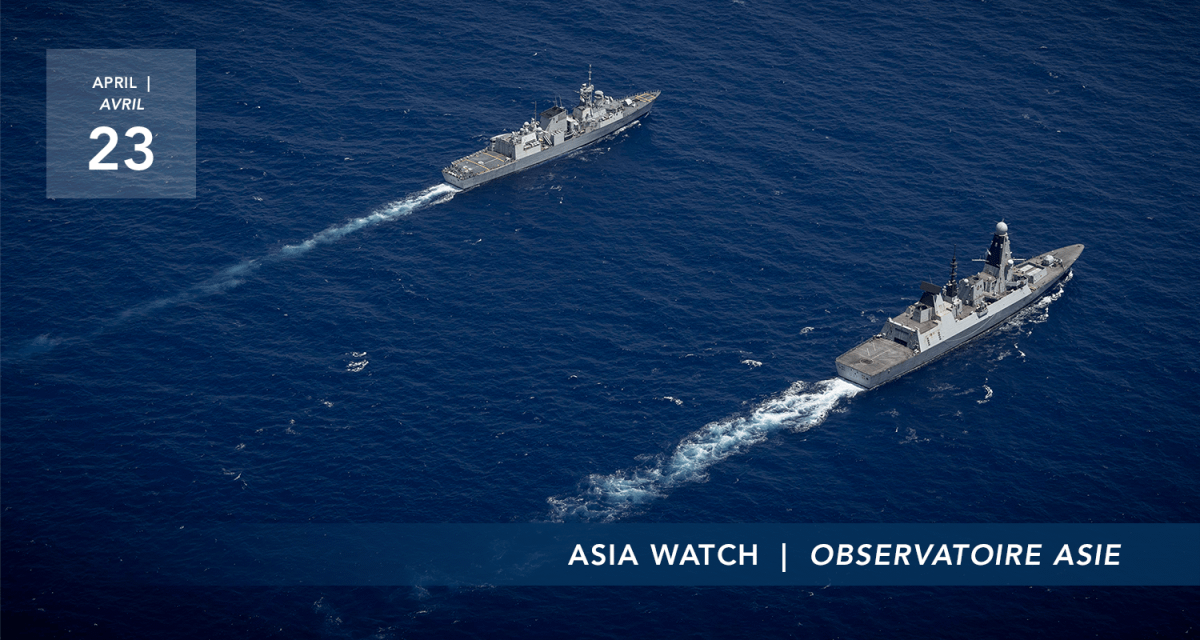
One of Asia's largest military exercises kicked off on Monday in the Philippines, bringing together 17,000 personnel from seven countries for land, sea, air, space, and cyberspace drills designed to project strength and solidarity as regional tensions heat up.
This year’s Exercise Balikatan, the largest and “most complex” iteration yet, runs from April 20 to May 8 and, for the first time, features Canada and Japan as full-fledged participants.
The Philippines and the U.S. co-lead Balikatan (meaning “shoulder-to-shoulder" in Tagalog). Australia, France, and New Zealand will also participate; 17 countries are observers.
The engagements, featuring 10,000 American troops, are a reminder to U.S. partners and allies that — even as Washington appears preoccupied with the Middle East, Venezuela, Cuba, and Greenland — the Indo-Pacific remains a priority. “Regardless of the challenges elsewhere in the world,” U.S. Lieutenant General Christian Wortman said on Monday, “the U.S.'s focus on the Indo-Pacific and our ironclad commitment to the Philippines remains unwavering.”
Balikatan is also an opportunity for middle powers, such as Canada and Japan, to demonstrate political resolve and improve military interoperability. Predictably, China was not pleased with Balikatan; its foreign ministry stated, “the last thing the [Asia Pacific] needs is division and confrontation as a result of the introduction of external forces.” Beijing’s China Military Online was even more alarmist, calling Japan–Philippines military co-operation “a dangerous pivot” and “a chilling watershed moment.”
Defence among top concerns for Japan’s ‘Iron Lady’
Japan is dispatching its largest-ever contingent to Balikatan of 1,400 Self-Defense Forces personnel, compared to just 150 in 2025. Japan will also fire its Type-88 missiles for the first time, using a decommissioned ship from the Second World War as target practice.
Tokyo's been busy elsewhere, easing long-held defence export restrictions on Tuesday and signing a US$7-billion deal to deliver 11 warships to Australia on Saturday. The day before, Japan and the European Union held their first-ever Defence Industry Dialogue in Brussels, featuring 50 European and Japanese companies. And last week, Japan’s defence minister, Koizumi Shinjiro, revealed that the country’s defence budget for this fiscal year will hit 1.9 per cent of GDP — just shy of its two per cent goal by 2027.
These deals, dialogues, and dollars underscore just how much Japan’s defence posture has changed under Prime Minister Takaichi Sanae, who wants to prepare Japan for a more dangerous and divided world in light of the threats posed by China and, to a lesser extent, North Korea and Russia.
Fair winds and following seas
HMCS Charlottetown, among other Canadian military assets, will participate in “air and missile defence, coastal defence, logistics and sustainment, medical support, maritime strike operations, and multinational co-ordination,” at Balikatan.
Participation in the annual exercise is a significant, concrete step by Ottawa to improve its Indo-Pacific engagement, complementing a Visiting Forces Agreement with the Philippines signed in November 2025. The Department of National Defence noted that Balikatan is part of Operation HORIZON, Canada’s “comprehensive military approach to promote peace and stability in […] the Indo-Pacific region.”
These developments come as interest and investment in Canadian defence increase. Canada’s defence spending officially hit NATO’s two per cent of GDP mark last month and, on Monday, Canadian Defence Minister David McGuinty announced that the Canadian Armed Forces enrolled 7,310 new members in fiscal 2025–26, the highest number of enrolments in more than three decades.
Posted by IHateTrains123
1 Comment
Hopefully the food’s better on the *Charlottetown* than the *Tripoli*