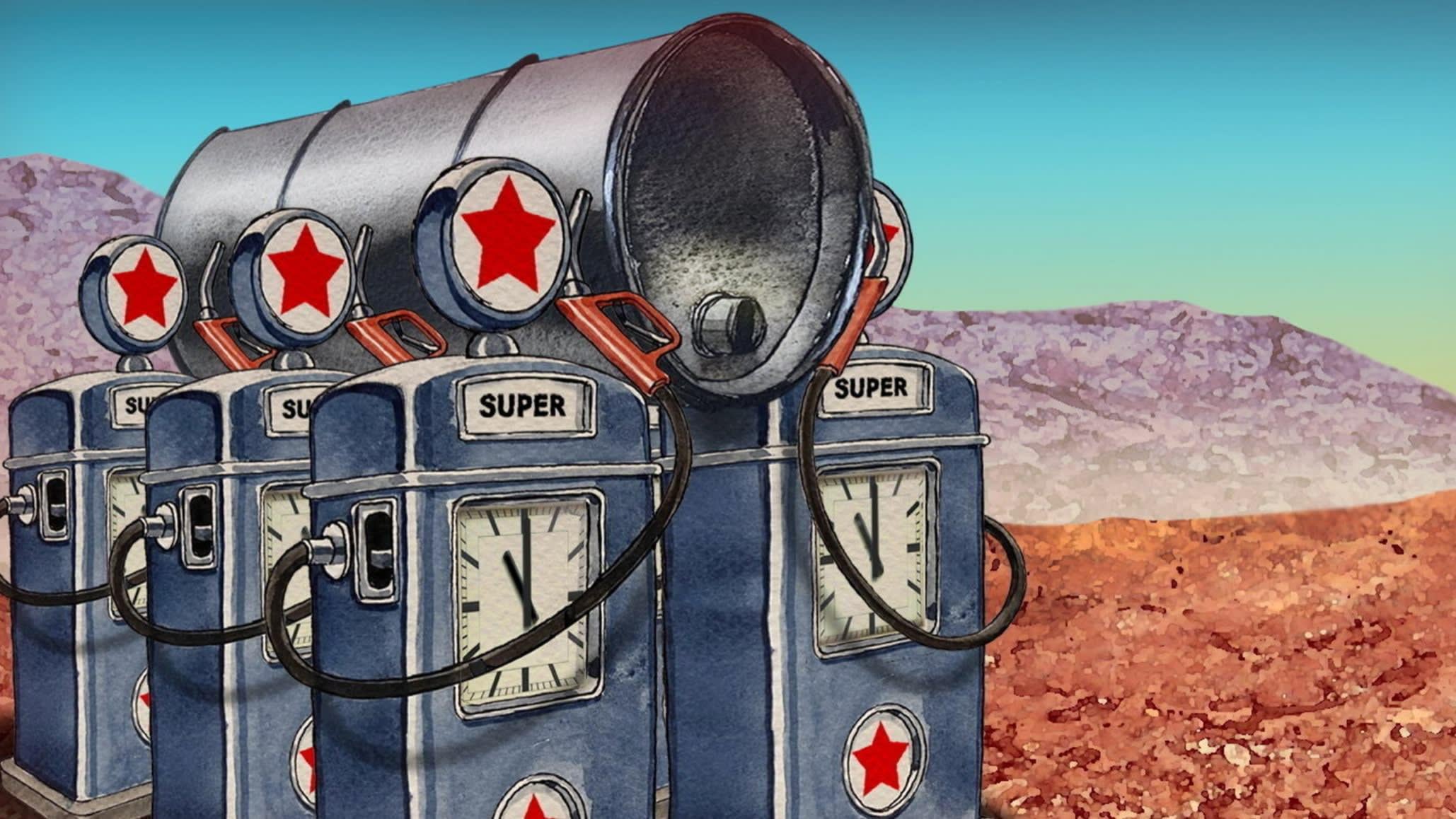
First came the war. Then came the blockade. Now come the shortages. The tankers full of essential commodities — oil, liquid natural gas, urea, refined oil products, hydrogen, helium and so forth — have not sailed through the Strait of Hormuz since the end of February. Those that left before the closure have mostly arrived. From now on, the shipments that did not leave will increasingly be missed. As [inventories are also drawn down](https://www.ft.com/content/19f0e4ad-12f9-4521-ac5b-6dd091dd7806?syn-25a6b1a6=1), we will move into an era of physical shortages.
Up to now, shortages have been mostly imaginary. Now they will become real. They must be managed, ultimately by suppressing demand. The latter in turn will require some combination of rationing and recession. A blend of higher prices with tighter monetary policy could deliver both. The longer the strait remains closed and the bigger the physical damage, the longer shortages will remain and the worse their impact.
First, the problems the world confronts are not just the result of the effective closure of the strait. The targeting of infrastructure, mainly by Iran, which was as predictable as the closure itself, has caused significant damage. According to Butler, “at least eight significant Gulf refineries are fully or partially out of action. So is the Ras Laffan LNG facility in Qatar.” How long it will take to repair the destruction is still unknown.
Second, as the Substack *“*[Crack The Market](https://crackthemarket.substack.com/)” explains, shortages should not be viewed solely in terms of crude oil. They will disproportionately affect specific products, because refineries are designed to deal with certain types of crude oil. The Gulf region not only produces specific types of oil, but, notes Crack The Market, “was exporting 3.3mn barrels per day of refined products and 1.5mn barrels per day of LPG before the crisis. These are finished fuels, diesel, jet fuel, naphtha, gasoline, that were flowing directly into the supply chains of Asian and European consumers.” The loss of exports of specific crudes and refined products means that no simple substitution is possible. Butler writes that the main shortages now are in jet fuel and diesel. Given these product-specific realities, the US is not self-sufficient in oil. Yes, it is a net exporter. But it is, as market pundit [Charlie Garcia argues](https://charliepgarcia.substack.com/p/energy-independence-myth-heavy-crude), also a large importer, since its refineries must have access to the crudes they can process.
Third, the impact has been muted hitherto by a rapid drawdown of stocks. But stocks are necessarily finite. It is hard to expand production outside the Gulf or reroute oil away from the strait, even in the medium run. Thus, much of the world’s spare production capacity of oil is in the Gulf region itself. After that, the largest additional source is Russia. But, apart from the evident political difficulties, Russian capacity is limited. The pipelines from Saudi Arabia to the Red Sea and Oman to Ras Markaz are limited in capacity. Enlarging them would take a long time. Replacing the lost refining capacity would also take time and cost a great deal. In Europe, refinery capacity has declined for years. This could not be changed quickly. Making such investments would also be costly and risky.
Finally, the shortages are far from limited to energy. Also affected are supplies of helium, naphtha, methanol, phosphates, urea, ammonia and sulphur. [The reduction in supply of helium](https://www.ft.com/content/2c5068d6-b0a5-4b9e-967f-958f8df23899?syn-25a6b1a6=1) damages production of microchips. The reduction in supply of commodities essential to making artificial fertilisers will reduce global food production. There is also a negative impact on world shipping, since the longer routes are more expensive. Not least, [20,000 seafarers](https://www.ft.com/content/218165fb-a3d7-43dd-81d7-fedc04f82905) are now stuck in the Gulf.
The markets seem to have persuaded themselves that these looming realities will lead, sooner rather than later, to a stable ceasefire and a reopening of the strait. This might happen. But it is not hard to imagine why it might not. Donald Trump insists he does not care about Americans’ financial situation. Instead, the “only thing that matters, when I’m talking about Iran, they can’t have a nuclear weapon”.
Yes, the oil futures markets suggest that prices are set to fall and so all will be well. But[ the oil futures curve is not a crystal ball](https://www.ft.com/content/07b8ad0d-86d3-4874-a264-17c34ea3b036?syn-25a6b1a6=1), as my colleagues Jonathan Vincent and Malcolm Moore have noted. Indeed, expectations have quite often been disappointed. I can see no good reason why that might not continue to be the case. If the worst happens, prices will have to rise enough to balance the constrained supply with demand. Since these are essential commodities, which face price-inelastic demand, the cost of products and crude oil could soar. Moreover, a part of this adjustment is likely to work via rising inflation expectations, higher interest rates and so a strong recessionary impact on the world economy.
Fatih Birol, executive director of the International Energy Agency, has warned that we are entering [the biggest energy crisis in history](https://www.ft.com/content/09524a74-db3c-4aef-b4f7-51eda3068320?syn-25a6b1a6=1). If things do not soon change, this warning will prove correct. Nor would such an outcome be surprising. The US called its war “Operation Epic Fury”. But “Operation Epic Folly” would have been a more realistic name.
Otherwise_Young52201 on
>Finally, the shortages are far from limited to energy. Also affected are supplies of helium, naphtha, methanol, phosphates, urea, ammonia and sulphur. The reduction in supply of helium damages production of microchips.
I’d like to push back on this point in particular. While I agree with the rest of the article, chip production isn’t in immediate danger because of natural gas and helium stockpiles accumulated by East Asian chip fans.

3 Comments
Times have become too interesting
First came the war. Then came the blockade. Now come the shortages. The tankers full of essential commodities — oil, liquid natural gas, urea, refined oil products, hydrogen, helium and so forth — have not sailed through the Strait of Hormuz since the end of February. Those that left before the closure have mostly arrived. From now on, the shipments that did not leave will increasingly be missed. As [inventories are also drawn down](https://www.ft.com/content/19f0e4ad-12f9-4521-ac5b-6dd091dd7806?syn-25a6b1a6=1), we will move into an era of physical shortages.
Up to now, shortages have been mostly imaginary. Now they will become real. They must be managed, ultimately by suppressing demand. The latter in turn will require some combination of rationing and recession. A blend of higher prices with tighter monetary policy could deliver both. The longer the strait remains closed and the bigger the physical damage, the longer shortages will remain and the worse their impact.
This, in a nutshell, is what Nick Butler, formerly group vice-president for strategy and policy development at BP and now at King’s College London, [argues](https://nbutler.substack.com/p/the-end-of-the-beginning-the-state?r=6xfqc&utm_medium=ios&triedRedirect=true) in a Substack post entitled “The end of the beginning”. Here, then, are some of the main elements in this worrying story.
First, the problems the world confronts are not just the result of the effective closure of the strait. The targeting of infrastructure, mainly by Iran, which was as predictable as the closure itself, has caused significant damage. According to Butler, “at least eight significant Gulf refineries are fully or partially out of action. So is the Ras Laffan LNG facility in Qatar.” How long it will take to repair the destruction is still unknown.
Second, as the Substack *“*[Crack The Market](https://crackthemarket.substack.com/)” explains, shortages should not be viewed solely in terms of crude oil. They will disproportionately affect specific products, because refineries are designed to deal with certain types of crude oil. The Gulf region not only produces specific types of oil, but, notes Crack The Market, “was exporting 3.3mn barrels per day of refined products and 1.5mn barrels per day of LPG before the crisis. These are finished fuels, diesel, jet fuel, naphtha, gasoline, that were flowing directly into the supply chains of Asian and European consumers.” The loss of exports of specific crudes and refined products means that no simple substitution is possible. Butler writes that the main shortages now are in jet fuel and diesel. Given these product-specific realities, the US is not self-sufficient in oil. Yes, it is a net exporter. But it is, as market pundit [Charlie Garcia argues](https://charliepgarcia.substack.com/p/energy-independence-myth-heavy-crude), also a large importer, since its refineries must have access to the crudes they can process.
Third, the impact has been muted hitherto by a rapid drawdown of stocks. But stocks are necessarily finite. It is hard to expand production outside the Gulf or reroute oil away from the strait, even in the medium run. Thus, much of the world’s spare production capacity of oil is in the Gulf region itself. After that, the largest additional source is Russia. But, apart from the evident political difficulties, Russian capacity is limited. The pipelines from Saudi Arabia to the Red Sea and Oman to Ras Markaz are limited in capacity. Enlarging them would take a long time. Replacing the lost refining capacity would also take time and cost a great deal. In Europe, refinery capacity has declined for years. This could not be changed quickly. Making such investments would also be costly and risky.
Finally, the shortages are far from limited to energy. Also affected are supplies of helium, naphtha, methanol, phosphates, urea, ammonia and sulphur. [The reduction in supply of helium](https://www.ft.com/content/2c5068d6-b0a5-4b9e-967f-958f8df23899?syn-25a6b1a6=1) damages production of microchips. The reduction in supply of commodities essential to making artificial fertilisers will reduce global food production. There is also a negative impact on world shipping, since the longer routes are more expensive. Not least, [20,000 seafarers](https://www.ft.com/content/218165fb-a3d7-43dd-81d7-fedc04f82905) are now stuck in the Gulf.
The markets seem to have persuaded themselves that these looming realities will lead, sooner rather than later, to a stable ceasefire and a reopening of the strait. This might happen. But it is not hard to imagine why it might not. Donald Trump insists he does not care about Americans’ financial situation. Instead, the “only thing that matters, when I’m talking about Iran, they can’t have a nuclear weapon”.
Will Iran agree to that, even in principle? Why would it trust Trump to keep his side of any deal? How would such a deal be monitored and enforced? Why would Iran, having imposed control over shipping in the Gulf, surrender it? Would its leaders not at least insist upon their right to charge tolls? [Would Trump be willing](https://www.reuters.com/world/us/trump-says-stopping-irans-nuclear-program-outweighs-americans-economic-pain-2026-05-13/) to accept such a humiliation?
Yes, the oil futures markets suggest that prices are set to fall and so all will be well. But[ the oil futures curve is not a crystal ball](https://www.ft.com/content/07b8ad0d-86d3-4874-a264-17c34ea3b036?syn-25a6b1a6=1), as my colleagues Jonathan Vincent and Malcolm Moore have noted. Indeed, expectations have quite often been disappointed. I can see no good reason why that might not continue to be the case. If the worst happens, prices will have to rise enough to balance the constrained supply with demand. Since these are essential commodities, which face price-inelastic demand, the cost of products and crude oil could soar. Moreover, a part of this adjustment is likely to work via rising inflation expectations, higher interest rates and so a strong recessionary impact on the world economy.
Fatih Birol, executive director of the International Energy Agency, has warned that we are entering [the biggest energy crisis in history](https://www.ft.com/content/09524a74-db3c-4aef-b4f7-51eda3068320?syn-25a6b1a6=1). If things do not soon change, this warning will prove correct. Nor would such an outcome be surprising. The US called its war “Operation Epic Fury”. But “Operation Epic Folly” would have been a more realistic name.
>Finally, the shortages are far from limited to energy. Also affected are supplies of helium, naphtha, methanol, phosphates, urea, ammonia and sulphur. The reduction in supply of helium damages production of microchips.
I’d like to push back on this point in particular. While I agree with the rest of the article, chip production isn’t in immediate danger because of natural gas and helium stockpiles accumulated by East Asian chip fans.